Best Hall Effect Keyboards 2026: The Definitive All-Tier Roundup
Hall effect keyboards went from a $200 Wooting exclusive to a market that spans $42 to $400. This is the definitive all-tier roundup: the best budget, mid-range, and flagship magnetic boards of 2026, ranked by specs, lab data, pro adoption, and community feedback.
By GamepadSquire — August 13, 2026Verified
Best Hall Effect Keyboards 2026: The Definitive All-Tier Roundup
Three years ago, "hall effect keyboard" meant one brand and one price point: a Wooting — usually the 60HE — at $180 or more. In 2026 that single door is a dozen. Magnetic-switch keyboards now span the entire market, from $42 wired boards with 8,000Hz polling to flagships that hold 8K over the air. The fastest-growing segment in the keyboard category has gone from a niche to the default recommendation for anyone who plays movement-heavy shooters.
This guide is the definitive all-tier roundup — the one page that covers the whole market rather than a single price band. We already publish a dedicated budget guide for sub-$100 boards and a full switch-type explainer; here we rank the best hall effect keyboards of 2026 across every tier, based on specs, lab data from RTINGS and independent testers, pro-scene adoption numbers, and community feedback from r/WootingKB, r/MechanicalKeyboards, and r/BudgetKeebs. Every pick below has a full review on this site — follow the product links for the long version.
Quick Picks
| Keyboard | Price | Layout | Wireless | Best For |
|---|---|---|---|---|
| EPOMAKER HE68 Lite | ~$42 | 65% | No | Best overall value |
| Gamakay x NaughShark NS68 | ~$40–60 | 65% | Optional | Cheapest pro-grade feature set |
| ATTACK SHARK R85 HE | ~$62 | 75% | No | Best performance per dollar |
| AULA F75 HE | ~$80 | 75% | Yes (tri-mode) | Best budget wireless |
| DrunkDeer A75 Pro | ~$110–130 | 75% | No | Best mid-range FPS board |
| Keychron K2 HE | ~$130–140 | 75% | Yes (tri-mode) | Best wireless daily driver |
| Keychron K4 HE | ~$135–145 | 96% | Yes (tri-mode) | Best with numpad |
| Lemokey P1 HE | ~$140–170 | 75% | Yes (tri-mode) | Best typing feel |
| NuPhy WH80 | ~$250 | 80% | Yes (8K wireless) | Best wireless performance |
| Wooting 80HE | ~$200 | 80% | No | Best overall / competitive benchmark |
What Hall Effect Actually Buys You
A hall effect (magnetic) switch measures the position of a magnet sliding past a sensor as the key moves, instead of closing a physical metal contact. That positional sensing unlocks the three features that define the category:
- Adjustable actuation — set how far a key must travel to register, from hair-trigger 0.1mm for movement keys to a deeper press for typing keys. Per-key, in most implementations.
- Rapid trigger — the reset point tracks the key's upward travel instead of waiting for a fixed physical release, so you can re-press a key almost instantly. This is the feature that changed counter-strafing in CS2 and Valorant.
- SOCD / Snap Tap-style input — configurable resolution of simultaneous opposite inputs (A+D), letting you strafe both ways with one direction change.
For typing, magnetic switches are not automatically better than a good mechanical switch — the advantage is entirely on the gaming side. Community consensus across r/MechanicalKeyboards and FPS subreddits is honest about this: the advantage is real but not magic — a practiced player on a standard mechanical board still hits the overwhelming majority of counter-strafes. What hall effect removes is the hardware from the equation: no physical reset distance, no actuation drift, no contact wear. (See our hall effect switches explainer for the deeper mechanical vs magnetic question.)
One more thing before the tiers: the anti-cheat asterisk. SOCD features like Snap Tap and Last Win Mode are banned or flagged in some competitive titles — CS2's VAC has kicked players using SOCD exploits in matchmaking. Treat them as practice tools if you value your ranked account.
How to Choose: The Criteria That Matter
Five decisions separate a good hall effect buy from a regret, in rough order of importance:
- Layout. 60% and 65% boards maximize mouse space but lose the F-row, arrows, or both. 75% keeps arrows and the F-row in a compact frame — the mainstream sweet spot. 80% (TKL), 96%, and full-size add the numpad and nav cluster for work-and-play setups. The single most common buyer's remorse in community threads is picking a 60% for esports cred and discovering layers are a pain for daily use.
- Wired vs wireless. Wooting — still the category benchmark — ships wired-only. Wireless hall effect boards now exist with genuine 1000Hz or even 8K over 2.4GHz, but they cost more and carry a small firmware/pairing risk tail. If you never move your keyboard, wired saves money and removes variables.
- Polling and scan rate. 1000Hz is the practical floor for competitive play; 8K is the spec-sheet race Wooting started. Independent testing shows the measured latency difference between a great 1000Hz board and a great 8K board is fractions of a millisecond — real for top-tier players, irrelevant for everyone else. The more meaningful number is rapid-trigger resolution (how finely the board tracks key travel): 0.01mm–0.005mm is the current elite tier.
- Software. The feature set is only as good as the configuration tool. Wooting's Wootility is the gold standard — browser-based, cross-platform, deep. Keychron's web Launcher and NuPhy's NuPhyIO are close behind. Check that the board stores profiles onboard so settings survive a machine switch.
- Switch ecosystem and QC. Most magnetic boards are a closed ecosystem: hot-swap sockets accept only that brand's magnetic switches, not MX or other families. And across every tier, hall effect boards have a documented quality-control tail — dead keys, chatter, wireless dropouts — that mechanical boards of the same price mostly don't. Buy from a retailer with a real return policy.
The Best Budget Hall Effect Keyboards (Under $100)
The sub-$100 tier is where hall effect became a mass-market category. Two years ago the features below cost $200; today they start at $42. We cover this tier in depth in our budget hall effect keyboard guide; here's the short version.
1. EPOMAKER HE68 Lite — Best Overall Value

The board that reset expectations for the whole category. At around $42 it delivers the full magnetic feature set — rapid trigger, adjustable actuation from 0.1mm to 3.4mm in 0.01mm steps, SOCD (marketed as Snap Key), Dynamic Keystroke, and Mod Tap — plus 8,000Hz polling and a 128kHz per-key scan rate. Professional reviews have scored it 8.3/10 (MechanicalKeyboard.net) to 9/10 (Tech4Gamers), and the press consensus mirrors community sentiment: this is the board that makes hall effect affordable, full stop. The sound profile is the sleeper hit — five layers of dampening and factory-lubed switches produce a creamy, thocky sound that reviewers compare to boards costing three times as much. The corners cut are honest ones: a hollow-ish ABS tray-mount case, wired-only, and software that is functional but less polished than Wootility. None of it is a dealbreaker at $42.
2. Gamakay x NaughShark NS68 — Cheapest Pro-Grade Feature Set

PC Gamer handed the NS68 an 85/100 and named it the best budget gaming keyboard on the market — and the assessment has aged well. For around $40 wired ($60 for the tri-mode wireless version), it packs 8,000Hz polling, 0.01mm rapid-trigger resolution, Snap Tap, and per-key adjustable actuation behind real Outemu Peach Crystal magnetic switches. Independent polling tests with Keyboard Inspector confirm the wired connection runs at or very close to the advertised 8K, with single-keypress latency measured around 0.25ms. The trade-offs are the usual budget-tier compromises: a loud typing feel, dim RGB on some keycap variants, and the occasional QC quirk. For $40, the risk profile is normal; the feature set is not.
3. ATTACK SHARK R85 HE — Best Performance Per Dollar

If the HE68 Lite made hall effect affordable, the R85 HE proved the budget tier could carry flagship numbers: 8,000Hz polling, a 256kHz scan rate, 0.005mm rapid-trigger accuracy, 0.08ms latency, per-key actuation from 0.1–3.3mm, and the full competitive suite — Snap Tap (SOCD), DKS, Mod Tap, and TGL. It is the only sub-$70 board advertising 0.005mm resolution, and community testing generally confirms the response is genuinely elite for the price. Wired-only, 75% layout with F-row and arrows intact, and a proven community track record through 2025 into 2026. The main knock is software polish and a Windows-first setup flow — the same caveat that applies to most of this tier.
4. AULA F75 HE — Best Budget Wireless
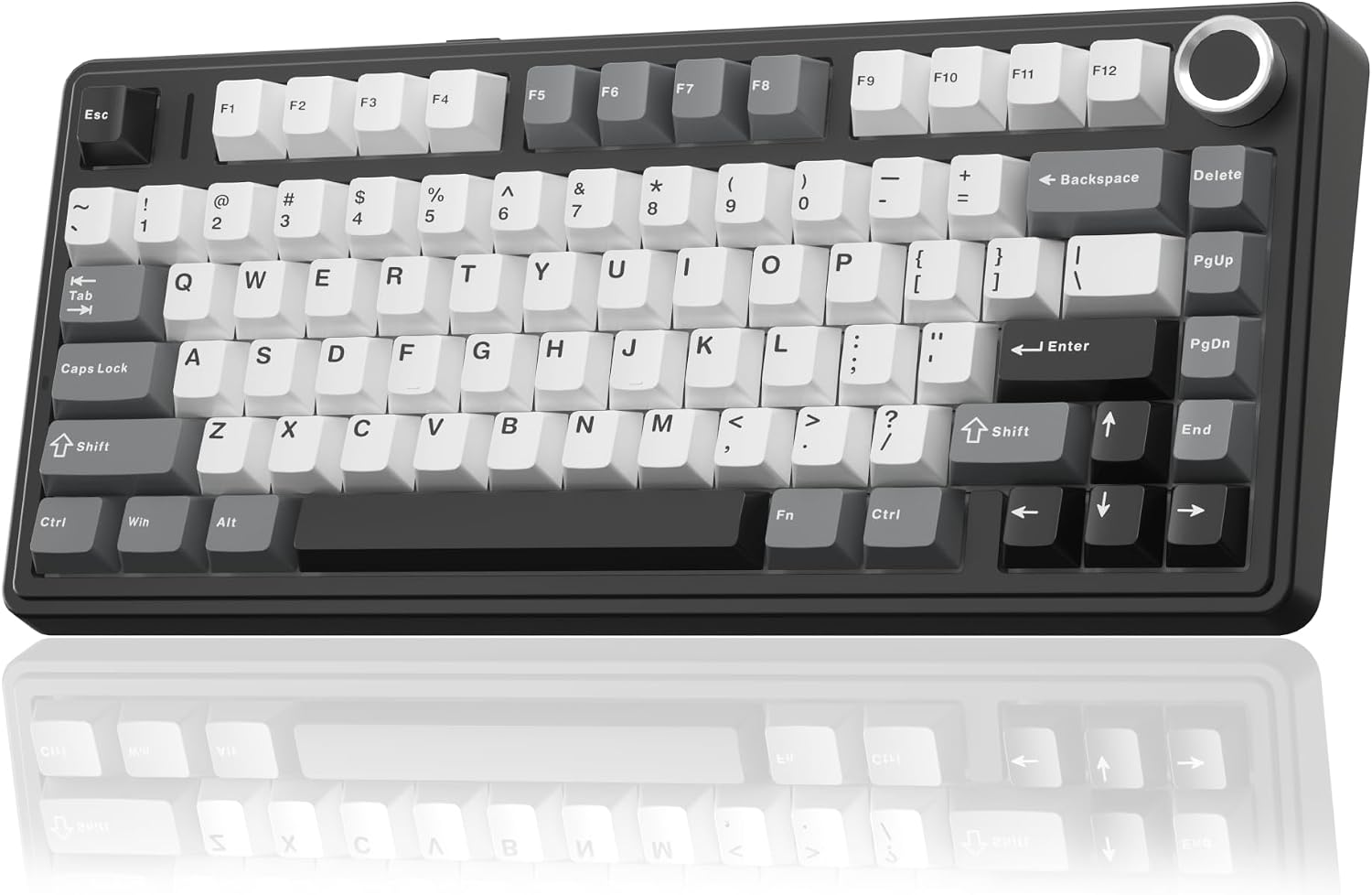
The cheapest way into a wireless hall effect board with the full competitive feature set. At around $80, the F75 HE pairs genuine rapid trigger with 0.01mm adjustment, per-key actuation, SOCD, tri-mode connectivity (2.4GHz, Bluetooth 5.0, USB-C), and a 4000mAh battery — plus 8,000Hz polling wired (1,000Hz over 2.4GHz, a distinction the marketing buries in fine print). Owner sentiment on the core experience is strongly positive: rapid trigger performs, wireless is stable, and the 75% layout with an aluminum volume knob makes it a viable daily driver. What keeps it from the top tier is everything around the edges: a plastic, lightweight case, loud clacky acoustics, and a legitimate controversy about whether AULA quietly downgraded the plate and keycaps versus the beloved mechanical F75.
5. Redragon K673 HE — Cheapest Genuine Rapid Trigger

If the absolute floor matters more than anything else, the K673 HE gets you real rapid trigger and 8K wired polling for around $51 — the cheapest genuine hall effect experience in 2026, with a metal knob and a creamy sound profile. It's wired-only, the software is basic, and there's a recurring RGB flicker QC complaint in the review data. Fine as a first hall effect board; the extra $10–20 for the NS68 or HE68 Lite buys meaningfully more polish.
6. MonsGeek FUN60 Ultra TMR — Best Compact/Magnetic Hybrid
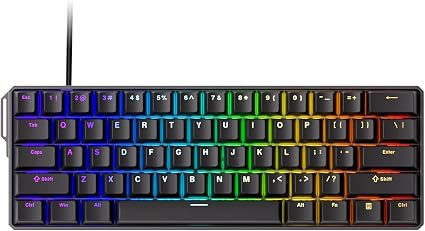
Technically a TMR board rather than hall effect — TMR (tunneling magnetoresistance) is the newer magnetic sensing tech with finer resolution and lower power draw, and it behaves identically from the player's perspective. The FUN60 Ultra packs TMR switches into a CNC aluminum case with 8K polling over wireless for around $90: excellent build for the money and a genuine alternative if you want magnetic features in a 60% frame, at the cost of the F-row, arrows, and knob. (More on the difference in our TMR vs hall effect explainer.)
The Best Mid-Range Hall Effect Keyboards ($100–170)
This is the most crowded tier in the market, and the one where wireless becomes realistic without sacrificing performance.
7. DrunkDeer A75 Pro — Best Mid-Range FPS Board

The board that most directly answers the question competitive players have asked since 2023: what do you buy when you want Wooting-grade rapid trigger without Wooting pricing? At a $129.99 MSRP that regularly drops to $109.99, the Pro delivers the full competitive stack — rapid trigger with 0.1mm sensitivity, per-key adjustable actuation from 0.2–3.3mm, Last Win Mode (SOCD), and release dual triggers — wrapped in a genuinely upgraded chassis: 1,000g planted build, die-cast metal accents, gasket structure, and a real silent switch option that Reddit recommends for shared spaces. Independent testing by HLPlanet measured roughly 4ms input latency — not quite Wooting's sub-2ms Tachyon territory, but the same ballpark as most flagship boards, and it's the most-recommended sub-$150 hall effect board across Reddit keyboard and FPS communities. The caveats: wired-only, a 1-year warranty versus Wooting's 4, and a small but persistent minority of owners reporting intermittent input dropouts. For pure FPS value, nothing at this price touches it.
8. Keychron K2 HE — Best Wireless Daily Driver
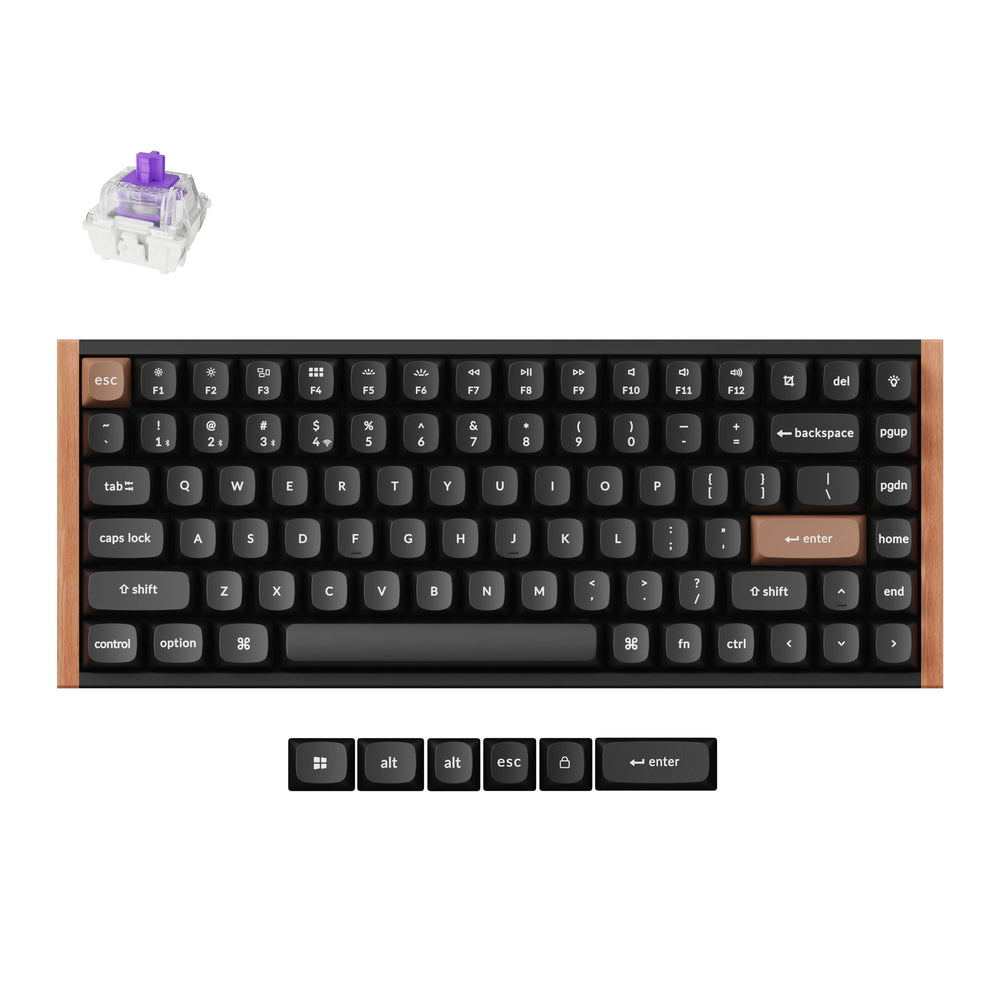
The K2 HE is the easiest hall effect board to recommend to someone who doesn't think of themselves as a keyboard enthusiast. It's a 75% with a real F-row and arrow keys, tri-mode wireless with true 1000Hz polling over 2.4GHz (confirmed by RTINGS, with LTT Labs independently measuring ~6.3ms wired and ~8.4ms wireless latency), Gateron double-rail magnetic switches, and an aluminum-and-rosewood build that WIRED scored 9/10. At $139.99 for the Special Edition ($129.99 standard), it makes magnetic switches feel like a normal, pleasant daily driver rather than a competitive tool.
The honest trade-offs: rapid trigger trails Wooting's finer control, polling tops out at 1000Hz (no 8K), the web configurator is clunky and requires a wired connection, and the hot-swap sockets only accept Gateron double-rail magnetic switches. For mixed work-and-play use under $150, it's arguably the best option in the category.
9. Keychron K4 HE — Best With a Numpad
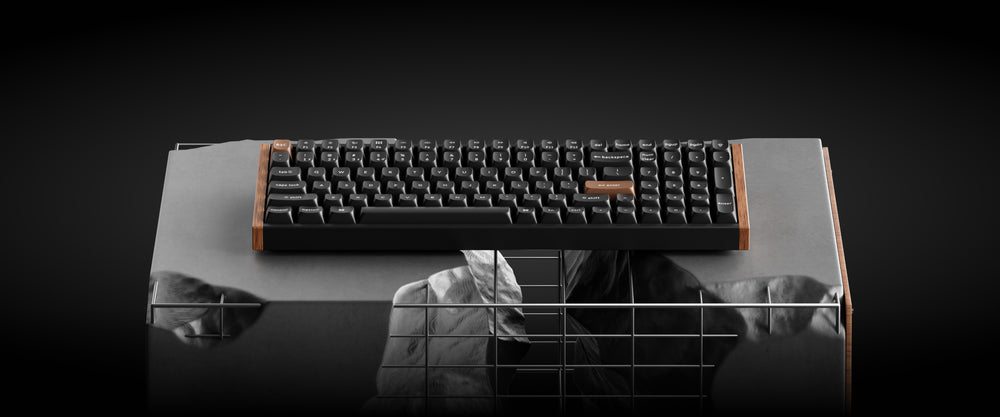
The K4 HE is the answer to a specific complaint about magnetic keyboards: almost all of them are tenkeyless. This is one of the few boards that refuses to make that trade, packing Keychron's magnetic platform into a 96% layout with a full numpad, F-row, and nav cluster — for MMO players, spreadsheet warriors, and anyone who does real work between ranked matches. The reception has been strong: IGN gave it an Editors' Choice 9/10, and Tom's Guide and Windows Central both scored it 4/5.
Same Gateron double-rail platform and software as the K2 HE, at $134.99–$144.99. The trade-offs are inherent to the layout: the 96% arrangement is cramped with zero gaps between clusters (mis-hits around the arrows are a recurring complaint), polling tops out at 1000Hz, and the switch ecosystem is closed. If you need a numpad and want magnetic performance, this is currently the best option on the market.
10. Lemokey P1 HE — Best Typing Feel

The P1 HE is what happens when Keychron's gaming sub-brand builds the enthusiast platform of the Q1 HE and shaves $50 off the price: full aluminum body, gasket mount, Gateron double-rail magnetic switches, tri-mode wireless with true 1000Hz over 2.4GHz, quad-actuation (up to four configurable thresholds per key), and a 4000mAh battery. RTINGS rates it excellent across gaming, office, and programming use; Tom's Guide calls it "an absolute powerhouse." At $169.99 (regularly ~$140 on sale), it's the best-typing hall effect board under $200.
The caveat is the one that shows up in every corner of the internet: quality control. Amazon's US listing sits at 4.2 stars with a striking split, and Reddit threads document double-typing, dead keys, and wireless dropouts. Lab performance is excellent; the failure tail is real, if contained. Buy from a retailer with a good return policy and test every key in the first week.
11. Logitech G Pro X TKL Rapid — Best Big-Brand Option
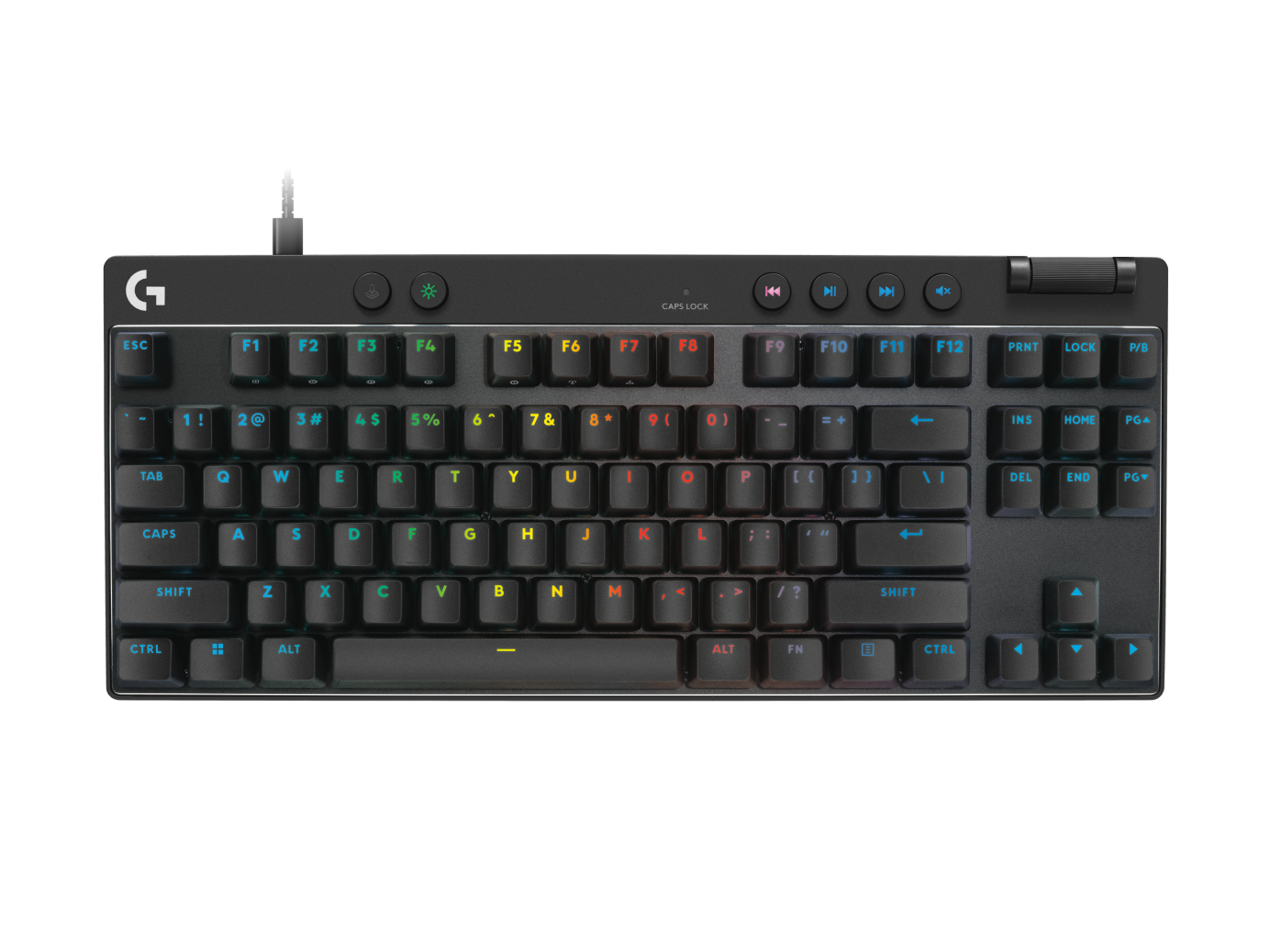
Logitech's magnetic entry: a TKL with GX Magnetic switches, rapid trigger, and the polish of a company that's been shipping gaming peripherals to pros for two decades. At $149.99 it's the big-brand hall effect board done right — solid build, excellent software, and the warranty and support ecosystem the budget brands can't match. The trade-offs: TKL-only (no wireless) and a more conservative feature set that doesn't push the 8K envelope. If you want hall effect from a name you can buy at any Best Buy, this is the pick.
The Best Flagship Hall Effect Keyboards ($170+)
This is the tier where the category's two real questions get answered: is Wooting still the benchmark, and has wireless finally caught up?
12. Wooting 80HE — Best Overall
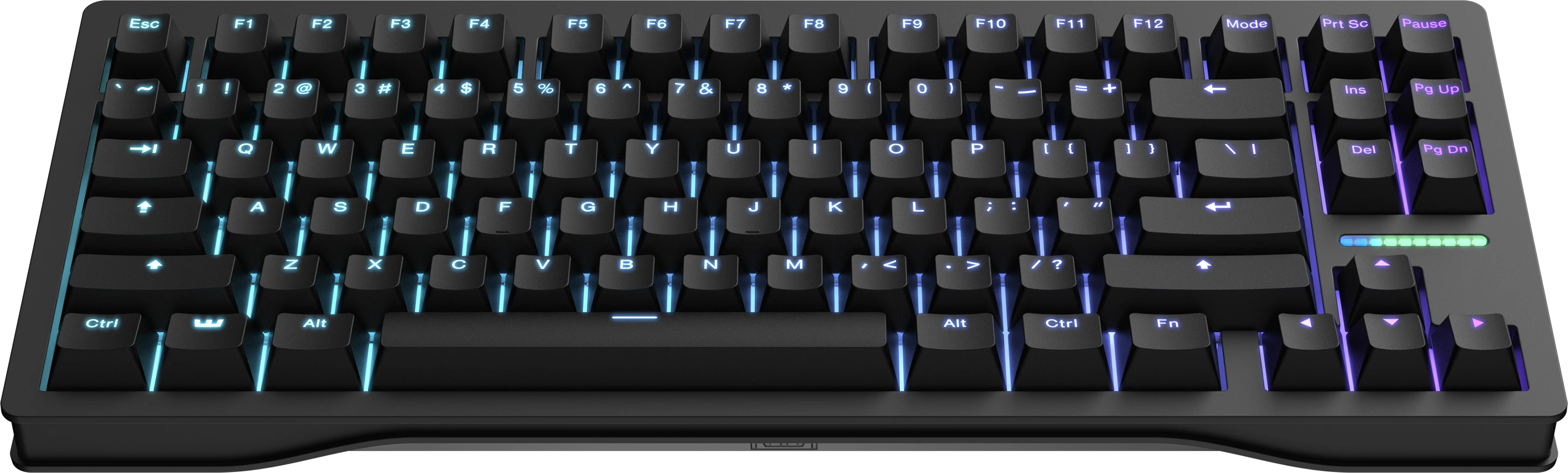
The Wooting 80HE remains the gold standard for hall effect keyboards — the board every rival gets compared to, and the one that keeps winning. At $199.99 it delivers true 8,000Hz polling (0.125ms input speed via Tachyon mode), Lekker V2 hall effect switches with per-key calibration, rapid trigger, adjustable actuation from 0.1–4.0mm, Rappy Snappy, SOCD (Snappy Tappy), Dynamic Keystroke, analog gamepad input, and Wootility — the best keyboard software in the industry. Independent testing from RTINGS puts its latency among the best measured on any keyboard.
The real-world evidence of performance is adoption: per prosettings.net data from June 2026, the 80HE is the most-used keyboard in CS2 (27.51% of pros) and Fortnite (15.41%), and no other hall effect brand comes close. The compromises are the price of a board engineered around one priority: wired-only, a plastic case at a premium price (the zinc upgrade costs extra), and a typing feel that splits opinion. The 4-year warranty and transparent launch-defect handling round out a package that is, for its intended audience, unmatched at any price.
13. Wooting 60HE — Best Compact Flagship
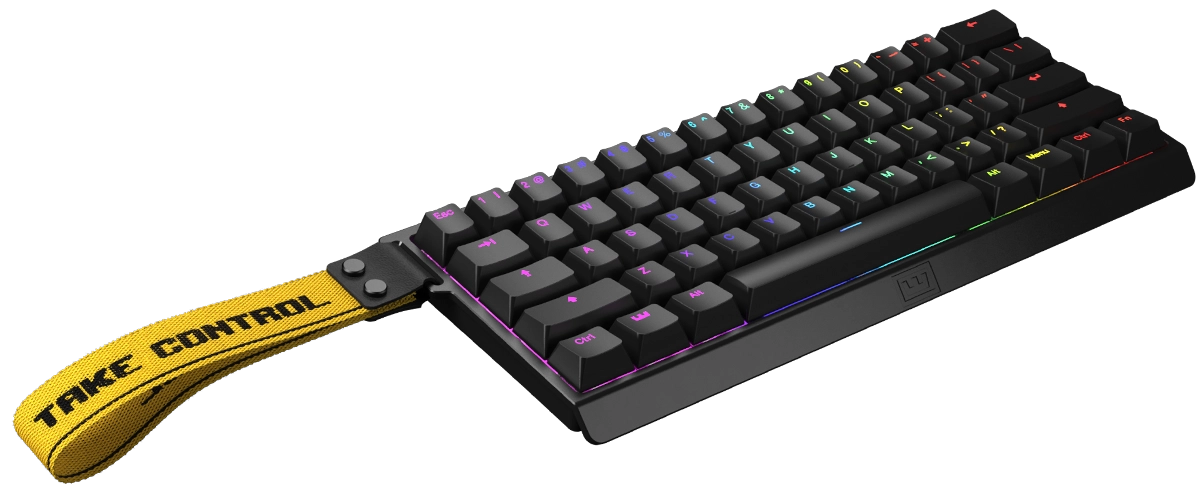
The original phenomenon, still the competitive FPS endgame for players who want maximum mouse space: the same Wooting tech — Lekker switches, rapid trigger, adjustable actuation, analog input, Wootility — in a 60% frame at $188.99. It leads Valorant (20.6% of pros) and Rainbow Six Siege (17.41%) per prosettings.net. The layout is the entire story: no F-row, no arrows, no nav cluster. If you live in competitive queues and want every last millisecond, this is the sharper tool for pure desk-space efficiency; if you type or work on the same board, the 80HE or a 75% wireless alternative will feel easier to live with.
14. NuPhy WH80 — Best Wireless Performance

The WH80 exists to settle one argument: that cutting the cable means giving up competitive input performance. It's one of a small handful of keyboards that sustains a true 8,000Hz polling rate over its 2.4GHz wireless connection — verified by RTINGS, which measured "exceptionally low" latency and placed it in the same performance conversation as the wired Wootings while adding wireless on top. Independent testing measured 1.427ms wired and 1.711ms wireless at 8K — the gap is now tenths of a millisecond. Actuation is adjustable from 0.1–4.0mm with rapid-trigger sensitivity down to 0.005mm, the build is premium (1,516g, gasket-mounted, aluminum plate), and the 8000mAh battery delivers weeks of mixed use. At $249.95 it's flagship-priced, but for the wireless competitive gamer it's currently the board to beat. The known warts: analog output doesn't work as advertised per RTINGS lab testing, wireless pairing has been the source of most owner complaints, and customization is NuPhyIO-only.
15. The Premium Alternatives
More flagships worth knowing, all reviewed on this site:
- ASUS ROG Azoth 96 HE (~$290) — a 96% wireless hall effect board with HFX V2 magnetic switches, an OLED display, and 8K wireless support. The premium work-and-play pick for people who want a numpad. Full review.
- SteelSeries Apex Pro Gen 3 (~$250) — OmniPoint 3.0 HyperMagnetic switches, rapid trigger, Rapid Tap, and SteelSeries GG integration. The mainstream flagship with the best ecosystem software, slightly behind the Wooting on raw latency. Full review.
- Corsair Vanguard PRO 96 (~$224) — a wired 96% hall effect flagship with MGX switches and 8K polling, held back by iCUE's complexity. Full review.
If your budget is truly unlimited, the ASUS ROG Falcata (~$420) is the category's oddity — a split 75% wireless hall effect board built for FPS diehards who want the halves angled for shoulder-width aiming. Brilliant for its niche, absurd for everyone else. Full review.
Comparison Table
| Keyboard | Price | Layout | Wireless | Polling | Rapid Trigger | Our Score |
|---|---|---|---|---|---|---|
| EPOMAKER HE68 Lite | ~$42 | 65% | No | 8K wired | 0.01mm | 8.5 |
| Gamakay NS68 | ~$40–60 | 65% | Optional | 8K wired | 0.01mm | 8.6 |
| ATTACK SHARK R85 HE | ~$62 | 75% | No | 8K wired | 0.005mm | 8.5 |
| AULA F75 HE | ~$80 | 75% | Yes (tri-mode) | 8K wired / 1K wireless | 0.01mm | 8.0 |
| Redragon K673 HE | ~$51 | 75% | No | 8K wired | Yes | 7.5 |
| MonsGeek FUN60 Ultra TMR | ~$90 | 60% | Yes | 8K wireless | TMR | 8.3 |
| DrunkDeer A75 Pro | ~$110–130 | 75% | No | 1K + 8K scan | 0.1mm | 8.5 |
| Keychron K2 HE | ~$130–140 | 75% | Yes (tri-mode) | 1K wired/2.4G | Yes | 8.4 |
| Keychron K4 HE | ~$135–145 | 96% | Yes (tri-mode) | 1K wired/2.4G | Yes | 8.5 |
| Lemokey P1 HE | ~$140–170 | 75% | Yes (tri-mode) | 1K wired/2.4G | Yes | 8.5 |
| Logitech G Pro X TKL Rapid | ~$150 | TKL | No | 1K | Yes | 8.5 |
| Wooting 60HE | ~$189 | 60% | No | 8K (Tachyon) | Best-in-class | 9.2 |
| Wooting 80HE | ~$200 | 80% | No | 8K (Tachyon) | Best-in-class | 9.0 |
| Corsair Vanguard PRO 96 | ~$224 | 96% | No | 8K wired | Yes | 7.8 |
| NuPhy WH80 | ~$250 | 80% | Yes (8K 2.4G) | 8K wired/2.4G | 0.005mm | 8.6 |
| SteelSeries Apex Pro Gen 3 | ~$250 | TKL | No | 8K | Yes | 8.0 |
| ASUS ROG Azoth 96 HE | ~$290 | 96% | Yes | 8K wireless | Yes | 8.3 |
FAQ
Is a hall effect keyboard worth it in 2026? For movement-heavy competitive games — CS2, Valorant, Fortnite, Apex — yes, especially at the new budget price points. Rapid trigger and adjustable actuation give a measurable input advantage, and the entry cost has fallen from $180 to $40. For MOBAs, MMOs, strategy games, and general typing, the advantage is marginal to nonexistent — a good mechanical board will serve you just as well.
What's the difference between hall effect and TMR? Both are magnetic switch technologies — TMR (tunneling magnetoresistance) is the newer sensing method with finer resolution and lower power draw. From the player's perspective they behave identically: adjustable actuation, rapid trigger, SOCD. TMR boards (like the MonsGeek FUN60 Ultra) are the emerging generation, but hall effect boards have the longer track record. See our TMR vs hall effect explainer.
Do I need 8,000Hz polling? No — but it's nice. Independent testing consistently shows the measured latency difference between a great 1000Hz board and a great 8K board is fractions of a millisecond. What matters more than raw polling is rapid-trigger resolution and per-key calibration — that's what makes aggressive settings usable without phantom presses.
Will SOCD get me banned? Possibly. Features like Snap Tap and Last Win Mode are flagged or banned in some competitive titles — CS2's VAC has kicked players using SOCD in matchmaking. Treat them as practice tools if you value your ranked accounts.
Which hall effect keyboard do pros actually use? Wooting, overwhelmingly. Per prosettings.net data from June 2026, the Wooting 80HE is the most-used keyboard in CS2 (27.51% of pros) and Fortnite (15.41%), and the 60HE leads Valorant (20.6%) and Rainbow Six Siege. No other magnetic brand comes close to that footprint.
Is Wooting still worth the premium over a $60 hall effect board? For competitive players, yes — the gap is in consistency and refinement: per-key calibration, the most mature rapid-trigger implementation, best-in-class software, and a 4-year warranty. For everyone else, community sentiment is honest that the performance gap only shows up in ranked play. A $60–80 board like the ATTACK SHARK R85 HE delivers 90% of the feature set for a third of the price.
Verdict
Hall effect keyboards are no longer a niche or a premium exclusive — they are the fastest-growing segment in the keyboard market, spanning every price point from $40 to $400. The market has settled into three clear answers:
- Budget buyers get a genuine competitive feature set for $40–80. The Gamakay NS68 and EPOMAKER HE68 Lite are the value kings; the ATTACK SHARK R85 HE is the performance-per-dollar champion; the AULA F75 HE is the cheapest wireless option that's actually good.
- Mid-range buyers get wireless without compromise. The Keychron K2 HE is the best all-round daily driver, the K4 HE the best numpad option, the Lemokey P1 HE the best typing feel, and the DrunkDeer A75 Pro the best pure FPS value.
- Flagship buyers still end at Wooting for pure competitive performance — the 80HE remains the safest, most proven recommendation in the category — while the NuPhy WH80 is the first wireless board that genuinely matches it.
The one piece of advice that applies at every tier: test every key in the first week, buy from a retailer with a real return policy, and be honest about whether you play the genres where this technology pays off. If you do, there has never been a better time to buy — at any budget.
Related Guides
Buying Guide
Best Mechanical Keyboards 2026: The Complete Guide for Every Budget
The 2026 mechanical keyboard market mapped tier by tier: from the $37 Keychron C3 Pro and $42 EPOMAKER HE68 Lite to the Wooting 80HE and NuPhy WH80. RTINGS' top picks synthesized with Reddit community consensus, covering mechanical, Hall Effect, and TMR switches for every budget.
Buying Guide
Best Budget Hall Effect Keyboards Under $100 in 2026
Rapid trigger used to mean one thing: a $200 Wooting. In 2026 the sub-$100 tier delivers genuine hall effect gaming — 8K polling, rapid trigger, SOCD — for as little as $42. We rank the five budget magnetic boards worth buying.
Buying Guide
Best Gaming Keyboard Switches 2026: Linear, Tactile, Magnetic & Hall Effect, Explained
Every switch type explained and ranked for 2026: linear vs tactile vs clicky mechanicals, Hall Effect and TMR magnetic switches, Rapid Trigger, adjustable actuation, and what competitive players actually use — with real recommendations at every price point.