Best Budget Hall Effect Keyboards Under $100 in 2026
Rapid trigger used to mean one thing: a $200 Wooting. In 2026 the sub-$100 tier delivers genuine hall effect gaming — 8K polling, rapid trigger, SOCD — for as little as $42. We rank the five budget magnetic boards worth buying.
By GamepadSquire — August 9, 2026Verified
Best Budget Hall Effect Keyboards Under $100 in 2026
Two years ago, "hall effect keyboard" meant one thing: a Wooting, and a $200+ price tag. In 2026 the budget tier has flipped the script. Rapid trigger — the feature that made magnetic switches famous for counter-strafing in CS2 and Valorant — is now table stakes on boards that cost less than a round of games. Entry-level hall effect keyboards start around $40, and the sub-$100 segment has quietly become the most competitive corner of the entire keyboard market.
This guide ranks the best budget hall effect keyboards under $100 in 2026, based on specs, community feedback from r/keyboards and r/BudgetKeebs, professional review scores, and the boards we have already reviewed in depth on GamepadSquire. Every pick below has a full review on this site — follow the links for the long version. Here we cut straight to which one you should buy and why.
Quick Picks
| Keyboard | Price | Layout | Wireless | Best For |
|---|---|---|---|---|
| EPOMAKER HE68 Lite | ~$42 | 65% | No (wired) | Best overall value |
| Redragon K673 HE | ~$51 | 75% | No (wired) | Cheapest genuine rapid trigger |
| ATTACK SHARK R85 HE | ~$62 | 75% | No (wired) | Best performance per dollar |
| AULA F75 HE | ~$80 | 75% | Yes (tri-mode) | Best wireless option |
| MonsGeek FUN60 Ultra TMR | ~$90 | 60% | Yes (tri-mode) | Best compact/magnetic hybrid |
The Best Budget Hall Effect Keyboards
1. EPOMAKER HE68 Lite — Best Overall Value

The HE68 Lite is the board that reset expectations for the whole category. At around $42, it delivers the full magnetic feature set — rapid trigger, adjustable actuation from 0.1mm to 3.4mm in 0.01mm steps, SOCD (marketed as Snap Key), Dynamic Keystroke, and Mod Tap — plus 8,000Hz polling and a 128kHz per-key scan rate. Professional reviews have scored it 8.3/10 (MechanicalKeyboard.net) to 9/10 (Tech4Gamers), and the press consensus mirrors community sentiment: this is the board that makes hall effect affordable, full stop.
The sound profile is the sleeper hit. Five layers of dampening and factory-lubed Clear Mag switches produce a creamy, thocky sound that reviewers consistently compare to boards costing three times as much. The stock PBT keycaps are shine-through on the Black and White colorways, which is rare at this price.
The catch: The case is ABS plastic with a hollow-ish, tray-mounted feel and a fixed 4.5-degree typing angle — no adjustable feet. It is wired only, with no Bluetooth or 2.4GHz. The software is functional but less polished than Wooting's Wootility, and there is no web-based configurator. A small number of owners report double-registration in specific games, usually resolved by recalibrating the board. None of these are dealbreakers at $42; they are the corners cut to hit the price.
Specs at a glance
- Layout: 65% ANSI, 68 keys
- Switches: Epomaker Clear Mag (Hall Effect linear, 45gf bottom-out, factory-lubed)
- Polling rate: 8,000Hz; 128kHz per-key scan
- Actuation: 0.1–3.4mm adjustable, 0.01mm steps
- Features: Rapid trigger, SOCD (Snap Key), DKS, Mod Tap
- Keycaps: Double-shot PBT (shine-through on Black/White)
- Connectivity: Wired USB-A to USB-C (detachable)
- Weight: 650g
2. ATTACK SHARK R85 HE — Best Performance Per Dollar

If the HE68 Lite made hall effect affordable, the R85 HE proved the budget tier could carry flagship numbers. This is the board with Wooting-class specs at a fraction of the price: 8,000Hz polling, a 256kHz scan rate, 0.005mm rapid trigger accuracy, 0.08ms latency, per-key actuation from 0.1–3.3mm, and the full competitive suite — Snap Tap (SOCD), DKS, Mod Tap, and TGL. It is the only sub-$70 board on the market advertising 0.005mm resolution, and community testing and YouTube reviews generally confirm the response is genuinely elite for the price.
The build punches above its weight too: an aluminum plate, top-mount construction with snap-in stabilizers, and a five-layer dampening stack that gives it a deep, muted thock. The 75% layout keeps the F-row, arrow keys, a volume roller, and a 36-LED lightbox — a lot of board for around $62.
The catch: It is wired only, with Windows-first software (the Gear Lab desktop app; a web driver exists for other platforms). The keycaps are opaque PBT, so the RGB does not shine through the legends. Community discussion still surfaces occasional questions about the software after June 2026 malware allegations — those were technically rebutted, but the brand trust friction is real. A small minority of owners report early unit failures, and the board is louder than some rivals. No palm rest included.
Specs at a glance
- Layout: 75% (79 keys + volume roller)
- Switches: Hall Effect magnetic, hot-swappable, 100M lifespan
- Polling rate: 8,000Hz; 256kHz scan
- Rapid trigger: 0.005mm accuracy; actuation 0.1–3.3mm per key
- Features: Snap Tap (SOCD), DKS, MT, TGL
- Keycaps: PBT double-shot, Cherry profile (opaque)
- Connectivity: Wired USB-C (detachable 110cm cable)
- Weight: 815g
3. Redragon K673 HE — Cheapest Genuine Rapid Trigger

Redragon built its name on the absolute-budget tier, and the K673 HE is the best expression of that philosophy: genuine hall effect rapid trigger, adjustable actuation from 0.1–3.4mm, and 8,000Hz polling for around $51 — the cheapest working rapid trigger experience in 2026. The PRCS input modes bring Snap Tap-style counter-strafe cleaning to the sub-$60 tier, and the gasket-mount build with multi-layer dampening produces a creamy, quiet sound profile that reviewers genuinely like.
The UltraMag POM magnetic switches are smooth, with per-key actuation and hot-swap sockets. The metal control knob (volume/media/backlight) is a nice touch at this price, and the web-based driver means macOS and Linux users can configure it — rare in this tier.
The catch: The recurring complaint in owner feedback is RGB backlight flicker, including across replacement units — treat it as a quality-control lottery. It is wired only, the stock USB-C cable is thin, and the side-mounted port is awkward. The keycaps are ABS-class rather than PBT, and there is no dust cover in the box. The software is basic, and PRCS/SOCD behavior depends on game compatibility.
Specs at a glance
- Layout: 75% (81 keys)
- Switches: UltraMag 100% POM magnetic (Hall Effect), hot-swappable
- Polling rate: 8,000Hz
- Actuation: 0.1–3.4mm adjustable
- Features: Rapid trigger, PRCS (4 SOCD modes)
- Keycaps: Double-shot shine-through (ABS-class)
- Connectivity: Wired USB-C (detachable)
- Weight: ~850g
4. AULA F75 HE — Best Wireless Option
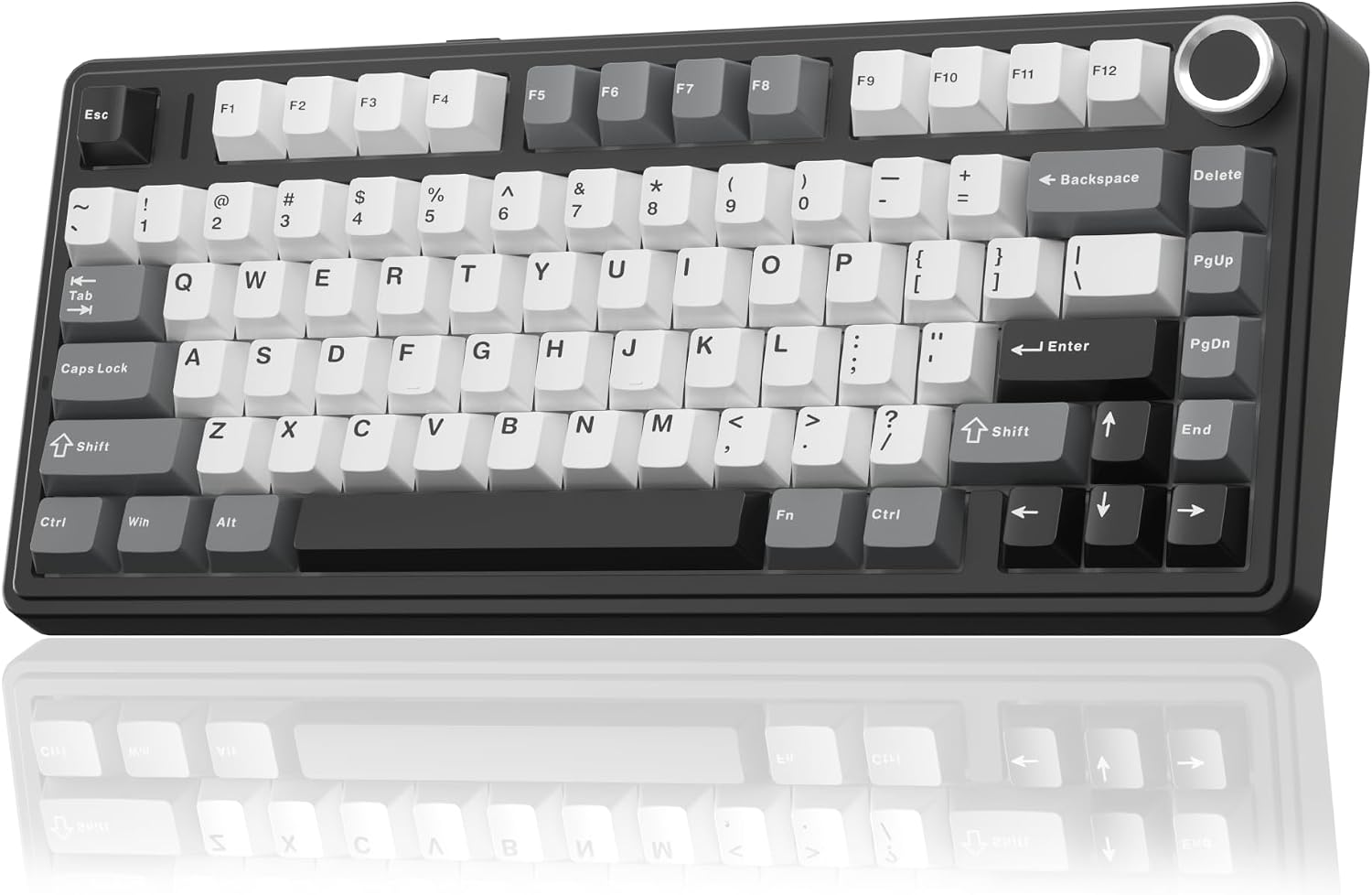
If you want magnetic switches without the cable, the F75 HE is the cheapest genuine wireless rapid-trigger board in 2026. At around $80 it brings tri-mode connectivity (2.4GHz, Bluetooth 5.0, USB-C), a 4,000mAh battery, genuine rapid trigger with 0.01mm adjustment, per-key actuation, SOCD, and 8,000Hz wired polling with a 160kHz single-key scan rate. The 2.4GHz mode tops out at 1,000Hz — the 8K figure is wired-only — but for most players the wireless experience is indistinguishable from wired.
The 75% layout keeps the F-row, arrows, and an aluminum multi-function knob, and the board works cross-platform out of the box: Windows, macOS, iOS, and Android. Five-layer dampening is in place, though the acoustics lean loud and clacky rather than thocky.
The catch: The case is plastic and lightweight, and one detailed owner review alleges ABS keycaps and a rigid steel plate rather than the gasket-mount PBT build of the mechanical F75 — worth reading before you buy. The opaque keycaps do not shine through, so the legends are hard to read in the dark. AULA HUB software is Windows-first with a learning curve, and the board is too new for long-term reliability data.
Specs at a glance
- Layout: 75% (80 keys)
- Switches: Hall Effect magnetic (Black King / Dragon King), hot-swappable
- Polling rate: 8,000Hz wired / 1,000Hz 2.4GHz; 160kHz single-key scan
- Rapid trigger: 0.01mm adjustable, per-key actuation
- Features: SOCD, aluminum knob, tri-mode connectivity
- Battery: 4,000mAh
- Compatibility: Windows, macOS, iOS, Android
5. MonsGeek FUN60 Ultra TMR — Best Compact Magnetic Board
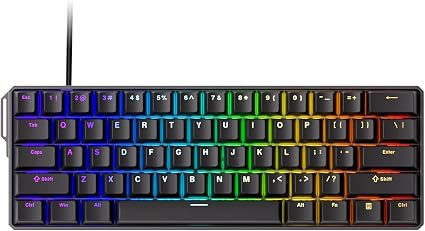
Strictly speaking this is a TMR board, not hall effect — Tunneling Magnetoresistance is the newer magnetic switch tech that reads the magnet's field with even higher precision. For buyers it means the same rapid-trigger benefits with elite-level latency, and the FUN60 Ultra is the best-value way into it: 8,000Hz polling over both wired and 2.4GHz wireless, 0.01mm rapid trigger, per-key actuation, and a CNC aluminum case with real rigidity for around $90.
The standout feature is MagMech: the PCB accepts both magnetic switches and standard 5-pin mechanical switches, so you can mix — magnetic WASD cluster for rapid trigger, mechanical keys elsewhere. Pre-lubed Akko Glare switches give a quiet, thocky profile out of the box.
The catch: The mode switch hides under the Caps Lock keycap, the battery drains fast at 8K wireless with RGB on (roughly three hours), and the desktop driver can hang over 2.4GHz. There is no adjustable typing angle and the tray-mount feel is stiff. It is a 60% board — no F-row, no arrows — which is exactly right for FPS players and wrong for anyone who needs navigation keys.
Specs at a glance
- Layout: 60% (60 keys, US ANSI)
- Switches: TMR magnetic (Akko Glare) + 5-pin mechanical via MagMech
- Polling rate: 8,000Hz (wired + 2.4GHz)
- Rapid trigger: 0.01mm; actuation 0.1–3.4mm
- Connectivity: Tri-mode (USB-C, 2.4GHz, Bluetooth 5.0)
- Battery: 4,000mAh
- Weight: ~1,023g (CNC aluminum)
What to Look For in a Budget Hall Effect Keyboard
The spec sheets all blur together at this price, so here is what actually separates the good boards from the cheap ones.
Rapid trigger implementation matters more than the headline number. Every board here advertises rapid trigger; the difference is how well the firmware executes it. Community feedback across r/keyboards consistently notes that budget hall effect boards differ less in switches and more in software robustness — a board with a buggy driver will feel slower than one with a lower spec sheet and better firmware. Check for web-based drivers (the R85 HE and K673 HE have them) and read recent owner threads before buying.
Polling rate: 8K is the norm, but wired-only on most budget boards. All five picks advertise 8,000Hz. On the AULA F75 HE, that figure is wired-only — wireless tops out at 1,000Hz, a distinction buried in the fine print. If 8K wireless matters to you, the MonsGeek FUN60 Ultra is the only sub-$100 board here that delivers it.
Switch compatibility and lifespan. All hall effect switches are rated at 100 million keystrokes — no contacts to wear out, no debounce issues. Hot-swap sockets let you replace or upgrade switches later. The MonsGeek's MagMech goes further, letting you mix magnetic and mechanical switches on one PCB.
Layout is the real differentiator. 60% saves the most desk space but drops the F-row and arrows; 65% keeps arrows; 75% keeps everything except the numpad and is the sweet spot for most players. FPS players with low sensitivity usually want 60-65%; anyone doing productivity work should default to 75%.
Sound profile varies wildly. The HE68 Lite and K673 HE are creamy and dampened; the AULA F75 HE is loud and clacky. If you game in a shared space or stream with an open mic, the acoustics matter as much as the specs.
Who Should Buy a Budget Hall Effect Keyboard
Buy one if you play competitive FPS (CS2, Valorant, Apex, Fortnite) and want rapid trigger for faster counter-strafes and re-fires without spending Wooting money. The performance gap between a $50 magnetic board and a $200 one has narrowed to the point where the budget tier covers most of the competitive benefit.
Skip it if you primarily type — hall effect switches are almost exclusively linear, with no tactile bump, and a traditional mechanical board will feel better for long typing sessions. Skip it if you need wireless at 8K (only the FUN60 Ultra delivers that under $100), and skip the 60% boards if you need navigation keys for work.
Final Verdict
The sub-$100 hall effect market in 2026 is stacked, and the good news is you cannot go far wrong with any of these five. The EPOMAKER HE68 Lite is the value benchmark — full magnetic feature set, 8K polling, and a creamy sound profile for around $42, with the strongest press scores in the category. The ATTACK SHARK R85 HE is the performance pick, bringing 0.005mm rapid trigger and flagship feature coverage to the $60 tier. If you need wireless, the AULA F75 HE is the cheapest genuine wireless rapid-trigger board around. The Redragon K673 HE is the entry point if every dollar counts, and the MonsGeek FUN60 Ultra TMR is the compact-player special with a build quality that embarrasses boards twice its price.
For the full treatment on any of these — build quality, software deep-dives, and long-term owner sentiment — read the individual reviews linked above. For a wider look at the category, see our guides on the best gaming keyboards of 2026 and best gaming keyboards under $100.
Related Guides
Buying Guide
Best Mechanical Keyboards 2026: The Complete Guide for Every Budget
The 2026 mechanical keyboard market mapped tier by tier: from the $37 Keychron C3 Pro and $42 EPOMAKER HE68 Lite to the Wooting 80HE and NuPhy WH80. RTINGS' top picks synthesized with Reddit community consensus, covering mechanical, Hall Effect, and TMR switches for every budget.
Buying Guide
Best Hall Effect Keyboards 2026: The Definitive All-Tier Roundup
Hall effect keyboards went from a $200 Wooting exclusive to a market that spans $42 to $400. This is the definitive all-tier roundup: the best budget, mid-range, and flagship magnetic boards of 2026, ranked by specs, lab data, pro adoption, and community feedback.
Buying Guide
Best Gaming Keyboard Switches 2026: Linear, Tactile, Magnetic & Hall Effect, Explained
Every switch type explained and ranked for 2026: linear vs tactile vs clicky mechanicals, Hall Effect and TMR magnetic switches, Rapid Trigger, adjustable actuation, and what competitive players actually use — with real recommendations at every price point.