Best Gaming Keyboards in 2026: Top Picks for Every Budget and Playstyle
The head-term guide to gaming keyboards in 2026: Wooting's hall effect boards lead, real magnetic-switch performance now starts at $40, and the best pick depends on the games you play — every pick fully reviewed and scored on our 10-point scale.
By GamePadSquire Test Desk · Updated Nov 21, 2026
Best Gaming Keyboards in 2026: Top Picks for Every Budget and Playstyle
The gaming keyboard market in 2026 barely resembles the one most buying advice was written for. Magnetic switches — hall effect and TMR — went from a $180 Wooting curiosity to the default recommendation for competitive players, with real boards starting under $40. Rapid trigger and adjustable actuation, features that used to justify flagship pricing, now ship on budget boards. And the old wired-versus-wireless trade-off has mostly evaporated: several wireless keyboards in this guide poll as fast over the air as their wired rivals do over a cable.
This is our head-term guide to the category — the one page that answers "which gaming keyboard should I actually buy?" across every budget and playstyle. Every pick below has a full review on this site, scored on our 10-point scale, and links straight to the long version. If you want to go deeper on a specific lane, we publish dedicated roundups for hall effect keyboards, keyboards under $100, budget mechanical boards, and a full switch-type explainer.
Quick Picks
| Keyboard | Price | Switch Tech | Our Score | Best For |
|---|---|---|---|---|
| Wooting 60HE | $154.99 | Hall effect | 9.2 | Best overall |
| Wooting 80HE | $199.99 | Hall effect | 9.0 | Best premium |
| ASUS ROG Strix Scope II 96 Wireless | $109.99 | Mechanical (hot-swap) | 9.0 | Best full-size wireless |
| Logitech G Pro X TKL Rapid | $159.99 | Magnetic analog | 8.5 | Best big-brand esports |
| EPOMAKER HE68 Lite | $39.99 | Hall effect | 8.5 | Best budget hall effect |
| Keychron C3 Pro | $49.99 | Mechanical | 8.5 | Best traditional under $50 |
What to Look For in a Gaming Keyboard
Switch technology is the 2026 decision. Standard mechanical switches — linear, tactile, or clicky — still cover most use cases and remain the value option. But magnetic switches (hall effect and the newer TMR) are the reason the category is interesting: they sense actuation magnetically with no physical contact point, which means per-key adjustable actuation (down to fractions of a millimeter), rapid trigger (reset the instant you release, not at a fixed reset point), and no switch wear in the traditional sense. If you play movement-heavy or aim-heavy games, magnetic switches are the single biggest upgrade a keyboard can give you. Our switch explainer covers the physics in detail.
Polling rate matters more on paper than in feel — with one exception. A 1000 Hz keyboard matches a standard gaming mouse and is fine for virtually everyone. 8000 Hz polling is real, not marketing, but its benefits are subtle outside of high-refresh competitive play; don't pay a large premium for it alone. The exception is analog behavior: rapid trigger response and actuation consistency affect every keystroke, every game, immediately.
Layout is a personal ergonomics decision. 60/65% boards free desk space and shorten the reach to your mouse; TKL keeps the arrows and F-row that gamers actually use; 96%/full-size keeps the numpad for productivity. There is no wrong answer — but buy the layout you will not resent in a month.
Wireless is now a free upgrade, not a compromise — on the boards that do it properly. Tri-mode connectivity (2.4 GHz dongle, Bluetooth, USB-C) is table stakes in the mid-range, and our wireless picks below poll at full speed over the dongle. Cheap wireless is still where budget boards cut corners: if a $35 board leads with "wireless" rather than switch quality, be skeptical.
Software quality separates premium from annoying. Per-key actuation tuning, rapid trigger sensitivity, and onboard profiles are only as good as the app that controls them. Wooting's config tool, Razer Synapse, and Logitech G HUB all make our picks' best features accessible; obscure-brand apps are a common regret. Check our full reviews for software notes before buying.
The Picks
1. Wooting 60HE — Best Overall
Score: 9.2/10 — read the full Wooting 60HE review
The board that dragged the whole market forward remains the safest "best gaming keyboard" answer in 2026. Per-key adjustable actuation down to 0.1 mm, rapid trigger that behaves exactly as advertised, and configuration software that the community regards as the category benchmark. It is a 60% layout, so it trades the arrow cluster and F-row for pure pointer space — the right trade for FPS players, the wrong one for numpad-dependent work. At $154.99 it undercuts most magnetic-switch rivals while doing analog better than nearly all of them. If our money had to pick exactly one keyboard for gaming in 2026, this is it.
2. Wooting 80HE — Best Premium
Score: 9.0/10 — read the full Wooting 80HE review
The 80HE takes the 60HE's analog engine and wraps it in a fuller, more grown-up package — an 80% layout with the navigation cluster intact, top-tier build, and the same per-key tuning depth. It is the pick for players who want flagship magnetic-switch performance without living in a 60% compromise, and at $199.99 it is priced against premium boards it plainly outperforms on input latency behavior. It is still a keyboard for people who will open the configuration software at least once; that is the price of admission for this class.
3. ASUS ROG Strix Scope II 96 Wireless — Best Full-Size Wireless

Score: 9.0/10 — read the full ROG Strix Scope II 96 Wireless review
A 96% layout that keeps the numpad in a footprint barely larger than a TKL, hot-swappable mechanical switches, tri-mode wireless, and a $109.99 price that undercuts boards with weaker reviews — this is the value full-size pick of the year. It scored 9.0 in our review on the strength of build quality, a sensible switch lineup, and wireless performance with no meaningful latency penalty over the dongle. Buyers chasing magnetic-switch features should look elsewhere in this guide; everyone else — especially players who also work at the same desk — gets more keyboard per dollar here than anywhere else on this page.
4. Logitech G Pro X TKL Rapid — Best Big-Brand Esports Pick
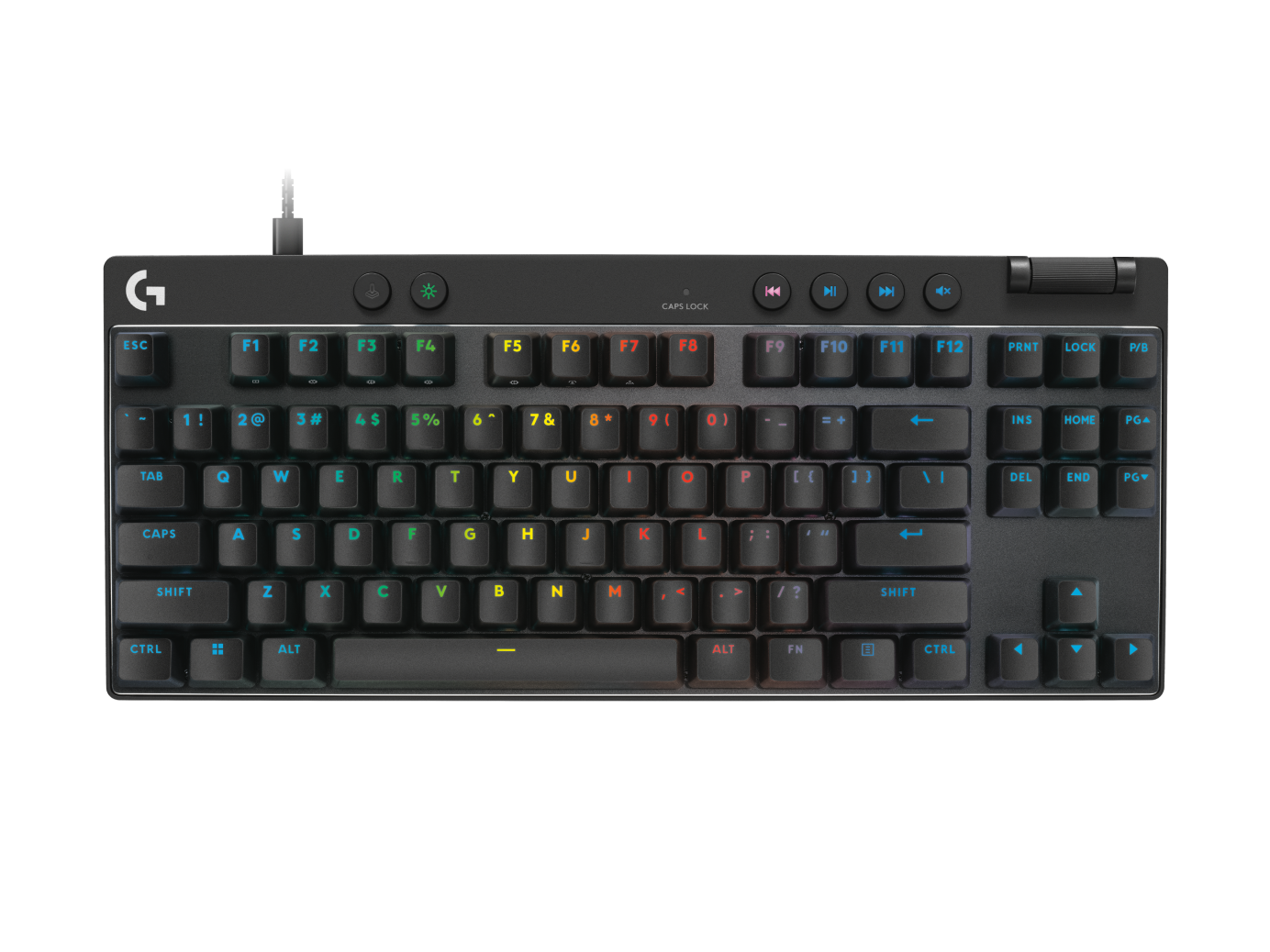
Score: 8.5/10 — read the full G Pro X TKL Rapid review
Logitech's magnetic-analog answer to the hall effect wave: adjustable actuation, rapid trigger, and the tournament-grade wireless reliability and software ecosystem that only the big peripheral brands can guarantee. At $159.99 it carries a brand premium over the enthusiast alternatives, and our review dinged it slightly for exactly that — but if you want analog performance with mainstream warranty support, retail availability, and a config app that will still be maintained in five years, this is the one. The TKL layout is the correct esports default: arrows and F-row present, numpad gone.
5. EPOMAKER HE68 Lite — Best Budget Hall Effect

Score: 8.5/10 — read the full HE68 Lite review
Hall effect switches, rapid trigger, per-key actuation tuning, and a 65% layout for $39.99 — a sentence that would have been nonsense two years ago. Our review scored it 8.5, which is not "good for the price" padding; it is genuinely competitive with boards at triple the cost on input performance. The compromises are the expected ones: lighter case, humbler stabilizers, and software that works but does not spoil you. For a first magnetic-switch keyboard, a secondary competitive board, or anyone building a budget setup, it is the category's floor-raiser. Our budget hall effect roundup covers the rest of this fast-moving tier.
6. Keychron C3 Pro — Best Traditional Mechanical Under $50
Score: 8.5/10 — read the full Keychron C3 Pro review
Not every gaming keyboard needs analog tricks. The C3 Pro is a wired TKL with a sensible hot-swap-capable platform, QMK/VIA support, and the build sanity that made Keychron the default enthusiast recommendation — for $49.99. It scored 8.5 on the strength of fundamentals: feel, stabilizers, and software that lives in the browser instead of a vendor app. If you play slower-paced games, value typing feel over reset speed, or simply want a keyboard that is pleasant for everything, this is the under-$50 pick that doesn't feel like a compromise.
Honorable Mentions
- Razer Huntsman V3 HE TKL 8KHz (8.5, $139.99) — Razer's magnetic-switch TKL with 8K polling and Multi-Tap; the strongest Synapse-integrated analog option.
- NuPhy Air75 HE (8.8, $129.95) — the low-profile magnetic pick; laptop-feel key travel with full rapid trigger.
- MonsGeek M1 V5 TMR (8.5, $112.49) — TMR sensing at a mid price, 8K polling, and our review found it startlingly refined for the money.
- Corsair K65 PLUS Wireless (8.4, $129.99) — tri-mode wireless TKL with hot-swap; the mainstream-brand wireless value pick.
- Ajazz AK820 Pro (8.6, $58.64) — the budget gasket-mount darling; excellent typing feel for the price.
- Redragon K552 Kumara (8.0, $29.59) — the eternal ultra-budget mechanical; still fine, still cheap.
What to Avoid
No-name "hall effect" boards under $25. Real magnetic switches at legitimate rapid-trigger quality have a component cost floor; boards that claim the feature at impulse prices routinely ship inconsistent sensors and firmware that fakes analog behavior. The genuinely cheap good boards start around $40 — see the HE68 Lite above.
"Mechanical-feel" membrane keyboards. Marketing phrasing, not a technology. If the switches are not individually replaceable mechanical or magnetic units, it is a membrane board, and no gaming claim changes the input characteristics.
8K polling as a headline feature on cheap boards. High polling on unstable sensors, mushy stabilizers, and laggy firmware is wasted. Buy switch quality and firmware competence first; extra polling is a bonus that only matters when everything underneath it is already good.
Wireless-first budget boards. Where sub-$50 boards cut cost, radio and battery quality suffer first. At this tier, wired boards consistently deliver more keyboard for the money.
How We Evaluate
Every keyboard on this page has a full, scored review on GamepadSquire built from three inputs: verified spec sheets and manufacturer documentation; independent testing data and professional reviews from established outlets; and sustained community feedback from r/MechanicalKeyboards, r/WootingKB, and r/BudgetKeebs, weighted toward long-term ownership reports rather than launch-week excitement. Scores are on a 10-point scale against what each keyboard claims to be — a $40 board is scored against its tier, not against flagships. Prices are tracked and updated in our review pages, not frozen at launch MSRP.
FAQ
Are hall effect keyboards worth it for gaming in 2026? If you play fast, input-timing-heavy games — shooters, rhythm games, platform fighters — yes; rapid trigger and adjustable actuation are the most tangible keyboard upgrade of the decade. For MMOs, strategy games, and general typing, a good traditional mechanical board delivers 95% of the experience for less money.
What is rapid trigger, exactly? A keypress resets the instant you start releasing the key, at any point in the travel, instead of waiting for a fixed reset point. In practice it makes counter-strafing, bunny hopping, and feathered inputs faster and more repeatable. It is a magnetic-switch feature; standard mechanical switches cannot do it.
Is wireless fast enough for competitive gaming now? On the boards in this guide, yes — a 2.4 GHz dongle connection from a reputable manufacturer polls at full speed with negligible latency penalty. Bluetooth mode is the exception: it is for convenience and secondary devices, not competitive play.
Which layout should I get: 60%, TKL, or full-size? FPS players with small desks and big mouse sensitivities: 60–65%. Most gamers: TKL, which keeps arrows and F-row. Anyone who enters numbers all day for work: 96% or full-size. There is no competitive advantage to any layout — only ergonomics and desk space.
How much do I need to spend for a good gaming keyboard? The honest floor is about $40: the EPOMAKER HE68 Lite gets you genuine hall effect features there, and the Keychron C3 Pro covers traditional mechanical at $50. Below that, quality falls off sharply. Above $160, you are paying for polish, layout, and brand, not raw input performance.
Do pro players actually use these keyboards? Magnetic-switch boards — Wooting above all — are now standard in competitive FPS circles, and big-brand analog boards like the Logitech G Pro X TKL Rapid and Razer Huntsman V3 series are tournament-regular sights. The days of pros tolerating stock membrane boards are long over.
Verdict
The 2026 answer to "best gaming keyboard" is stratified by what you play. For most gamers, the Wooting 60HE at $154.99 is the best overall combination of input technology, software, and price we have reviewed at 9.2/10. If you want a fuller layout with the same analog DNA, the Wooting 80HE is the premium pick; if your keyboard also has to earn a living, the ROG Strix Scope II 96 Wireless is the do-everything value choice. Budget buyers have never had it better: $40 now buys real hall effect performance, and $50 buys a proper enthusiast mechanical. Whatever tier you shop, buy the switch technology that matches your games — that decision matters more than any brand on the case.
Related Guides
Buying Guide
Best Mechanical Keyboards 2026: The Complete Guide for Every Budget
The 2026 mechanical keyboard market mapped tier by tier: from the $37 Keychron C3 Pro and $42 EPOMAKER HE68 Lite to the Wooting 80HE and NuPhy WH80. RTINGS' top picks synthesized with Reddit community consensus, covering mechanical, Hall Effect, and TMR switches for every budget.
Buying Guide
Best Hall Effect Keyboards 2026: The Definitive All-Tier Roundup
Hall effect keyboards went from a $200 Wooting exclusive to a market that spans $42 to $400. This is the definitive all-tier roundup: the best budget, mid-range, and flagship magnetic boards of 2026, ranked by specs, lab data, pro adoption, and community feedback.
Buying Guide
Best Budget Hall Effect Keyboards Under $100 in 2026
Rapid trigger used to mean one thing: a $200 Wooting. In 2026 the sub-$100 tier delivers genuine hall effect gaming — 8K polling, rapid trigger, SOCD — for as little as $42. We rank the five budget magnetic boards worth buying.