Turtle Beach
Turtle Beach Command Series KB7 Review
Good
$199.99
Excellent hall-effect hardware and a genuinely useful 4.3-inch touchscreen, undermined by unstable Swarm II software and intermittent input glitches. Brilliant for streamers and patient early adopters - 7.5/10.
As an Amazon Associate we earn from qualifying purchases made through links for Turtle Beach Command Series KB7.
layout
Tenkeyless (TKL), modified - touchscreen replaces nav cluster
switch
Titan low-profile Hall Effect (linear, magnetic)
switch_lifecycle
100 million presses
actuation
Adjustable 0.1-3.2mm, per-key
Pros & Cons
Pros
- Genuinely useful 4.3-inch touchscreen: profiles, macros, system stats, app launchers, OBS/Streamlabs controls, and an on-screen numpad
- Titan low-profile Hall Effect switches feel superb: smooth, pre-lubed, exceptionally quiet, with per-key actuation from 0.1-3.2mm, Rapid Trigger, and ReacTap
- Premium construction: anodized aluminum top plate, double-shot PBT keycaps, illuminated translucent wrist rest
- True 8K polling (0.125ms) with 32MB onboard storage and five fully independent profiles
- Modular KP7 rails on both sides add a powered numpad/macro pad without a second USB connection
- On-the-fly control of actuation, Rapid Trigger, and macros from the display
Cons
- Swarm II software is the weak link: crashes, update loops, device-recognition failures, and settings resets are the most common complaint across reviews and owner feedback
- Intermittent ghost inputs, missed inputs, and repeat glitches reported by Tom's Hardware and multiple Amazon owners
- Switches are not hot-swappable, a conspicuous omission at $199.99
- Wired-only; the touchscreen's power draw rules out wireless
- RGB brightness is modest, the glossy screen attracts fingerprints, and the wrist rest has been reported to yellow
- No icon customization or plugin ecosystem for touchscreen macros
Overview
The Turtle Beach Command Series KB7 is the first mainstream gaming keyboard built around a touchscreen, and it is exactly as bold as that sounds. Where the navigation cluster normally sits on a tenkeyless board, Turtle Beach has installed a full 4.3-inch color touchscreen — a miniature command deck that can launch apps, trigger macros, monitor PC stats, control OBS streams, and even replace the number pad. Underneath sits the company's new Titan low-profile Hall Effect switch, a magnetic design with adjustable actuation down to 0.1mm, Rapid Trigger, and a 100-million-press lifespan. Add true 8K polling with 0.125ms latency, and the $199.99 KB7 (released May 2026 alongside the modular KP7 keypad and the cheaper, mechanical KB5) reads like the most ambitious keyboard Turtle Beach has ever shipped.
The launch buzz was immediate — few keyboards get covered by Tom's Hardware, TechRadar, PC Gamer, and a wave of enthusiast outlets within weeks of release. But the press consensus tells a two-part story. Every review praises the hardware: the aluminum construction, the quiet, buttery switch feel, and a touchscreen that genuinely earns its place rather than serving as a gimmick. And nearly every review lands on the same complaint in the same breath: the Swarm II software that powers the whole experience is unstable, buggy, and, in the words of more than one outlet, at times broken. The KB7 is a premium product with a firmware asterisk — which makes it a fascinating recommendation and a genuinely tricky one.
Build Quality and Design
The KB7 looks and feels like a flagship. An anodized aluminum top plate sits over a plastic chassis, with a brushed finish that PC Gamer compared to a weapon skin and a copper-toned accent panel that several reviewers mistook for wood inlay. It measures 399 x 174 x 31mm and weighs 858g — or 1,120g with the wrist rest attached — which is light enough to feel portable but heavy enough to stay planted during aggressive play. The modified TKL layout keeps the full function row, arrows, and a top "action bar" housing a notched aluminum volume dial, two media keys, and four triangular quick-press keys pre-mapped to game mode, profile cycling, mic mute, and lighting toggle (all remappable). The volume dial feels premium; the four shortcut keys drew mild criticism from Tom's Hardware for cheap, plasticky feedback.
The bundled wrist rest is a highlight. It is translucent silicone that clicks into the base and diffuses the board's RGB into a soft under-glow — a cohesive effect that drew consistent praise. It is not the plushest rest on the market, but it provides a gentle slope onto the low-profile board, and the double kickstand offers 5 and 7 degree typing angles. The included extras are generous for the price: a 1.8m braided USB-C cable, a USB-C to dual-USB-A splitter (the board draws enough power to want two ports), four textured WASD keycaps, and a keycap puller. A USB-A passthrough port sits beside the USB-C connection.
Two build notes from owner feedback are worth flagging. The glossy touchscreen is a fingerprint magnet that needs regular wiping, and some Amazon owners report the silicone wrist rest yellowing within weeks of use. More significantly, the KP7 keypad ($99.99) attaches via rails on either side of the board, drawing power and data without a second cable. Reviewers love the modular concept — it works on either side for left-handed users — but several note the attachment can feel slightly flimsy and can alter the board's balance enough to make it wobble during heavy input. It is a dock, not a seamless extension.
Key Features
- 4.3-inch Command Touch Display. The headline feature. It holds up to three swipeable pages of a 3x4 button grid (roughly 36 shortcuts), plus fixed system buttons for home, profiles, and a settings menu. From the screen you can adjust actuation, toggle Rapid Trigger and ReacTap, record macros, remap keys, and control brightness — no software needed for the basics.
- Titan low-profile Hall Effect switches. Linear magnetic switches with adjustable actuation from 0.1mm to 3.2mm per key, a 100-million-press lifecycle, and pre-lubed stems. They are exceptionally quiet — MP1st called it one of the quietest boards they had used, quiet enough for late-night typing.
- Rapid Trigger and ReacTap. Rapid Trigger re-fires a key on the tiniest upward movement for faster repeat inputs; ReacTap enables SOCD-style simultaneous-opposite-cardinal-direction handling. Multi-input is supported, though analog and multi-point input were not available at launch.
- True 8K polling. 8,000Hz polling with 0.125ms latency, wired-only, driven by dual-core ARM Cortex M3/M4 processors.
- Onboard memory. 32MB of storage holds five fully independent profiles — each with its own key mappings, actuation, RGB, and touchscreen layout — with auto-switching per application and profile import/export.
- Streamer integrations. Native OBS and Streamlabs shortcuts, plus Discord, Counter-Strike, Spotify, Steam, and Teams options, and a dedicated volume mixer.
- Modular KP7 ecosystem. Dual rails on both sides accept the KP7 keypad, which adds a numpad, four macro keys, F13-F15, an extendable thumb bar, and a programmable scroll wheel.
Performance
The typing experience is the KB7's quiet triumph. The low-profile Hall Effect switches deliver a smooth, muted, pre-lubed feel that press reviewers consistently described as buttery, with a soft thock rather than a mechanical clack. Typists coming from full-travel mechanical boards report a day of adjustment to the flat, light double-shot PBT keycaps, but most acclimated quickly and praised the spacious layout for fast, accurate typing. The sound profile is a genuine feature: several reviewers noted it is quiet enough for shared rooms and late-night sessions.
Gaming performance, on paper, is elite. The 8K polling and 0.125ms latency sit at the top of the wired keyboard class, and community and press impressions of the switches themselves are uniformly positive — ImpulseGamer reported noticeably quicker strafe response in Rainbow Six Siege after dropping actuation to 1.2mm, and gstylemag highlighted immediate, precise movement in Marathon during extended sessions. The adjustable actuation genuinely changes how the board plays; competitive players who tune WASD to short actuation and the rest of the board to full travel get a hybrid that no fixed-switch keyboard can match.
But the KB7 has a reliability problem that no amount of feature polish excuses. Tom's Hardware, testing the board for its review, encountered ghost inputs, missed inputs, and repeat glitches — six separate interruptions while writing a single review — and Amazon owners describe the same signature: keys registering when not pressed, phantom auto-presses, and the occasional stuck-input burst that types on its own. Some of this is firmware, and Turtle Beach shipped multiple updates through the launch window (NotebookCheck counted six Swarm II updates and three keyboard firmware updates during its testing, which resolved a substantial share of early issues). But the reports persist into July and August listings, and a 3.2-out-of-5 Amazon rating built mostly on software and input complaints is a hard signal. For a board explicitly aimed at competitive players, intermittent phantom input is the single most damaging flaw a keyboard can have.
The touchscreen itself performed well in testing once configured: responsive, accurate, and reliable in normal use. Tom's Hardware noted it worked as expected roughly 85% of the time — the failures tracking Swarm II rather than the panel — and PC Gamer, the most software-tolerant reviewer, found it dependable after setup and admitted struggling to live without it by the end of the review. The screen's real limitation is depth: macro icons cannot be customized (they all read "New Macro"), there is no plugin ecosystem, and the widget set is thin next to an Elgato Stream Deck. For streamers it covers the essentials; for power users it is a starting point, not a destination.
Pros and Cons
Pros:
- The 4.3-inch touchscreen is genuinely useful — profiles, macros, system stats, app launchers, OBS/Streamlabs controls, and an on-screen numpad, all configurable without leaving the game
- Titan low-profile Hall Effect switches feel superb: smooth, pre-lubed, exceptionally quiet, with per-key actuation from 0.1-3.2mm, Rapid Trigger, and ReacTap
- Premium construction: anodized aluminum top plate, double-shot PBT keycaps, illuminated translucent wrist rest, and a quality braided cable setup
- True 8K polling (0.125ms) with 32MB onboard storage and five fully independent profiles
- Modular KP7 rails on both sides add a powered numpad/macro pad without a second USB connection
- On-the-fly control of actuation, Rapid Trigger, and macros from the display — no software required for core tuning
Cons:
- Swarm II software is the weak link: crashes, update loops, device-recognition failures, and settings resets are the single most common complaint across every professional review and most owner feedback
- Intermittent ghost inputs, missed inputs, and repeat glitches reported by Tom's Hardware and multiple Amazon owners — a serious flaw for a competitive-focused board
- Switches are not hot-swappable, a conspicuous omission at $199.99 when rivals at the price tier offer it
- Wired-only; the touchscreen's power draw rules out wireless operation
- RGB brightness is modest next to competitors, the glossy screen attracts fingerprints, and the wrist rest has been reported to yellow with use
- No icon customization or plugin ecosystem for touchscreen macros, limiting it next to dedicated Stream Deck hardware
Who Should Buy This
The KB7 is for streamers and creators first. If you run OBS, manage Discord, or live in a handful of apps, the touchscreen collapses a second device and a wall of hotkeys into one board — and the KP7 modular keypad makes the whole rig feel like a mixing desk. It is also a legitimate pick for latency-obsessed FPS players who will actually tune per-key actuation and Rapid Trigger, provided they accept the current firmware roulette. Casual gamers who just want a nice mechanical board should skip it: you are paying a $70-100 premium for a screen you will use twice, and you can get a superb hall-effect TKL with the same switches and none of the software baggage for less. Skip it, too, if you need wireless, if hot-swappable switches are a hard requirement, or if you want a board that works perfectly from the moment it leaves the box — this one, for now, needs a firmware patience fund.
Alternatives to Consider
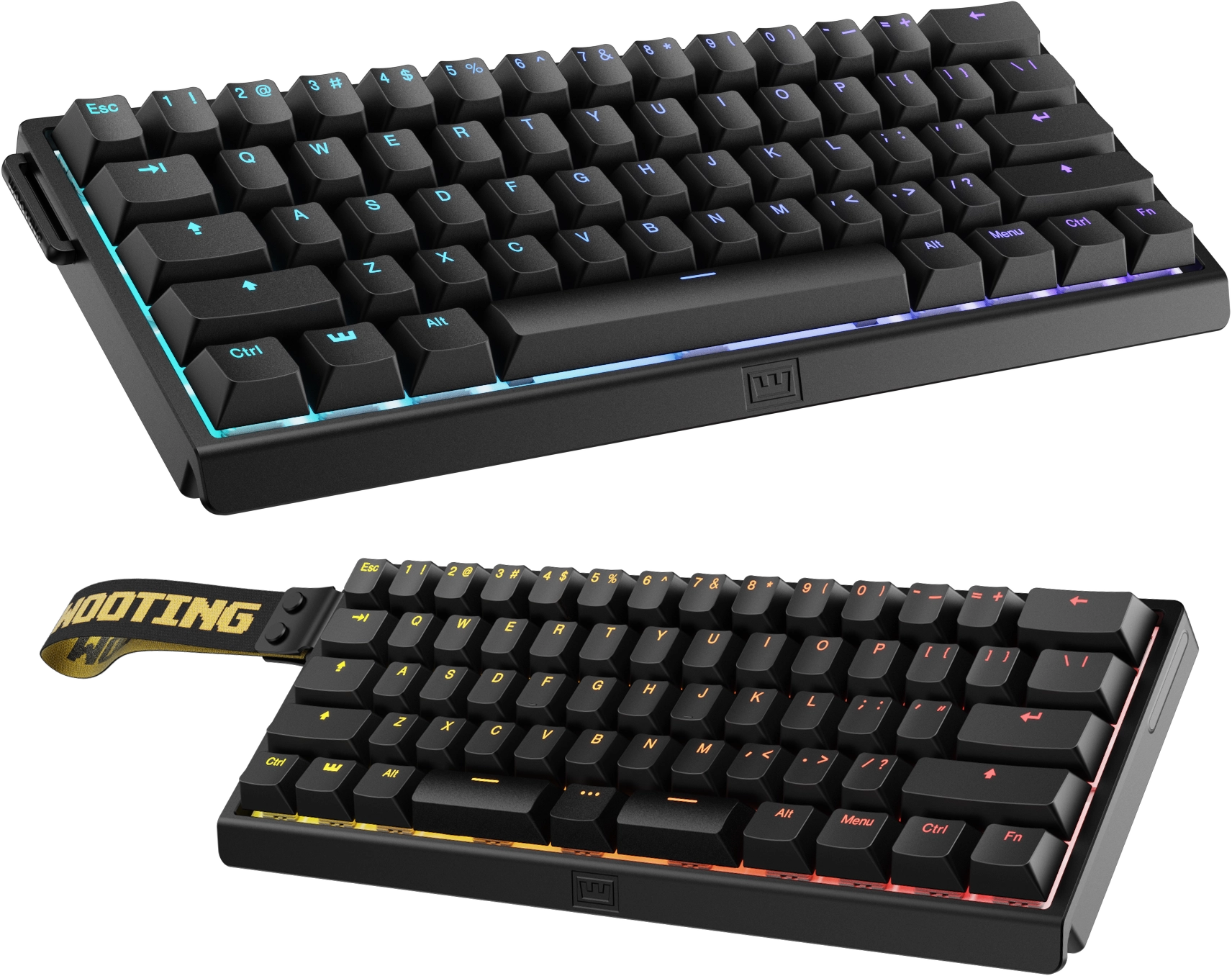
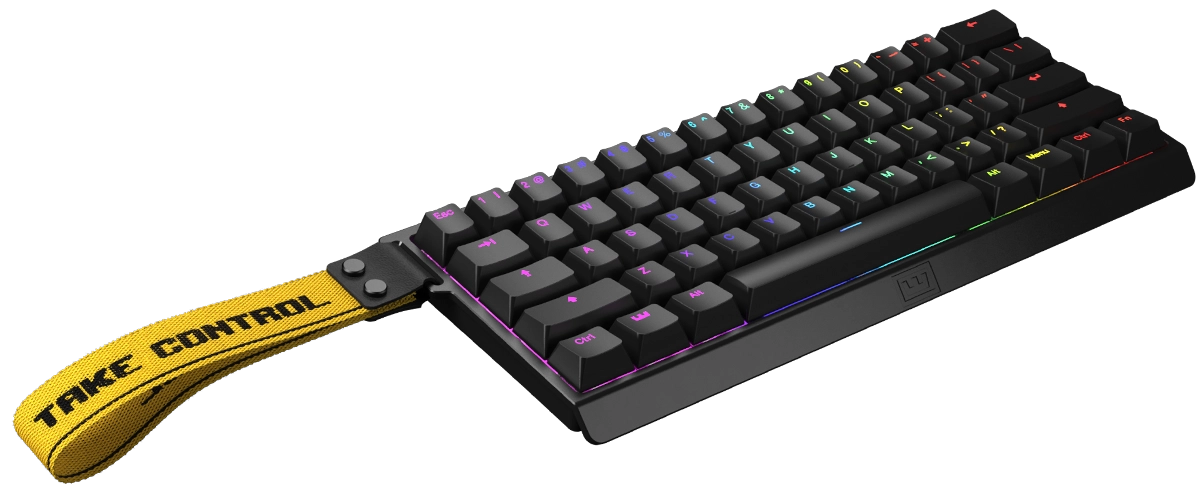
- Wooting 60HE ($188.99) — the hall-effect benchmark. Same adjustable actuation and Rapid Trigger DNA, plus true analog input and a famously polished web-based configurator. No screen, but a mature, stable software experience. The safe choice if the KB7's touchscreen does not matter to you.
- Keychron K2 HE ($139.99) — wireless magnetic-switch TKL at a significantly lower price, with a cleaner software story and the flexibility of Bluetooth/2.4GHz. The value pick for hall-effect converts who do not need a display.
- Corsair Galleon 100 SD — the closest direct rival: a touchscreen-equipped board with hot-swappable MLX switches and the far more mature iCUE/Elgato ecosystem behind it. Pricier than the KB7, but the software moat is real.
- SteelSeries Apex Pro TKL Wireless Gen 3 — if you want hall-effect performance with wireless freedom and top-tier build, SteelSeries' flagship OmniPoint board remains the reference, at a higher price.
Verdict
The Turtle Beach Command Series KB7 is one of the most exciting keyboards of 2026 and one of the most frustrating. The hardware is a genuine achievement — a beautiful, quiet, lightning-fast hall-effect board whose touchscreen stops being a gimmick about the time you realize you have not touched your Stream Deck in a week. The modular KP7 system is the smartest ecosystem play in the category, and at $199.99 the KB7 undercuts the touchscreen-equipped competition while out-building it. But the Swarm II software that the entire concept depends on is not ready, and the phantom-input reports that follow the board through its launch window are disqualifying for the competitive audience Turtle Beach is courting. The enthusiast press split accordingly — 9/10 at gstylemag and 85/100 from PC Gamer and COGconnected for the hardware, 3/5 at Tom's Hardware for the experience.
If the firmware matures the way NotebookCheck's testing suggests it can, the KB7 becomes an easy 8.5+ recommendation. Today, it is a brilliant product you buy with your eyes open: the touchscreen and build earn their keep, but you are an early adopter paying $199.99 to beta-test the software. 7.5/10 — Good, with a firmware-shaped ceiling.
What the Experts Say
Professional review consensus for this product
Full Specifications
| layout | Tenkeyless (TKL), modified - touchscreen replaces nav cluster |
|---|---|
| switch | Titan low-profile Hall Effect (linear, magnetic) |
| switch_lifecycle | 100 million presses |
| actuation | Adjustable 0.1-3.2mm, per-key |
| gaming_features | Rapid Trigger, ReacTap (SOCD), multi-input |
| polling_rate | 8000 Hz (8K) |
| latency | 0.125ms |
| display | 4.3-inch full-color touchscreen (Command Touch Display) |
| keycaps | Double-shot PBT, textured WASD extras included |
| construction | Anodized aluminum top plate, plastic chassis |
| dimensions | 399 x 174 x 31 mm |
| weight | 858g (without palm rest), 1120g (with) |
| connectivity | Wired USB-C (USB-C to dual USB-A splitter included) |
| ports | USB-A passthrough |
| onboard_memory | 32MB, 5 profiles |
| rollover | N-key, anti-ghosting |
| rgb | Per-key RGB + illuminated wrist rest |
| software | Swarm II (Windows 10+) |
| modular | Dual rails for KP7 keypad (either side) |
| price | $199.99 MSRP |
| release | May 2026 |
The Verdict: Good
Excellent hall-effect hardware and a genuinely useful 4.3-inch touchscreen, undermined by unstable Swarm II software and intermittent input glitches. Brilliant for streamers and patient early adopters - 7.5/10.
— GamepadSquire, August 2026
As an Amazon Associate we earn from qualifying purchases made through links for Turtle Beach Command Series KB7.
Related Buying Guide
Buying Guide
Best Mechanical Keyboards 2026: The Complete Guide for Every Budget
The 2026 mechanical keyboard market mapped tier by tier: from the $37 Keychron C3 Pro and $42 EPOMAKER HE68 Lite to the Wooting 80HE and NuPhy WH80. RTINGS' top picks synthesized with Reddit community consensus, covering mechanical, Hall Effect, and TMR switches for every budget.
Buying Guide
Best Hall Effect Keyboards 2026: The Definitive All-Tier Roundup
Hall effect keyboards went from a $200 Wooting exclusive to a market that spans $42 to $400. This is the definitive all-tier roundup: the best budget, mid-range, and flagship magnetic boards of 2026, ranked by specs, lab data, pro adoption, and community feedback.