HyperX
HyperX Cloud Alpha Wireless Review
Good
$108.95
Category-defining 300-hour battery life and top-tier comfort make the Cloud Alpha Wireless the best wireless headset bargain at ~$120 — if you are a PC or PlayStation gamer who can live with dongle-only connectivity and its reliability reports.
As an Amazon Associate we earn from qualifying purchases made through links for HyperX Cloud Alpha Wireless.
connectivity
2.4GHz wireless dongle (USB-A), no Bluetooth, no wired
driver
50mm dual-chamber
battery
300h claimed, 327h measured (SoundGuys)
weight
322-337g
Pros & Cons
Pros
- Battery life that measures beyond the 300-hour claim (327 hours in independent testing); owners charge roughly once a month
- Outstanding comfort — plush memory foam, moderate clamp, ~330g weight suits marathon sessions and glasses wearers
- Sturdy aluminum frame and premium materials that feel more expensive than the street price
- Punchy, distortion-free dual-chamber sound with a useful DTS Headphone:X spatial mode on PC
- Simple onboard controls and a detachable boom mic with visible mute indicator
- Excellent value at $119-130, nearly 40% below launch price
Cons
- No Bluetooth, no 3.5mm jack, no wired fallback — 2.4GHz dongle only, so PC/PlayStation devices only
- Reliability concerns: a persistent minority report units that stop charging, refuse to power on, or crack at the hinge joints within a year
- Wireless range is shorter than the older Cloud II Wireless; some owners report dropouts or disconnect loops
- NGENUITY companion app is spotty and some users report audio latency with its features enabled
- Microphone quality is inconsistent across owner experiences despite strong press results
- Scooped midrange default tuning sounds best only after EQ adjustment in the Windows app
Overview
The HyperX Cloud Alpha Wireless is the wireless version of the Cloud Alpha, the wired headset that quietly became one of the most common sights on Twitch streams and in esports team photos after its 2017 debut. Released in 2022, it takes the familiar black-and-red Cloud shell and removes the cable, and then does something no wireless headset had done before: it promises 300 hours of battery life on a single charge. That is roughly twelve days of continuous playback, and more than ten times the endurance of typical wireless gaming headsets of its generation, which hovered in the 20-30 hour range.
Four years on, the Cloud Alpha Wireless remains the benchmark for battery life in gaming audio, and it has aged into a remarkably good value. The $199.99 launch price has settled to roughly $119-130 at most retailers, frequently dipping to $120 or below during sale events. For that money, buyers get a comfortable, aluminum-framed headset with 50mm dual-chamber drivers, DTS Headphone:X spatial audio, and a detachable noise-cancelling boom mic. The catch is connectivity: this is a 2.4GHz USB dongle headset, full stop. There is no Bluetooth, no 3.5mm jack, no wired fallback of any kind, which makes it effectively a PC-and-PlayStation peripheral.
The core question for any potential buyer is whether that single-minded design, massive battery, PC-first connectivity, no compromises for other platforms, is worth the trade-offs. Based on the weight of community feedback and professional testing, the answer is a qualified yes for PC gamers, with some important caveats around reliability that have grown louder as these headsets age.
Build Quality and Design
The Cloud Alpha Wireless carries over the design language that made the wired Cloud Alpha a classic: matte black ear cups with red stitching, red aluminum struts connecting the cups to the headband, and plush memory foam earpads wrapped in leatherette. It weighs roughly 322-337 grams depending on whether the mic is attached, which puts it on the lighter end of premium wireless gaming headsets, notably lighter than the Razer Kraken V3 Pro and competitive with the SteelSeries Arctis lineup.
The aluminum frame is the standout structural feature. The headband is a solid metal band with an adjustable, leatherette-padded inner strap that locks into position with a firm ratchet. Reviewers at PCMag and How-To Geek both described the frame as sturdy and well-constructed, and the How-To Geek review, which awarded the headset a 9/10 Editor's Choice, specifically praised the metal construction as "made to last." The ear cups swivel flat for storage, though the headset does not fold and ships without a carrying case.
Comfort is where this headset consistently earns praise across every source. The memory foam earpads are soft, generously sized, and clamp pressure is moderate, enough to stay put during movement, not enough to cause fatigue. Reddit users repeatedly describe it as one of the most comfortable headsets they have worn, including for glasses wearers and for marathon sessions. The leatherette does trap heat like any pleather pad, a minor complaint that applies to virtually every headset in this category.
That said, the long-term durability picture is more complicated than the initial build quality suggests. While the aluminum frame itself is rarely criticized, owner reports on Amazon and Reddit describe a pattern of plastic components, particularly around the hinge joints where the cups attach, becoming brittle and breaking after roughly a year of use. There are also scattered reports of the leatherette flaking after extended use. These reports are a persistent minority rather than the consensus, but they appear often enough across both Amazon's verified reviews and community threads that they deserve weight in the buying decision.
Key Features
- 300-hour battery life: The headline feature. HyperX advertises 300 hours at 50% volume, and independent testing at SoundGuys measured 327 hours and 27 minutes of continuous playback at 75dB, actually exceeding the claim. In practice, owners report charging this headset once every few weeks to once a month with daily use.
- 50mm dual-chamber drivers: HyperX's second-generation dual-chamber design separates the mids and highs from the bass in physically distinct chambers, reducing distortion between frequency ranges. It is the same driver philosophy that made the wired Cloud Alpha famous, refined for wireless.
- DTS Headphone:X spatial audio: A licensed virtual surround implementation accessible through the HyperX NGENUITY app on Windows. Community and press feedback indicates it works well for positional cues in competitive shooters, How-To Geek noted it made footstep and gunfire direction much easier to track in Overwatch and Halo Infinite, though it performs noticeably better with the app's Gaming EQ preset enabled.
- Detachable noise-cancelling boom mic: A flexible, detachable mic with an LED mute indicator. The noise-cancelling is of the software-filter variety, and opinions on the mic are sharply divided (more on that below).
- Onboard controls: A volume wheel on the right cup, plus power and mic-mute buttons and a USB-C charge port on the left. The controls are refreshingly simple, no multi-function button gymnastics required.
- HyperX NGENUITY companion app: Provides a 10-band EQ, presets, mic monitoring, battery level display, and firmware updates. Useful when it works, and occasionally frustrating when it doesn't.
Performance
Sound quality is this headset's second pillar after battery life. The dual-chamber drivers deliver a v-shaped sound profile with punchy, tactile bass and clear treble. PCMag praised its "powerful, crisp sound" and noted the bass response on test tracks was strong with no distortion even at high volume, while describing the overall signature as somewhat "scooped", mids sit back slightly in the default tuning, which is why HyperX ships a Balanced EQ preset in NGENUITY that lifts the midrange. RTINGS measured the profile as slightly v-shaped with accurate vocals and lead instruments, while flagging one quirk: the frequency response is prone to inconsistency depending on fit and seal, so repositioning the cups can noticeably change the sound.
In competitive gaming, the Cloud Alpha Wireless is well regarded but not class-leading. Reddit sentiment, which aggregates hundreds of community posts, rates it highly for general gaming and entertainment, but notes it is not the sharpest option for competitive spatial audio out of the box; the DTS implementation needs the Gaming EQ preset to deliver precise directional cues. This is consistent with PCMag's finding that the virtual surround was "more accurate and directional" with EQ enabled. For story-driven games and music, the headset is broadly considered excellent, with the dual-chamber design keeping busy mixes clear.
Wireless performance is a mixed bag. Latency over the 2.4GHz dongle is low enough for gaming, RTINGS classifies the dongle connection as suitable for gaming use. However, two recurring issues stand out in community reports. First, the wireless range is noticeably shorter than the older Cloud II Wireless: the most detailed long-term owner review on r/hardware measured roughly a 30% range reduction, with disconnects appearing at distances the older headset handled fine. Second, a subset of owners report intermittent no-audio dropouts and occasional disconnection loops, particularly at range. Amazon's aggregated review data confirms connectivity as one of the most common complaint categories, with some owners describing repeated DISCONNECTED/RECONNECTED cycling even at modest distances.
The NGENUITY software is the other recurring sore point. RTINGS noted user reports of high latency when app features are enabled, and SoundGuys described the app as "spotty," frequently requiring a computer restart to recognize the headset's drivers. These are firmware/software issues that have improved over time, but they remain part of the ownership experience.
Battery performance, by contrast, is unimpeachable. The 327-hour independent measurement stands as the best result ever recorded for a gaming headset by SoundGuys. Charging takes around three hours via USB-C, and the headset includes a battery LED that shifts color as charge depletes. Owners frequently describe a behavior that no other wireless headset encourages: forgetting the charger entirely.
Microphone: The mic is the most divisive element. PCMag called it excellent, clear, crisp, and free of laptop fan noise in recordings. How-To Geek likewise found it "reliably crystal-clear and distortion-free." RTINGS rates the boom mic's overall performance as very good, including in moderately noisy environments. Yet a substantial share of Amazon owners and Reddit users describe it as mediocre to poor, with complaints about it sounding muffled, distant, or "like gravel" to teammates. The split appears to correlate with software version and noise-filter behavior, some units/updates handle background noise by aggressively filtering the voice itself. Buyers who rely heavily on voice chat should plan to test the mic early in the return window, and serious streamers should budget for a separate microphone regardless.
Pros and Cons
Pros:
- Battery life that genuinely measures beyond the 300-hour claim, 327 hours in independent testing, and owners report charging once a month in practice. Nothing else in gaming audio comes close.
- Outstanding comfort: plush memory foam, moderate clamp, and a weight around 330g make marathon sessions painless, including for glasses wearers.
- Sturdy aluminum frame and premium materials that feel more expensive than the current street price.
- Punchy, distortion-free dual-chamber sound with a satisfying v-shaped tuning and a genuinely useful DTS spatial audio implementation on PC.
- Simple, intuitive onboard controls and a detachable boom mic with a visible mute indicator.
- Excellent value at $119-130, nearly 40% below its launch price with no feature cuts.
Cons:
- No Bluetooth, no 3.5mm jack, no wired fallback: the 2.4GHz dongle is the only connection option, so this is a PC/PlayStation device only. Xbox owners are out of luck, and phone use requires a dongle adapter.
- Reliability reports are the loudest long-term concern: a persistent minority describe units that stop charging, refuse to power on, or develop brittle plastic joints within the first year.
- Wireless range is shorter than the older Cloud II Wireless, and a subset of owners report intermittent dropouts or disconnect loops.
- The NGENUITY app is spotty, requiring restarts to recognize the headset, and some users report audio latency when its features are active.
- Microphone quality is inconsistent across owner experiences, ranging from excellent (per press testing) to poor (per a large share of owners).
- The default sound signature is scooped in the mids; it sounds best only after EQ adjustment, which is locked behind the Windows app.
- No carrying case, and the leatherette pads can get warm and are not replaceable without aftermarket parts.
Who Should Buy This
The Cloud Alpha Wireless is for PC gamers who want to stop thinking about charging their headset. If you game several hours a day, this is the only wireless headset on the market where the battery is genuinely a non-issue: you will charge it weekly at worst, monthly at best. It is also an excellent choice for anyone who wears a headset all day for work calls and gaming alike, and for PlayStation 5 owners who want a comfortable wireless option with long endurance (the headset works on PS4/PS5 in stereo and chat, though DTS spatial audio is PC-only).
Skip it if you need multi-platform flexibility: Xbox owners, Mac users, and anyone who wants Bluetooth for phone or Switch use should look elsewhere, because the dongle-only design simply will not serve you. Skip it if your top priority is competitive spatial audio precision out of the box, the DTS implementation requires app tweaking to shine. And if you plan to keep a headset for three-plus years, the durability reports warrant caution or a good extended warranty.
Alternatives to Consider
- HyperX Cloud III Wireless (~$130): HyperX's newer wireless flagship. It trades the Alpha's extreme battery (120 hours instead of 300) for a more balanced sound signature, USB-C convenience, and a refined design, and it adds multi-platform support in the Cloud III family lineup. The Alpha generally wins on sound character and battery; the Cloud III wins on polish. Both are reviewed on this site.
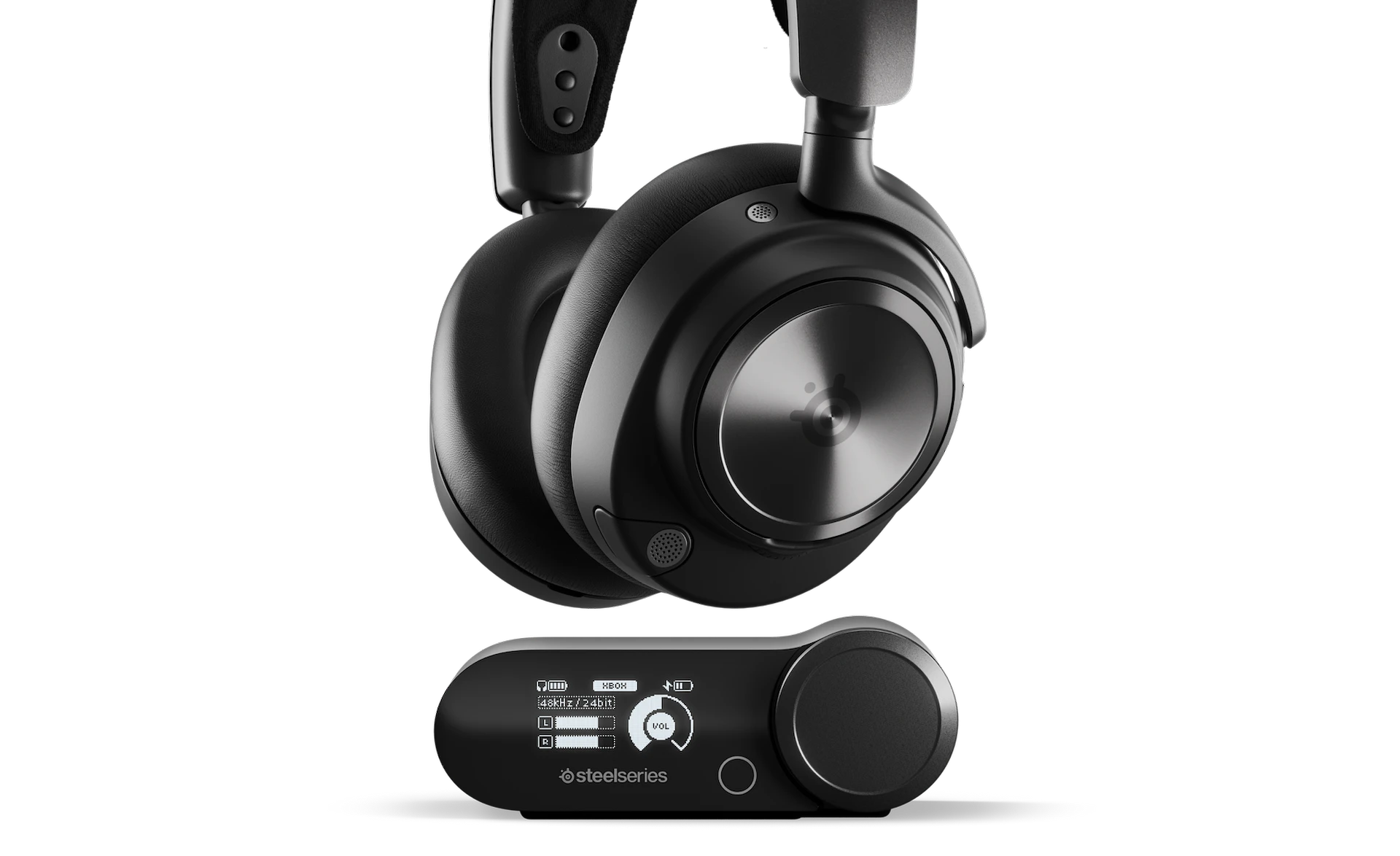
- SteelSeries Arctis Nova 7 Gen 2 (~$150-200): The most direct "do-everything" alternative. Simultaneous 2.4GHz and Bluetooth, so it works with PC, console, phone, and Switch, with the signature Arctis comfort. Battery life is roughly a tenth of the Alpha's, but the platform flexibility is unmatched in this price band.
- Razer BlackShark V3 Pro (~$180): A pricier premium option with a stronger competitive-audio reputation, better mic consistency, and a sleeker design. It cannot touch the Alpha's battery endurance and costs notably more.
Verdict
The HyperX Cloud Alpha Wireless is a category-defining product on one axis: battery life. No gaming headset before or since has delivered 300-plus hours of real-world endurance, and that single capability changes how you use a headset, you stop managing charge cycles and just play. It pairs that with the comfort and build quality that made the Cloud line famous, punchy dual-chamber sound, and a genuinely useful spatial audio implementation, all at a price that has fallen to roughly $119-130.
What keeps it from a higher score is the collection of compromises around that core. The dongle-only connectivity makes it a PC/PlayStation device when many rivals at the original price offered Bluetooth and wired fallbacks. The NGENUITY software remains finicky. And the reliability picture, a small but persistent stream of owners reporting dead units, charging failures, and brittle plastic within a year, is the most serious concern for long-term buyers. Press consensus is strong (How-To Geek 9/10, PCMag 4/5, RTINGS 7.5/10, SoundGuys 7/10), and owner sentiment is overwhelmingly positive on battery and comfort, but the durability reports are too frequent to ignore.
If you are a PC-first gamer who values comfort and never having to charge, this is still the best wireless headset bargain available at its current price, just buy it with an eye on warranty coverage and test the microphone early. 8.2/10
What the Experts Say
Professional review consensus for this product
Full Specifications
| connectivity | 2.4GHz wireless dongle (USB-A), no Bluetooth, no wired |
|---|---|
| driver | 50mm dual-chamber |
| battery | 300h claimed, 327h measured (SoundGuys) |
| weight | 322-337g |
| charge_time | ~3h via USB-C |
| spatial_audio | DTS Headphone:X (PC only) |
| platforms | PC, PS4, PS5 (stereo/chat on console) |
| mic | Detachable noise-cancelling boom |
| frame | Aluminum |
The Verdict: Good
Category-defining 300-hour battery life and top-tier comfort make the Cloud Alpha Wireless the best wireless headset bargain at ~$120 — if you are a PC or PlayStation gamer who can live with dongle-only connectivity and its reliability reports.
— GamepadSquire, August 2026
As an Amazon Associate we earn from qualifying purchases made through links for HyperX Cloud Alpha Wireless.
Related Buying Guide
Buying Guide
Best Gaming Headsets 2026: Buying Guide for Every Budget
From planar magnetic champs and open-back sleepers to budget wired bargains — what actually matters when buying a gaming headset in 2026.
Buying Guide
Best Wireless Gaming Headsets 2026: The Complete Guide for Every Budget
From the $62 dual-wireless budget champ to the $600 four-source flagship — every wireless gaming headset worth buying in 2026, tier by tier, with battery life, connectivity, ANC, and mic quality compared.