Best Steam Deck Accessories 2026: Docks, Cases, Storage & More
From docks that rival the official Valve station at a fraction of the price to microSD cards that double your library overnight — the Steam Deck accessories that actually matter in 2026.
By GamepadSquire — July 31, 2026Verified
What Actually Matters
The Steam Deck delivers an impressive out-of-box experience — Valve nailed the core hardware. But the right accessories transform it from a great handheld into a versatile gaming machine that docks to your TV, survives travel, and holds your entire library. After combing through thousands of user reviews, Reddit discussions, and professional testing, here are the accessories that genuinely make a difference in 2026.
The four essentials that solve real problems, in order of importance:
- A microSD card — the Deck fills up fast. This is the single biggest quality-of-life upgrade.
- A dock or USB-C hub — turns the Deck into a console for your TV or monitor.
- A power bank — doubles unplugged playtime for travel and long sessions.
- A case — protects your investment when it leaves the house.
Everything below has been vetted across community feedback, Amazon reviews, and multi-source testing data. Prices checked August 2026.
MicroSD Card: Expand Storage Without Surgery
The Steam Deck's internal storage fills up alarmingly fast. Modern AAA titles routinely hit 100GB+, and even indies stack up. A quality microSD card is the single most impactful accessory you can buy.
Pick: Samsung PRO Plus microSD
The Samsung PRO Plus is the near-universal community recommendation across r/SteamDeck, and for good reason. It delivers sequential read speeds up to 180MB/s and write speeds up to 130MB/s — fast enough that game load times from the microSD are indistinguishable from the internal SSD in real-world use. The A2 application performance class rating ensures snappy random read/write for game assets.
Available in 512GB and 1TB capacities. Pricing changed dramatically with the 2025-26 memory shortage: the 1TB model, which sold for $75-120 through 2024 and early 2025, now lists around $310 (it spiked past $350 in spring 2026), and the 512GB runs roughly $150-195. Check current listings before buying — at these prices the 512GB is the saner upgrade for most decks.

owners should note that while the OLED model's faster storage is nice, the Deck's microSD slot is still UHS-I, so speed differences between top-tier cards are minimal in practice. The Samsung PRO Plus and SanDisk Extreme are functionally identical in Deck usage — buy whichever is cheaper on the day.
What Reddit users say: The single most common piece of advice in every "what should I buy first" thread is microSD. Users consistently report the Samsung Pro Plus as the most reliable brand with the lowest failure rates. The only complaint is price volatility — the 1TB model jumped from $75 to nearly $200 during the 2025 NAND shortage and has kept climbing through 2026, where it now sits near $310.
Alternative: SanDisk Extreme 1TB — equivalent performance, similar pricing.
Dock: TV and Desktop Mode Made Easy
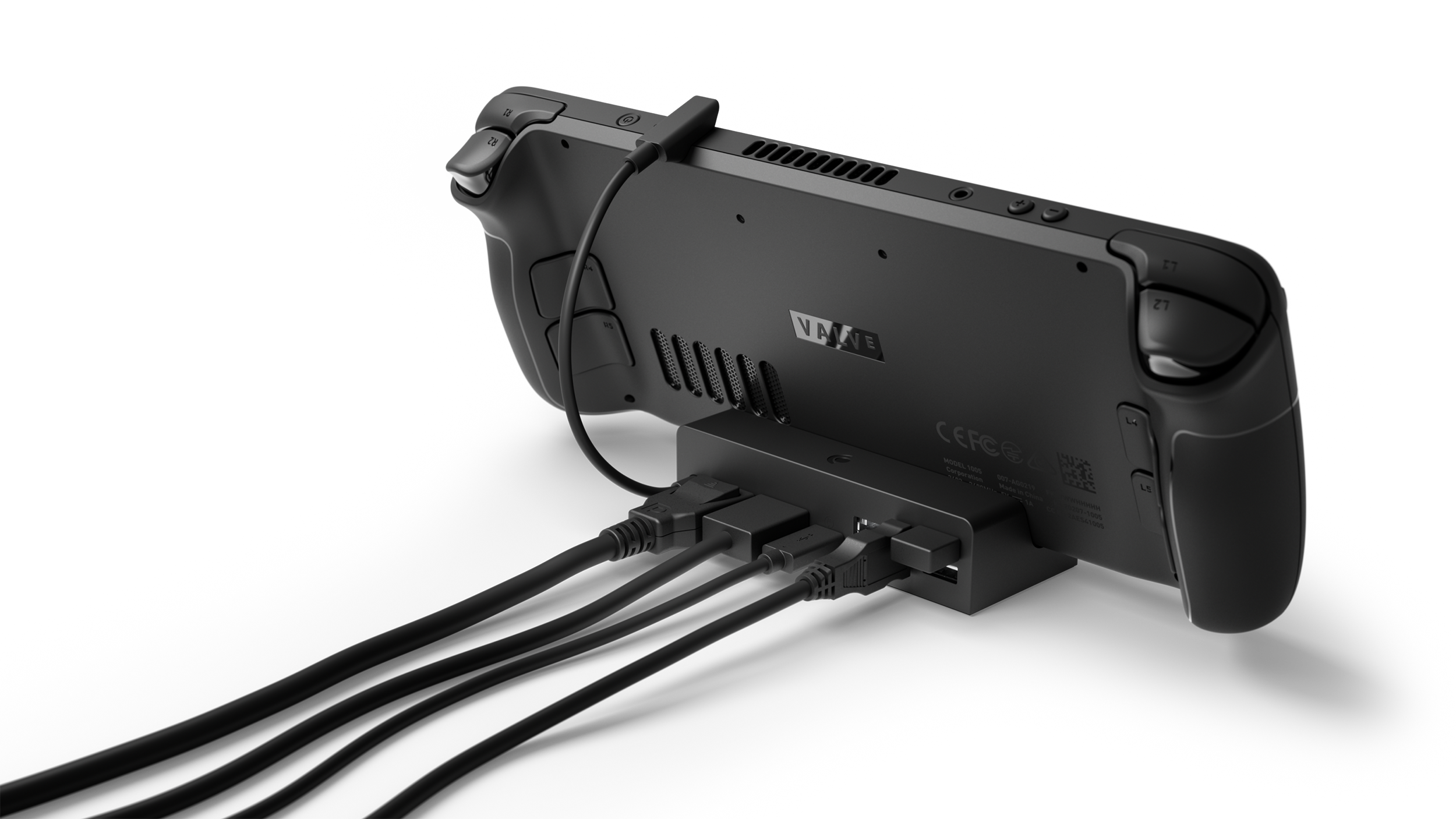
The Steam Deck's USB-C port does everything, but swapping cables is a pain. A dock gives you HDMI-out, USB ports, Ethernet, and passthrough charging in one tidy package.
Pick: JSAUX 6-in-1 Docking Station (HB0603)

The JSAUX HB0603 has become the default Steam Deck dock recommendation — and with 4,200+ Amazon reviews at 4.3 stars, it's earned the spot. It offers 4K@120Hz HDMI output, Gigabit Ethernet, 100W PD passthrough charging, and three USB 3.0 ports in a compact aluminum frame. The real kicker: it typically lists for around $30-45, compared to Valve's official dock at $89.
The build quality is notably good for the price point — solid aluminum body with rubber grips that prevent scratching your Deck. It's also wide enough to accommodate third-party cases on the Deck, which the official dock sometimes struggles with. The 6-in-1 variant (HB0603) improves on the earlier 5-in-1 (HB0602) with Gigabit Ethernet instead of 100Mbps and USB 3.0 instead of USB 2.0 — worth the small premium.
The catch: Reddit threads surface two recurring complaints. First, some users report audio crackling or dropouts lasting 3-10 seconds, particularly with USB audio devices connected. Second, there are sporadic reports of the dock failing after 6-12 months of use. Neither issue is widespread enough to knock it off the top spot — the 4.3-star average and sheer volume of positive feedback tell the real story — but they're worth knowing about.
Alternative: The official Valve Steam Deck Dock ($89) — more expensive with fewer ports, but offers the most reliable firmware compatibility and adds a DisplayPort output. No reported audio issues.
Alternative for expanded connectivity: Ugreen 9-in-1 Steam Deck Dock — adds microSD card reading and 4K@60Hz alongside similar core features, priced around $50-60.
Case: Protect Your Deck
The Steam Deck comes with a capable carry case, but many users find it bulky and lacking in organization. Third-party cases offer slimmer profiles, better pocket layout, and sometimes integrated stands.
Best Slim Option: tomtoc Slim Carrying Case

The tomtoc case is a r/SteamDeck darling with 4.8 stars from 440+ Amazon reviews. It's a semi-rigid hard shell made from German Bayer polycarbonate with a soft felt interior, priced around $30-40. The standout feature is how slim it is — significantly thinner than the official case while still providing genuine drop protection. It fits the Steam Deck OLED and LCD models equally well.
The exterior pocket comfortably holds the charger, a USB-C cable, and a microSD card holder. The case itself slides easily into a backpack without hogging space. Some users note the zipper feels a bit lightweight compared to the official case, but no widespread failure reports.
Best Modular Protection: JSAUX ModCase (PC0104)

For users who want protection during both travel and active play, the JSAUX ModCase offers a clever modular system. It's a back shell that stays on your Deck permanently, adding grip and impact protection, with an optional detachable front cover for travel. The integrated metal kickstand is surprisingly sturdy for tabletop play.
The modular slider on the back lets you attach JSAUX's ecosystem of add-ons, including a cooling fan — a genuine value-add not available in competing cases.
Amazon reviews average 4.6 stars across multiple listings. The main downside is added bulk when the front cover is attached, and the kickstand can loosen over time with heavy use. Priced around $25-35.
Best Premium: dbrand Killswitch

The dbrand Killswitch is the premium tier at roughly $60-70 (sold directly from dbrand, not Amazon). It uses a two-piece architecture: an adhesive-backed grip skin that wraps the Deck, plus a hard travel cover that snaps on over it. The travel cover claims over 100 lbs of crush protection. The ergonomic grip texture genuinely improves handling during long sessions.
The catch is the high price and limited availability — dbrand runs in batches that occasionally sell out. The adhesive skin is also a one-time installation; removing and reapplying degrades the grip. Community sentiment is positive but split on whether it's worth double the JSAUX ModCase price.
Best Value Grip: Skull & Co. GripCase SD

If comfort is the priority, the Skull & Co. GripCase SD is the value pick in the Deck protection category: a soft TPU shell with textured palm grips and a built-in 75-degree stand, priced at $26.99 list and routinely $17-22 on sale. It adds genuine grip where the stock backplate is slippery — the most common ergonomic complaint — for about a third of the price of the Killswitch. Two caveats: it adds roughly 130g of bulk to an already heavy handheld, and it doesn't seat fully in Valve's official dock, so owners tend to set the Deck upright in front of the dock and use its long cable instead. Note that Skull & Co. now does business as Savage Raven, but the GripCase SD line is unchanged under the rebrand.
Power Bank: Double Your Playtime
The Steam Deck gets roughly 2-8 hours of battery life depending on the game. A power bank effectively eliminates range anxiety.
Pick: Anker 737 Power Bank (PowerCore 24K)
The Anker 737 delivers 24,000mAh capacity with up to 140W USB-C PD output — enough to charge the Steam Deck at full speed (the Deck caps at 45W input) while also powering a laptop or phone. That capacity translates to roughly 1.5-2 full Steam Deck charges in practice.
The 737 features a convenient digital display showing remaining charge percentage and estimated charge time. It's TSA-friendly and roughly the size of a 12oz soda can — reasonable for its capacity. Anker backs it with a 24-month warranty, and Amazon reviews sit at 4.5 stars from thousands of ratings.
Priced around $90-110, with frequent sales down to roughly $85-90. The built-in USB-C cable variant (Anker Power Bank 20K with 87W output) is a slightly cheaper alternative at roughly $44-55, sacrificing some capacity and the display for a more integrated cable solution.
Best Value: JSAUX 20000mAh 65W Power Bank

The JSAUX 20000mAh 65W is the handheld-first value pick. Its 65W USB-C PD output covers the Deck's 45W charge-while-you-play requirement, its 20,000mAh cell delivers three full Deck recharges in our testing, it's flight-safe, and it straps into the ModCase ecosystem so it rides on the back of the console itself. It's frequently on sale around $46-60 (it has sold for as little as $45.99 on Amazon) — undercutting the Anker 737 by roughly half while covering everything a Deck owner actually needs. The trade-offs: the multi-port output is shared rather than independent, and the built-in cable is short, so budget a longer cable if you play in awkward positions.
What matters for Steam Deck: Look for a power bank that supports USB-C Power Delivery at 45W or higher. Lower-wattage banks will charge the Deck slower than it drains during gaming, only delaying the inevitable rather than actually charging it. The Anker 737 and similar 45W+ PD banks keep the Deck fully topped up even during intense gaming sessions.
Screen Protector: Cheap Insurance
A tempered glass screen protector is the easiest decision on this list. The Deck's screen is plastic and scratches more easily than modern phone glass. A $10-15 protector saves you from a $150+ screen replacement.
Pick: Ivoler Tempered Glass Screen Protector for Steam Deck
Consistently recommended across Reddit and Amazon (4.5+ stars, tens of thousands of reviews), Ivoler's kit comes with two protectors, an alignment frame, and cleaning supplies. The alignment frame is the key feature — it makes installation foolproof, which matters because the Deck's screen is slightly curved at the edges.
Two things to note: the protector reduces glare slightly less than the Deck's official anti-glare etched glass option (available on the 1TB OLED model — if you have that, you may not need a protector). And some users report slight rainbow effects at extreme viewing angles. Neither is a dealbreaker.
Alternative: Spigen GlasTR EZ Fit — similar quality and price, different alignment system.
Audio: Low-Latency Wireless Earbuds
The Deck's built-in speakers are serviceable, and Bluetooth earbuds work but introduce enough latency that lip-sync in cutscenes and footstep audio in competitive games suffer.
Pick: SteelSeries Arctis GameBuds
The Arctis GameBuds solve the latency problem with a tiny 2.4GHz USB-C dongle that plugs directly into the Deck's port — cutting Bluetooth's 150-300ms lag down to imperceptible sub-20ms latency. They offer active noise cancellation, a balanced sound profile with detail-rich mids, and physical button controls (better than touch controls that are easy to accidentally trigger on transit).
The charging case is small enough to slip into any pocket alongside the Deck. The main limitation is that the 2.4GHz dongle occupies the Deck's single USB-C port, meaning you can't charge and use them simultaneously without a dock or hub. RTINGS rates them as the best gaming earbuds of 2026 with a 8.4/10 overall score.
Priced around $130-160.
Alternative for budget: Any wired USB-C or 3.5mm earbuds — zero latency, zero battery anxiety, and a fraction of the price. The Panasonic ErgoFit wired earbuds are a common budget recommendation at under $15.
Thumbstick Grips: Better Grip, Longer Wear
The Deck's stock thumbsticks are functional but slick during long sessions, and some users find the short throw limiting.
Pick: PlayVital Thumbstick Grips or JSAUX Capacitive Grips
PlayVital grips add height and texture to the thumbsticks, improving precision aiming and reducing thumb fatigue. They come in a variety of colors and textures for roughly $8-10. Some users on r/SteamDeck report they transform the Deck's feel entirely.
The JSAUX capacitive grips preserve the Deck's gyro-aiming capability (which requires capacitive contact detection) while adding similar height and texture improvements.
The only real complaint: after 6-12 months of use, the grips can start slipping off during intense gameplay sessions, especially in humid conditions.
The Drift Fix: GuliKit Hall Effect Joysticks

If your sticks are already drifting — or you want to make sure they never will — the GuliKit Hall Effect modules are the definitive fix at about $30 a pair. They replace the Deck's wear-prone potentiometer sticks with contactless magnetic sensing, so the drift failure mode is designed out entirely, and the swap also lets you run tighter deadzones for snappier aiming. The OLED kit is a no-solder drop-in; the original LCD kits required soldering a single wire to preserve the stick caps' capacitive touch sensing, a step the newer LCD revision removes. Installation still means opening the Deck, but it's the rare upgrade that pays for itself in peace of mind.
SSD Upgrade: Maxed-Out Internal Storage
For users comfortable opening their Deck, an internal SSD swap provides the fastest possible storage — but it requires disassembly, a heat gun for the OLED model's adhesive, and some technical confidence. Valve recommends leaving repairs to professionals.
Pick: TeamGroup MP44S (M.2 2230)
The TeamGroup MP44S is available in 1TB and 2TB capacities in the compact 2230 form factor that the Steam Deck requires. It delivers PCIe 4.0 speeds up to 5,000MB/s read and 3,500MB/s write — well beyond what the Deck can fully utilize, but future-proof for any use beyond the Deck.
The practical benefit: internal SSDs are significantly faster than even the best microSD cards for large file transfers and OS responsiveness. The trade-off is cost — the MP44S 1TB has seen extreme price volatility, spiking from $75 to roughly $200 during the 2025-26 NAND price surge, though it has eased back to around $145-180 in mid-2026.
Only attempt this if you're comfortable with electronics repair. The OLED model in particular uses strong adhesive that requires careful heating and prying. Many users opt for the microSD route precisely because it's risk-free.
How to Choose: Priority by Use Case
I just bought a Steam Deck — what first?
- MicroSD card (Samsung PRO Plus). Nothing else comes close in impact-per-dollar.
- Screen protector (Ivoler). Cheap peace of mind.
- Carry case if you'll travel with it (tomtoc slim or JSAUX ModCase).
I play mostly docked on my TV
- Dock (JSAUX 6-in-1 or Valve official). This is non-negotiable for TV play.
- Controller (Xbox Wireless Controller — matches the Deck's button layout natively).
- Power bank if you also play undocked.
I travel frequently with my Deck
- tomtoc slim case — fits in bags the official case doesn't.
- Anker 737 power bank — doubles your play session.
- SteelSeries Arctis GameBuds — compact, low-latency audio for planes and trains.
I already have all the basics and want to optimize
- Thumbstick grips — cheap ergonomic upgrade.
- SSD upgrade — if you're technically inclined and need the speed.
- dbrand Killswitch — for the best (but priciest) protection and grip.
The Accessory to Skip
External cooling fans. The JSAUX cooling fan attaches via the ModCase mounting system and does reduce internal temperatures — testing data shows it drops CPU/GPU temps from 80°C to 72°C and cuts internal fan speed from 5400 to 4000 RPM. But the external fan's own noise largely negates the acoustic benefit, and the Deck's thermal system is already well-engineered for its design envelope. Unless you're consistently playing in hot environments or pushing the APU with sustained high loads, skip it.
Verdict
The best Steam Deck accessory stack in 2026 costs less than $200 total for the big three (microSD, dock, screen protector) and dramatically improves every aspect of the experience.
The one must-buy: Samsung PRO Plus microSD card. If you buy only one thing, make it this. Storage fills up faster than you expect, and a microSD is the only way to expand without opening the device.
The best value accessory: JSAUX 6-in-1 dock. It delivers 90% of what the Valve official dock offers for half the price, with more USB ports to boot.
The biggest luxury: SteelSeries Arctis GameBuds. Expensive for earbuds, but the 2.4GHz low-latency connection genuinely transforms the portable audio experience.
As the handheld PC market continues to evolve — with the ROG Ally X, Legion Go, and other competitors offering various trade-offs versus the Steam Deck — these accessories remain broadly compatible across platforms. USB-C is universal, and a good dock or power bank will serve you across multiple devices for years.
Related Guides
Buying Guide
Best PC Gaming Handhelds 2026: The Definitive Buyer's Guide
The 2026 handheld PC market explained tier by tier: Steam Deck OLED, ROG Xbox Ally X, Legion Go S, ROG Ally X, Legion Go, and MSI Claw 8 AI+ — with the new Z2 Extreme flagship, SteamOS off-Valve for the first time, and who each device is for.
Buying Guide
Best Nintendo Switch 2 Accessories 2026: Docks, Cases, Chargers & Screen Protectors
The Switch 2 accessory market is mature in 2026 — and full of compatibility traps. From the amFilm and dbrand screen protectors the press can't stop recommending, to the tomtoc case IGN gave Editor's Choice, to the JSAUX dock that beats the official one at half the price: the accessories that actually matter, and the mistakes to avoid.
Buying Guide
Best Controllers for Steam Deck 2026: The Definitive Buyer's Guide
The Steam Deck is the most controller-friendly handheld ever made — but the right pad depends on how Bluetooth, 2.4GHz dongles, gyro, and Steam Input actually behave on SteamOS. From the $29.99 8BitDo Ultimate 2C to Valve's own Steam Controller revival, every controller worth pairing with a Deck in 2026, ranked and explained.