Best Gaming Mice for FPS 2026: The Esports & Competitive Buyer's Guide
The competitive FPS mouse market decoded: what 1,600+ Valorant and CS2 pros actually use, what RTINGS' lab bench measures, and the real-world owner sentiment behind every pick — now including the solid-shell ASUS ROG Harpe II Ace and the $30 Razer Cobra as the cheap-wired pick, from the $35 VXE R1 Pro to the $180 Logitech Superstrike.
By GamepadSquire — August 5, 2026Verified
Best Gaming Mice for FPS 2026: The Esports & Competitive Buyer's Guide
FPS is where the mouse market's real arms race happens. Every other category tolerates compromise — a weight here, a mushy click there — but in Valorant and CS2, a single missed flick can end a round, and the people whose salaries depend on that fact are obsessive about their gear. The result is a market that moves fast: the mouse that dominated pro rosters two years ago is now the discount recommendation, and the current flagship generation is built around a feature set — haptic triggers, adjustable actuation, 8,000Hz polling — that didn't exist at flagship prices in 2024.
This guide answers one question: which mouse should a competitive FPS player actually buy in 2026? It's organized around competitive intent rather than weight classes, and it's triangulated from three sources: RTINGS' standardized lab bench (400+ mice tested, FPS list refreshed June 17, 2026), the pro gear database at ProSettings.net (tracking 679 Valorant and 931 CS2 professionals), and the consensus of thousands of owners across r/MouseReview and Amazon. Every mouse with a linked review has been covered in depth on this site; the rest are cited directly from the data.
Quick Picks
| Tier | Mouse | Weight | Price | Polling | Best For |
|---|---|---|---|---|---|
| Best overall | Razer Viper V4 Pro | 49g | $159.99 | 8,000Hz | The complete competitive flagship |
| Most used in CS2 | Logitech G Pro X Superlight 2 | 60g | $149.99 | 2,000Hz | The Counter-Strike default |
| RTINGS' #1 FPS pick | Logitech G Pro X2 Superstrike | 61g | $179.99 | 8,000Hz | HITS haptics + Rapid Trigger |
| Best ergonomic | Razer DeathAdder V4 Pro | 56g | $149.99 | 8,000Hz | Palm-grip CS2 players |
| Best pro-shaped flagship | ASUS ROG Harpe II Ace | 48g | $145.99 (street ~$100) | 8,000Hz | Solid-shell flagship, no vent holes |
| Best value | MCHOSE L7 Ultra / L7 Pro | 41–46g | $64.99 | 8,000Hz | Flagship-tier performance at half price |
| Best budget | VXE R1 Pro | 48g | $35–49 | 1,000Hz (4K dongle opt.) | The cheapest genuine esports mouse |
| Best cheap wired | Razer Cobra | 58g | $29.99 | 1,000Hz | Flagship-tier clicks for $30 |
| Best enthusiast wired | Endgame Gear OP1 8k v2 | 47g | $89.99 | 8,000Hz | The lowest physical click latency money can buy |
How We Picked
Every recommendation in this guide is triangulated from three independent sources. Lab data: RTINGS measures device-side click and sensor latency with a Beagle 480 USB analyzer, switch force with a Mecmesin force tester, and verifies every weight on their own scale — their FPS roundup was last refreshed in June 2026, when the Logitech G Pro X2 Superstrike replaced the Razer Viper V3 Pro as the top pick. Pro usage data: ProSettings.net tracks the actual mice of 679 professional Valorant players and 931 professional CS2 players, which tells you what people whose income depends on aim choose when they can have anything. Community feedback: r/MouseReview is the earliest warning system for QC issues, coating wear, and firmware problems in the entire peripheral industry.
The question this guide tries to answer for every mouse: what will annoy you about it six months after you buy it?
What Actually Matters for FPS (and What Doesn't)
Click latency is the #1 spec — and it's nearly a solved problem. RTINGS' measurements show the current flagship generation bunched within fractions of a millisecond over wireless: the Viper V4 Pro and the Superstrike differ by an average of 0.1ms in click latency, which the lab itself calls "far too small to be noticeable in-game." The only mice that open a real gap are the wired SPDT-switch specialists like the Endgame Gear OP1 8k v2, whose GX Speed mode registers clicks on contact release for a small but physical advantage — still measured in fractions of a millisecond.
Sensors are a solved problem. Every mouse on this list uses a flagship-class optical sensor (Focus Pro 50K, HERO 2, PAW3950, PAW3395) that tracks flawlessly with no acceleration or smoothing. RTINGS' motion latency tests confirm the differences are imperceptible in practice. If a 2026 mouse has a bad sensor, it's not on this list.
Weight matters up to a point. The 2026 consensus, backed by both pro usage data and community sentiment, is that 45–60g is the practical sweet spot for most players. Pros overwhelmingly choose the 50–60g band — it balances flick speed with stability — while mice under 40g trade structural integrity, battery life, and control for a gram number. The EsportsMice/ProSettings data is the proof: the two most-used mice in competitive play are 49g and 60g, not the lightest things available.
Polling rate is real but situational. 8,000Hz measurably lowers input latency versus 1,000Hz and RTINGS' tests confirm it, but it taxes your CPU and drains batteries — the Viper V4 Pro drops from 180 hours at 1,000Hz to roughly 45 at 8,000Hz. On a 240Hz+ monitor in a competitive shooter it earns its keep; at 144Hz it's largely imperceptible. Every 2026 flagship does 8K natively, but 1,000Hz is still fine for most players.
Shape is 80% of the decision. This is the most repeated piece of advice on r/MouseReview, and the pro data backs it up: pros don't all use the same shape — they use the shape that fits their hand and grip, then optimize everything else around it.
The Pro Landscape: What Valorant and CS2 Pros Actually Use
The pro data tells a fascinating story about how the two biggest tactical shooters diverged in 2026.
Valorant (679 pros tracked): The Razer Viper V4 Pro is the most-used mouse at 16.5% of players, with the previous-gen Viper V3 Pro right behind at 14.9%. Logitech's Superlight 2 holds 8.0% and the Superstrike 6.8%. Razer's Viper family combined accounts for nearly a third of the entire Valorant pro scene — a dominance that reflects the shape's versatility across grip styles and Razer's aggressive sponsorship of the competitive ecosystem.
CS2 (931 pros tracked): The picture flips. The Logitech G Pro X Superlight 2 leads at 18.1% of players — the single most-used mouse in either game — followed by the Razer DeathAdder V4 Pro at 11.4%, the Viper V3 Pro at 9.6%, and the Superstrike at 8.9%. CS2 pros skew older in their gear habits and more ergonomic in their shape choices: the DeathAdder's 11.4% share is the highest ergonomic-mouse adoption in any major esport, a reminder that palm-grip CS2 veterans are a huge and loyal market.
Two takeaways for buyers. First, pro usage is a signal, not a verdict — sponsorship deals and muscle memory keep older mice on rosters long after newer ones surpass them on paper. Second, the single most interesting value play in the market right now is the Razer Viper V3 Pro, still the second-most-used mouse across both games combined but now frequently discounted to $100–130 as the V4 Pro takes over — flagship-tier competitive performance at a mid-range price.
Best Overall: Razer Viper V4 Pro ($159.99, 49g)
The V4 Pro is the most complete competitive mouse on the market in 2026, and the data agrees across the board: it's the most-used mouse in Valorant (16.5% of pros), a 5/5 from ProSettings, and RTINGS' top upper mid-range FPS pick — a close runner-up to the pricier Superstrike that the lab says most players will prefer anyway.
At 49g (48.9g measured), it's lighter than both the Superstrike and the Superlight 2. The Focus Pro 50K Gen-3 sensor is among the most accurate RTINGS has ever tested, 8,000Hz polling works out of the box with no extra dongle purchase, and the 180-hour battery at 1,000Hz doubles the Superlight 2's endurance. It's optical-everything: Gen-4 optical switches rated for 100 million clicks and — notably — an optical scroll encoder, which replaces the mechanical encoder that has been a common failure point on Razer mice for years.
Owner sentiment is strongly positive, with the most common praise centered on the weight, battery life, and build quality. The recurring criticisms are the usual Razer optical trade-offs: clicks are very loud and tactile (audible in a quiet room, per both RTINGS and community reports), there's no Bluetooth — dongle or cable only — and at $159.99 it's firmly flagship-priced. A small minority of owners also report the shape runs low-profile for larger hands, so palm grippers with big hands should look at the DeathAdder V4 Pro below.

Most Used in CS2: Logitech G Pro X Superlight 2 ($149.99, 60g)
The Superlight 2 remains the shape benchmark of competitive gaming — the mouse that defined the modern esports category and still anchors 18.1% of CS2 pro rosters per ProSettings, more than any other mouse in any major title. At 60g with a HERO 2 sensor (32,000 DPI), 2,000Hz polling stock, a 95-hour battery, and LIGHTFORCE hybrid switches, it does nothing flashy and everything right. Its medium symmetrical shape is the most accommodating in the business — the reason so many players never need to try anything else.
It now faces genuine pressure from the V4 Pro, which is lighter, polls faster out of the box, lasts nearly twice as long at the same price, and — per RTINGS — the Superlight 2's stock feet glide less smoothly and the shell doesn't feel quite as sturdy as the Razer's. But the shape remains the safest bet in the category for players who don't know their grip type yet, and when it dips toward $120 on sale it's a no-brainer for CS2 specifically.
RTINGS' #1 FPS Pick: Logitech G Pro X2 Superstrike ($179.99, 61g)
The Superstrike is the most innovative mouse Logitech has shipped in a decade, and RTINGS' current #1 FPS mouse. It pairs the proven Superlight 2 platform (61g, HERO 2 up to 44,000 DPI, 8,000Hz wireless) with the Haptic Inductive Trigger System: magnetic haptic actuators that replace mechanical switches entirely, with adjustable actuation distance and Rapid Trigger — a feature borrowed from Hall effect keyboards that dynamically shortens the reset distance for faster follow-up inputs. In a tactical shooter, that's a click-timing specialist's tool.
The honest picture is more nuanced than the hype. RTINGS measured a small but real click-latency advantage at the lowest actuation settings, but those settings are easy to trigger unintentionally, and the haptic feedback — while precisely actuated — feels mushy compared to crisp mechanical or optical clicks. Reddit sentiment (60% positive) echoes the lab: owners love the innovation, battery life, and hot-swappable switches, but flag the price, small mushy side buttons, slippery coating, and the bloated G Hub software. At $179.99 it's the most expensive mouse on this list for a measurable-but-small edge that most players won't notice — the V4 Pro is the smarter buy for $20 less, and RTINGS itself notes the Superstrike "doesn't represent a meaningful performance leap for most players."

Best Ergonomic: Razer DeathAdder V4 Pro ($149.99, 56g)
The iconic DeathAdder shape — the most copied ergonomic design in gaming — finally went ultralight, and CS2's pro scene noticed: at 11.4% of tracked players, it's the most-used ergonomic mouse in esports. At 56g with a Focus Pro 45K Gen-2 sensor, true 8,000Hz wired and wireless, 150 hours at 1,000Hz, and optical-everything internals, it's the most complete ergonomic esports mouse ever made.
Community sentiment praises the build quality, coating, and shape comfort above all — this is the palm-grip pick for medium-to-large hands. The consistent criticisms are the loud optical clicks (a Razer family trait that some owners genuinely can't stand), the stock feet, and the price: $149.99 for a strictly right-handed mouse competing with symmetrical ultralights at the same money. If you palm-grip and game for hours, the shape comfort justifies the premium; if you claw or fingertip, the Viper line is the better fit.

Best Pro-Shaped Flagship: ASUS ROG Harpe II Ace ($145.99, 48g)
The newest 9/10 flagship in our catalog answers a specific complaint about the ultralight generation: solid shells. At 48g with no ventilation cutouts, the bio-based nylon body stays creak-free under pressure where open-shell rivals flex — proof that you don't need holes to hit flagship weight. The pro-developed semi-symmetrical shape is tuned with esports players and stabilizes claw and fingertip grips beautifully, the ROG AimPoint Pro sensor tracks to 42,000 DPI, and 8,000Hz polling works natively in both wired and wireless modes — no accessory dongle required.
The click feel deserves special mention: ROG's optical switches are among the crispest in the category, and the scroll wheel is genuinely excellent, a rarity in 2026's ultralight class. The trade-offs are battery and software ergonomics: 8K wireless polling cuts endurance to roughly 40 hours (over 100 at 1,000Hz), the DPI switch lives on the underside where you can't reach it mid-match, and settings live in ASUS's web app. At the $169.99 MSRP it's a tough sell against the Viper V4 Pro — but with street prices already dipping to around $100, it becomes one of the best flagship deals in the category.

Best Value: MCHOSE L7 Ultra → L7 Pro ($64.99, 41–46g)
The most important mouse of 2026 that most gamers haven't heard of. RTINGS named the MCHOSE L7 Pro its best lower mid-range FPS mouse — 40.7g, a PAW3950 sensor up to 42,000 DPI, true 8,000Hz wireless out of the box, and tri-mode connectivity, at roughly 40% of the flagship price. (Note: RTINGS discontinued the L7 Ultra, which this site reviewed, in April 2026 and replaced it with the L7 Pro — the Pro is the current model to buy.)
The honest picture: the shell is thin and flexes under moderate pressure, the dyed PTFE feet glide less smoothly than premium skates, the shape skews small (great for small-to-medium hands with claw or fingertip grip, restrictive for large hands), and the one-year warranty is shorter than the two-year coverage from Razer and Logitech, with mixed customer-service reports in community threads. But if you want flagship-tier FPS performance without the flagship price, this is the pick — RTINGS' testing shows near-identical raw performance to the $160 flagships.

Best Budget: VXE R1 Pro ($35–49, 48g)
The R1 Pro is the poster child of the Chinese ultralight wave and RTINGS' best cheap lightweight mouse — 48g, a PAW3395 sensor (the same flagship-class component found in $100+ mice), and wireless performance that the lab says approaches the Viper V4 Pro. r/MouseReview threads call the price "almost criminal" for what it delivers, and it's a common recommendation for budget students and Faceit-level grinders.
The downsides are the class's usual ones: the smaller 250mAh battery (75 hours rated) can't match the 150–180 hours of the flagships, the stock 1,000Hz polling needs the optional 4K dongle to go higher, the stock skates are mediocre, and availability can be inconsistent outside Asia — it's most reliably bought direct from ATK or via AliExpress and MaxGaming. At $35 direct from ATK or AliExpress — US retail stock runs closer to the $49 tracked price — the risk is easy to absorb.
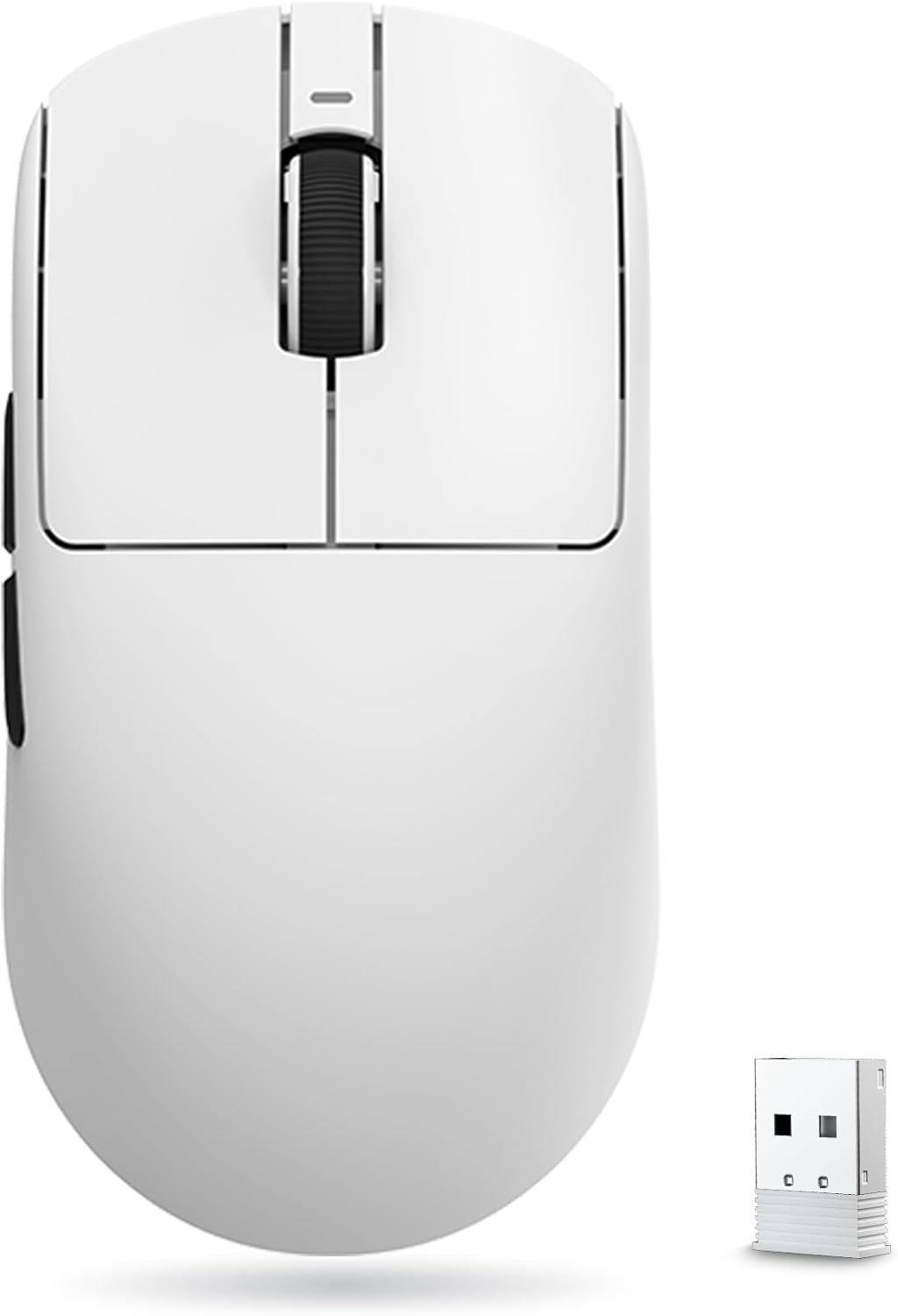
Best Cheap Wired: Razer Cobra ($29.99, 58g)
The Cobra replaced the Logitech G203 as our cheap wired pick for one simple reason: it's a real esports mouse for $30. Our review measured 0.9ms click latency — flagship-tier responsiveness, in the same league as mice costing five times as much — in a genuine 58g ultralight shell with pure PTFE feet that glide like a mini esports mouse. Gen-3 optical switches rated for 90 million clicks all but eliminate the double-click failures that plague budget mechanical mice, and the proven compact-egg shape fits most grips. Best Buy, Staples, and Walmart all carry it at $29.99.
The honest caveats: the 8,500 DPI sensor ceiling is modest, with some CPI deviation at high steps; there's minor shell flex in the side panels; and the scroll wheel encoder is the recurring reliability complaint — a minority of owners report wheel failures within months. At $29.99 street, the G203 no longer undercuts it, and the Cobra is 27 grams lighter with dramatically better clicks. The G203 remains a fine $30 starter for absolute beginners (see Notable Mentions), but for ranked play the Cobra is the pick.

Enthusiast Corner: Endgame Gear OP1 8k v2 ($89.99, 47g, wired)
For latency purists, the OP1 8k v2 is the only mouse on the market that beats the wireless flagships on paper. It's wired-only — which is the point, because it eliminates wireless overhead entirely — with a PAW3950 sensor, a Nuvoton MCU, and Kailh GX SPDT switches whose GX Speed mode registers clicks on contact release. RTINGS measured a small but very real physical latency advantage over even the Superstrike. The v2 also fixed the V1's notorious scroll encoder with a more robust Kailh dustproof unit.
The trade-offs are real: it's a narrow, low-profile shape built for claw and fingertip grips (palm grippers need not apply), it's wired in an era of excellent wireless, and it's pricey for a wired mouse. But it's a favorite in r/MouseReview for a reason — the community consensus is that it's the most "honest" competitive mouse you can buy.
Notable Mentions Worth Knowing
- Lamzu Maya X ($121.99, 47g): The flagship-value play — a PAW3950 and Omron optical switches in a full medium-large shell at $40 under the big-brand flagships, with the 8K dongle in the box. Our 9/10 pick for medium-to-large hands if the Viper V4 Pro is out of budget; battery life (~60–70 hours) trails the tier.

- Hitscan Hyperlight ($89.99, 39g): A 9/10 sub-40g shell with elite RTINGS-verified click latency and build quality that shames mice twice the price — the claw/fingertip pick for small-to-medium hands, if you accept the older PAW3395 sensor and a $24.99 dongle for 8K.

- Razer Viper V3 Pro ($119.99 tracked, 54g): The previous flagship, still 14.9% of Valorant and 9.6% of CS2 pros — now tracked below its successor's price and frequently dipping to $100, at which point it's one of the best performance-per-dollar wireless mice available.

- Pulsar X2 CrazyLight ($97, 35–39g): The sub-40g specialist — incredible in aim trainers and tactical shooters, but the 65-hour battery and open chassis mean weekly charging and dust management. Buy it for the weight, not for daily-driver duty.

- Glorious Model O 2 ($39.99, 59g, wired): The best budget wired lightweight — paracord cable, PTFE skates, zero battery anxiety, caps at 1,000Hz.

- Logitech G203 LIGHTSYNC ($30.95, 85g, wired): The former cheap-wired default — good clicks and build for the money, but 85g and a sensor that spins out at high-speed flicks make the Cobra the better competitive pick at the same price.

- Keychron M3 Mini (~$30 on sale, 57g): RTINGS' budget FPS pick — a PAW3395 in a small Viper-like shape with dual USB-A/USB-C receivers, slightly scratchy feet and mushy buttons.
- Scyrox V8 (~$70): Among the best-performing mice RTINGS has tested at a fraction of flagship cost, but the small shape is claw-specific and the software experience is sketchy.
- WLmouse Beast X Max (~$160): Magnesium alloy, dramatically light, striking design — but small, cutout-heavy, and less comfortable to hold for extended sessions per RTINGS.
How to Choose Your FPS Mouse
Shape and grip first, always. Palm grippers with medium-to-large hands: the DeathAdder V4 Pro (ergonomic) or Superlight 2 (symmetrical). Claw and fingertip grippers have the widest selection — the Viper V4 Pro, Harpe II Ace, MCHOSE L7, VXE R1 Pro, and OP1 8k v2 all work, with smaller shapes favoring smaller hands. If you're unsure of your grip, the medium-hump symmetricals (Viper V4 Pro, Superlight 2) are the safest bets — they're the two most-used shapes in pro play precisely because they accommodate everyone.
Choose your click feel deliberately. Optical (Viper, DeathAdder) = loud, crisp, snappy, long-lasting. Mechanical hybrid (Superlight 2) = familiar, slightly softer. HITS haptic (Superstrike) = adjustable but mushy. SPDT speed mode (OP1) = the fastest, at the cost of being wired. Test a friend's mouse before committing if you can.
Match polling to your hardware. 8,000Hz earns its keep on a 240Hz+ monitor in competitive shooters; at 144Hz, 1,000–2,000Hz is fine and saves your battery and CPU. Every flagship on this list does 8K natively — the decision is about whether to enable it, not whether it's available.
Battery philosophy is a real spec. 150–180 hours (Viper V4 Pro, DeathAdder V4 Pro) means charging every couple of weeks; 65–95 hours (Superlight 2, X2 CrazyLight) means weekly; wired options like the OP1 and G203 eliminate the question entirely.
Warranty is the hidden differentiator. Razer and Logitech offer two years with established RMA processes; MCHOSE, VXE, and most Chinese brands offer one year with mixed support reports. At $35 that risk is trivial; at $150+ it's a real factor.
Mistakes to Avoid in 2026
- Buying the RTINGS #1 without checking the shape. The Superstrike is a great mouse, but if you don't want haptic clicks and a $180 price tag, the V4 Pro delivers nearly identical performance for less. The lab says so itself.
- Paying flagship prices for a mouse you'll use at 1,000Hz on a 144Hz monitor. The MCHOSE L7 at $65 delivers the same experience for most players.
- Ignoring the discounted previous generation. The Viper V3 Pro at $100–130 is one of the best value buys in the entire category right now.
- Chasing the lowest gram number. Sub-40g mice come with real costs — battery life, dust ingress, structural flex — and many owners report coming back to ~50g after a few months. The pro data agrees: the two most-used mice are 49g and 60g.
- Assuming pro usage equals "best for you." Sponsorships and muscle memory keep older mice on rosters. Use the pro data to build your shortlist, then choose by shape and feel.
Final Verdict
The 2026 FPS mouse market is the strongest it's ever been: flagship sensors and sub-60g weights are now table stakes from $35 up, and the performance gap between a $35 VXE R1 Pro and a $180 Superstrike is measured in fractions of a millisecond that most players will never perceive. The real differentiation is shape, click feel, software, and support — which is why the pro data is so valuable.
Our recommendations by use case:
- Best overall: Razer Viper V4 Pro — read the review
- CS2 default: Logitech G Pro X Superlight 2 — read the review
- RTINGS' #1 / haptics enthusiast: Logitech G Pro X2 Superstrike — read the review
- Best ergonomic: Razer DeathAdder V4 Pro — read the review
- Best pro-shaped flagship: ASUS ROG Harpe II Ace — read the review
- Best value: MCHOSE L7 Ultra / L7 Pro — read the review
- Best budget: VXE R1 Pro — read the review
- Best cheap wired: Razer Cobra — read the review
- Enthusiast wired: Endgame Gear OP1 8k v2
For the complete mouse market picture beyond the competitive tier — including general-purpose heavyweights and the sub-$30 budget class — see our Best Gaming Mice 2026 guide, the Best Lightweight Gaming Mice guide, and the Best Budget Gaming Mice Under $50 guide.
The rule for 2026 is simple: pick the shape that fits your hand, buy the best sensor you can afford within that shape, and stop reading spec sheets — then go win your ranked games.
Related Guides
Buying Guide
Best Gaming Mice 2026: The Complete Guide for Every Budget
The 2026 gaming mouse market explained tier by tier: RTINGS-lab-verified picks from the $25 G203 to the $180 haptic Superstrike, with the Viper V4 Pro, DeathAdder V4 Pro, the $35 VXE R1 Pro budget flagship-killer, and the Chinese mid-range revolution covered in depth.
Buying Guide
Best Lightweight Gaming Mice 2026: The Esports & FPS Buyer's Guide
The ultralight revolution explained: weight-class-by-weight-class picks from the 35g Pulsar X2 CrazyLight to the 60g Superlight 2, backed by RTINGS lab data and the gear choices of 2,100+ pro players.
Buying Guide
Best Ergonomic Gaming Mice 2026: Sculpted, Vertical & Wrist-Saving Picks
Shape — not DPI — is what saves wrists. The best ergonomic gaming mice of 2026: the sculpted MX Master 3S benchmark, the 57° MX Vertical for existing wrist pain, the ergo-shaped Superlight 2 DEX for competitive play, and the Keychron M6 8K big-hand value pick, plus the vertical landscape (Pro Click V2 Vertical, Logitech Lift) explained.