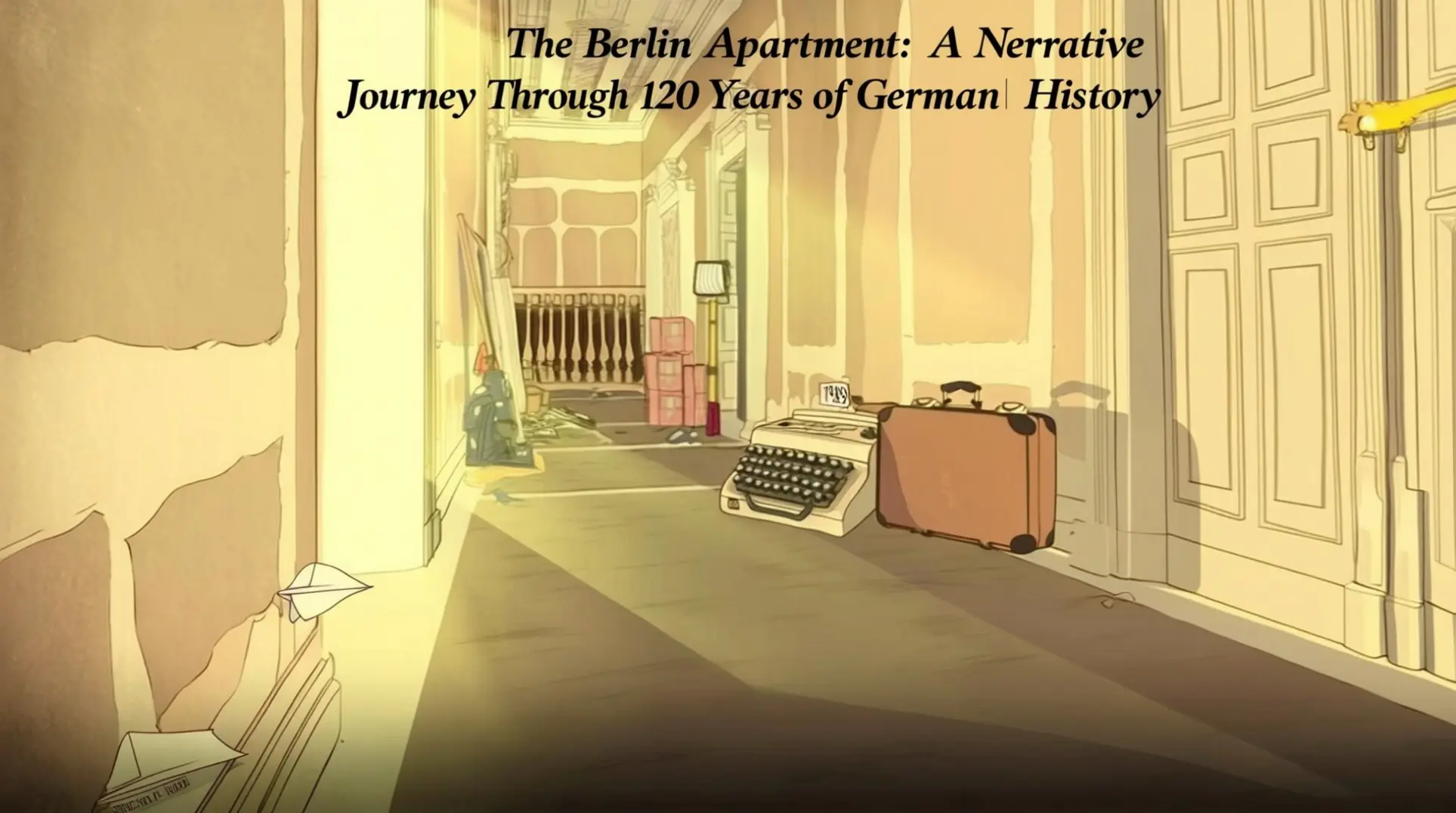
The Berlin Apartment: A Narrative Journey Through 120 Years of German History
Introduction
What if a single apartment could hold the entire history of a city? The Berlin Apartment is a narrative game that transforms one residential space into a portal through 120 years of German history. You play as Dilara, renovating the flat in 2020, and each object you uncover triggers a story from a past resident. This guide explores how the game uses its unique structure, characters, and mechanics to weave personal lives into the fabric of major historical events.
The Narrative Structure
The Apartment as a Historical Portal
The Berlin Apartment isn't your typical historical game. Instead of grand battles or political intrigue, you're standing in one residential space that somehow contains over 120 years of German history. The game uses this single apartment as a kind of time portal, where every wall and floorboard holds echoes of the people who lived there before.
You're not a historian or a soldier - you're Dilara, a kid in 2020 helping your dad Malik clean out the place after inheriting it. This renovation framing isn't just set dressing; it's your actual gateway to the past. As you sift through old boxes and poke around dusty corners, you trigger episodes that jump across different eras, each revealing how ordinary lives got tangled up in extraordinary historical moments.
The whole thing plays out like a walking simulator, which means you're mostly exploring and piecing together stories yourself. You'll collect items and uncover traces left behind by previous residents, and these aren't just random collectibles - they're the connective tissue that links these human stories across time. The apartment itself stays constant, but the narratives leap between decades, creating this unique episodic structure where you're constantly discovering how personal history overlaps with the bigger picture.
The Framing Characters: Connecting Past and Present
The Berlin Apartment doesn't just throw you into the past - it gives you two modern guides to hold your hand through history. Dilara and her father Malik are the frame that makes the whole story click, and they're way more than just exposition devices standing around.
Dilara: The Modern-Day Explorer (2020)
You're playing as Dilara, a woman in her early twenties who's stuck helping her dad renovate a crumbling Berlin apartment during the 2020 lockdown. It's not exactly glamorous work, but that mundane setup is what makes her discoveries hit harder. At first you're just peeling wallpaper and hauling debris, but then you start finding things - old letters, forgotten trinkets, traces of lives lived long before COVID turned the world upside down.
What makes Dilara work is that she's literally you. She's the bridge between your curiosity and the apartment's 120 years of German history, and her modern perspective makes every artifact feel like a real discovery rather than a museum piece. You're not just collecting items; you're triggering narrative vignettes that let past residents speak for themselves. And that lockdown backdrop? It adds this layer of isolation that makes the apartment feel like its own little world, which means every historical echo hits differently when you're both trapped inside.
Malik: The Keeper of Stories
Then there's Malik, Dilara's dad and the actual handyman behind the renovation. He's not just there to hand you tools - he's the keeper of stories who makes sense of what you're finding. His knowledge of building materials and construction techniques becomes this weirdly emotional thread connecting present-day Berlin to its complicated past.
Malik's the practical anchor who also happens to be your tutorial guide and emotional support. You'll hear his voice throughout the game, offering observations that range from technical ("this plaster is pre-war") to deeply personal. The voice acting gives him real depth, so when he talks about the layers he's peeling back, you feel it. He's both the reason you're uncovering history and the guy who helps you understand why it matters in the first place.
World War II Era Characters (1933-1945)
Josef: The Jewish Refugee (1933)
The first character you'll meet from this era is Josef, and his story hits hard. He's an elderly Jewish cinema operator in Berlin, and you're with him in 1933 as everything falls apart. The Nazis have just burned down his theater, which means you've got to help him pack a suitcase for a hasty escape in the chapter called The Suitcase.
The game presents Josef's past through black-and-white silent film sequences, which is a brilliant touch that connects directly to his life as a filmmaker. You'll see these flickering memories play out while you're frantically deciding what he can fit in his bag, and every item feels like a choice between memory and survival.
What makes this chapter really land is the visual storytelling. There's a menorah sitting on the windowsill, but right outside, Nazi flags are everywhere, and that single shot tells you everything about the rising persecution without a word of dialogue. You're not just packing clothes; you're packing a life that's being forcibly dismantled.
Mathilda & Magda: Post-War Survivors (1945)
Jump forward twelve years and you'll meet Mathilda, along with her mother Magda, trying to celebrate Christmas in a bombed-out Berlin apartment. The war has just ended, but its violence is still everywhere, literally. You'll help them decorate their Christmas tree with bullet shell casings they found in the rubble of their home.
The real gut-punch is what's not there. Mathilda's father, a senior Nazi officer, is missing, and his absence hangs over every moment. Young Mathilda starts asking innocent questions about him and about the "man with the funny voice" on the radio, which means she's piecing together what her dad did, and it's absolutely heartbreaking.
This segment, Silent Night, is all about loss, survival, and that fragile hope of rebuilding when you don't even know what tomorrow looks like. You're not just clicking through a scene; you're watching a family try to find normalcy in a world that has been anything but.
Tonia: The Dissident Writer (1967)
Tonia's story hits different because you're not just reading about censorship - you're living inside her coping mechanism. She's a novelist in 1967 East Germany, and the GDR's central administration is actively trying to shut down her book about a cosmonaut. The pressure builds until she mentally checks out, and that's when the game throws you into a completely different environment: a maze-like spaceship she imagines. This isn't some random mini-game tacked on; it's her brain's way of creating a space where state control can't reach her. The walls of her apartment might be monitored, but her imagination? That's boundless. And since this is the game's final episode, that creative escape feels like the ultimate act of defiance.
Kolja: The Divided Berliner (1989)
Kolja's chapter, "Growing Wings," takes place in 1989, and the title alone tells you everything. He's a young guy in East Berlin with the literal Berlin Wall outside his window, and his only companion is a fish tank - yeah, that's not a typo. The isolation is crushing, but people find ways to connect, and Kolja's method is pure poetry: he exchanges letters with someone on the western side using paper airplanes. You actually throw these planes across the divide, and each one carries that desperate hope of reaching another person. The mechanic itself is simple, but what it represents hits hard - the Wall's physical restrictions versus our stubborn need to reach out. This is the Cold War's final chapter, and every paper airplane feels like it could be the last one before everything changes.
Complete Chronological Story Timeline
The Berlin Apartment doesn't just tell you about history - it shoves you into it, one year at a time. Each era transforms the same four walls into a completely different world, and you're the one unpacking the baggage left behind.
1933: Rise of Nazi Germany
1933 hits you right away with Nazi flags hanging outside the apartment, and that's your first clue that things are about to get bad. You step into the shoes of Josef, a Jewish cinema owner who's frantically packing his suitcase because the regime's shadow is creeping into every corner of Berlin. This isn't just background noise - the vignette makes fascism feel personal, as political terror crashes directly into domestic life and turns a simple apartment into a trap that's about to snap shut.
1945: Post-War Devastation
The game jumps to 1945 for "Silent Night," and you're now Mathilda, a young girl trying to piece together a Christmas celebration with her mom Magda and brother Lukas in a bombed-out apartment. The real gut-punch is that her father's fate is still unknown, which casts a long shadow over every decoration you manage to hang. Still, the family pushes forward, hanging what little they can find, and that sparse decorating becomes a quiet metaphor for resilience when there's barely anything left to celebrate with.
1967: Cold War Censorship
1967 drops you into East Berlin as Toni, a young author whose novel about a cosmonaut is drawing the wrong kind of attention from the Stasi. The gameplay mirrors her paranoia - you're constantly sliding between her actual apartment and the fictional world she's creating, which means you're never quite sure what's real and what's under surveillance. This wasn't just paranoia for the sake of drama, either; the GDR's central administration really did control every piece of media to force-feed socialist ideals, so Toni's fight is literally against the state itself.
1989: Fall of the Berlin Wall
1989 puts you in the shoes of Kolja, a botanist living just meters from the Berlin Wall whose only friends are his plants and a goldfish named Eric. Since he can't exactly knock on his neighbor's door, he's been folding letters into paper airplanes and tossing them across the barrier, and the whole story builds toward that fateful night of November 9th when everything could change. The anticipation is brutal - you know what's coming historically, but Kolja doesn't, and his isolation makes every thrown letter feel like a tiny act of defiance.
2020: Modern Renovation and Reflection
The whole story is framed by 2020's COVID lockdown, where you play as Dilara, a girl helping her handyman dad Malik renovate this same old Berlin apartment. As you're tearing down wallpaper and digging through corners, you'll find relics from every previous resident, which means each object you uncover is basically a time machine back to their story. It's a reflective lens that ties everything together - you're not just learning history, you're physically pulling it out of the walls while the modern world stands still outside.
The Apartment as a Character: Environmental Storytelling
Architectural Evolution Through Time
The Berlin Apartment doesn't just tell you about 120 years of history - it shoves you right into it across five distinct eras, and each change hits harder because you're watching this single space mutate room by room.
You start in the Wilhelmine period (late 19th/early 20th century), and it's gorgeous - high ceilings, ornate moldings, that historicist design that screams old-money Berlin. But then the Weimar Republic crashes in, bringing the Nazi era with it, and suddenly you're noticing blackout measures on the windows and a general sense that the walls are closing in. The apartment reflects the political chaos outside, which means you get these weird, tense modifications that weren't there before.
After the war, everything's different. The post-war reconstruction period (1945-1960s) strips away a lot of that ornamentation for pure function. It's utilitarian, it's repaired-but-not-really, and you can feel the exhaustion in the design choices. Then the Cold War hits, and the space transforms again - this time with security and privacy modifications that scream "we're living in a divided city." It's subtle, but once you notice the reinforced doors or the way windows are covered, you can't unsee it.
Finally, you land in the modern reunification era (1990s-2020s), and it's almost jarring. Updated plumbing, modern electrical systems, proper insulation - suddenly the apartment feels like a contemporary home again, but with all these ghost layers underneath.
Hidden Objects and Their Stories
This is where the game really shines. You're not just collecting trinkets - you're piecing together lives that actually happened.
The core loop has you hunting for relics and traces, and these aren't generic glowing objects. You'll find a hidden key that opens a drawer you walked past five times, or a faded photograph tucked behind a loose floorboard that shows a family you never met but suddenly care about. There's this one moment in the 1933 era where you need to find Josef's passport and a hidden contract inside his desk compartment, and it's not just a fetch quest - it's the difference between understanding his story or letting it disappear.
The environmental storytelling goes deeper than you'd expect. You can discover hidden cornices or even make paper planes from old letters, which sounds silly until you realize each action reveals something about who lived there. The furniture itself tells stories, and the "traces of residents" aren't just bloodstains or footprints - they're half-finished letters, a child's drawing on a wall, a specific book left open to a specific page.
And then there's the view out of the window, which is basically a living artifact. You're not just staring at a static background; you're seeing historical Berlin unfold outside, and it contextualizes everything happening inside the apartment. It's one of those details that makes you stop and just... look.
Thematic Analysis: What The Berlin Apartment Explores
Memory and Historical Inheritance
The Berlin Apartment isn't just about fixing up an old flat - it's about excavating memory itself. The apartment acts as this weird time capsule, where every cracked tile and hidden relic basically becomes a silent witness to lives that unfolded across more than a century. We're talking everything from Nazi rule through the Cold War division and all the way to the COVID-19 pandemic, which means you're not just cleaning; you're piecing together a fragmented urban memory that the city itself tried to bury.
As you play Dilara renovating the space, each object you uncover serves as a conduit for generational knowledge, bridging that gap between personal stories and Berlin's collective identity. The game really wants you to see memory as something deeply personal yet weirdly universal - every tenant's story becomes this thread in the larger fabric of what Berlin actually is. It's not just about the big historical moments either; it's about how those moments get preserved or erased through architecture and the tiny artifacts people leave behind. So when you're scrubbing walls or pulling up floorboards, you're not just progressing - you're recovering place memory in a way that urban studies academics would probably nerd out over.
Personal Lives in Political Context
Here's where it gets really interesting. The game constantly shoves you into this tension between individual human experiences and massive political forces that don't care about your dinner plans. Over 120 years of German history, you see how Nazi oppression, Cold War paranoia, and even modern pandemic isolation fracture the idea of "home" itself. The apartment becomes this pressure cooker where repression, freedom, love, and loss all intersect in these intimate vignettes.
What makes it hit hard is that you're not watching historical figures make grand speeches - you're seeing ordinary people decide whether to flee, surrender, or resist when the world outside goes mad. A shared meal becomes an act of quiet defiance. A letter hidden under floorboards becomes a rebellion. The game basically argues that history isn't just dates and battles; it's composed of countless small moments where people felt fear, hope, love, and loss. And by focusing on these tiny, human stories set against decades of dramatic change, The Berlin Apartment reminds you that politics doesn't just shape nations - it shapes whose photos you can hang on your wall and whether you can trust your neighbor.
Gameplay Mechanics and Narrative Integration
Exploration and Discovery Mechanics
This isn't your typical walking simulator. The Berlin Apartment locks you into a single apartment, but don't let that fool you - this place is a time machine disguised as a fixer-upper. You play as Dilara in 2020, helping your dad restore the place, and that's your gateway to the past.
Everything runs on object interaction. Click a dusty letter or an old photograph, and suddenly you're not just cleaning anymore - you're unlocking someone else's life. The game transforms mundane furniture into portals, each click pulling you deeper into multi-generational stories that span decades. It's not about sprawling maps; it's about how deep a single room can go.
Progression works through chapters, each representing a different era. You don't level up or collect XP - you just keep exploring, and the apartment keeps revealing its secrets. The space feels bigger than it is because you're not just moving through rooms; you're moving through time.
Era-Specific Gameplay Variations
Here's where things get really interesting. Each tenant's story doesn't just change the scenery - it completely rewires how you play.
In Josef's 1933 chapter, you're packing. Sounds simple, right? But you're not just throwing items in a suitcase; you're making brutal choices about what to leave behind as you flee Nazi Germany. Every object you select (or abandon) carries weight, and that packing mechanic becomes a metaphor for forced migration itself.
Then there's Tonia in 1967, where you're writing under East Berlin's watchful eye. The game makes you craft content while dodging censorship, which means picking your words carefully and using coded language to subvert the system. It's not just typing - it's survival through subtlety.
And Kolja's 1989 story? Paper airplanes. Yeah, you read that right. You're folding messages and tossing them across the Berlin Wall, turning a childhood game into an act of political resistance. What looks like a simple physics puzzle is actually a creative way to show how people found hope in impossible situations.
The key thing here is that these mechanics aren't just window dressing. They're built from the ground up to reflect what life was like in each period, so when you're packing Josef's bag or folding Kolja's airplanes, you're not just solving puzzles - you're experiencing history.
Historical Accuracy and Educational Value
The Berlin Apartment doesn't just tell you about history - it shoves you right into it, stretching across two of Germany's most turbulent eras. The first chapter drops you into 1930s Berlin as the Nazis take power, and you'll immediately spot the swastika banners while hearing marching boots that recreate the period with unsettling precision. But it's not just set dressing; you actually feel civil liberties crumbling as neighbors turn into informants and dissent gets crushed. When the story leaps to Cold War Berlin, the Wall becomes more than concrete - it’s a psychological weight that splits the city and its people.
That authenticity didn't happen by accident. The devs consulted historians, dug through period photographs, and studied survivor testimonies to get every detail right, from furniture placement to street signs. They even used historical maps to recreate neighborhoods that were bombed into oblivion or bulldozed later. They also went deep on language, weaving in period-appropriate German expressions and the subtle dialect differences between East and West Berlin that you'd hear in official documents and graffiti.
What ties it all together is the apartment itself - you experience the same walls and windows through different families across decades, which makes the history feel personal rather than abstract.
Educational Applications
Here's where The Berlin Apartment really shines outside of just being a game. Educators have been praising it as a way to make history stick, and it's easy to see why. Textbooks give you dates and facts, but this game gives you people, and when you're rooting for a family to survive the Nazi purge or cross the Wall successfully, you're not memorizing - you're feeling. That emotional connection means you'll actually remember what happened and why it mattered.
Several schools have already added it to their curriculum, using it to kick off discussions about authoritarianism, division, and reunification. It's perfect for sparking debate because it shows multiple perspectives through ordinary lives, which aligns with modern teaching methods that emphasize empathy and critical thinking.
But let's be clear - this isn't a replacement for formal education. You still need the textbook context to fully understand the bigger picture, so think of it as the emotional hook that makes the dry stuff click. At around five hours, it's short enough to fit into a lesson plan without eating up the whole semester, which means teachers can actually use it without derailing their schedule.
Conclusion
The Berlin Apartment masterfully uses its confined setting to tell expansive stories of ordinary people caught in extraordinary times. By focusing on intimate moments - packing a suitcase, writing a censored novel, throwing a paper airplane - it makes history feel personal and immediate. The game stands as a powerful testament to how memory is preserved in the places we live and the small artifacts we leave behind.
More The-Berlin-Apartment Guides
The Berlin Apartment: A Living Time Capsule Through 120 Years of German History
Explore how The Berlin Apartment transforms a renovation project into an emotional journey through German history, merging narrative innovation with educational depth.
The Berlin Apartment: Complete Collectible Guide & Achievement Walkthrough
Master The Berlin Apartment with our complete guide to all relics, achievements, and 100% completion strategies. Unlock every narrative secret across all chapters.
Games Like The Berlin Apartment: Finding Your Next Narrative Adventure
Discover environmental storytelling games similar to The Berlin Apartment, including direct competitors like Edith Finch, Gone Home, and hidden narrative gems that prioritize story over action.
AI Tactical Companion
Consult with our specialized tactical engine for The-Berlin-Apartment to master the meta instantly.