Games Like The Berlin Apartment: Finding Your Next Narrative Adventure
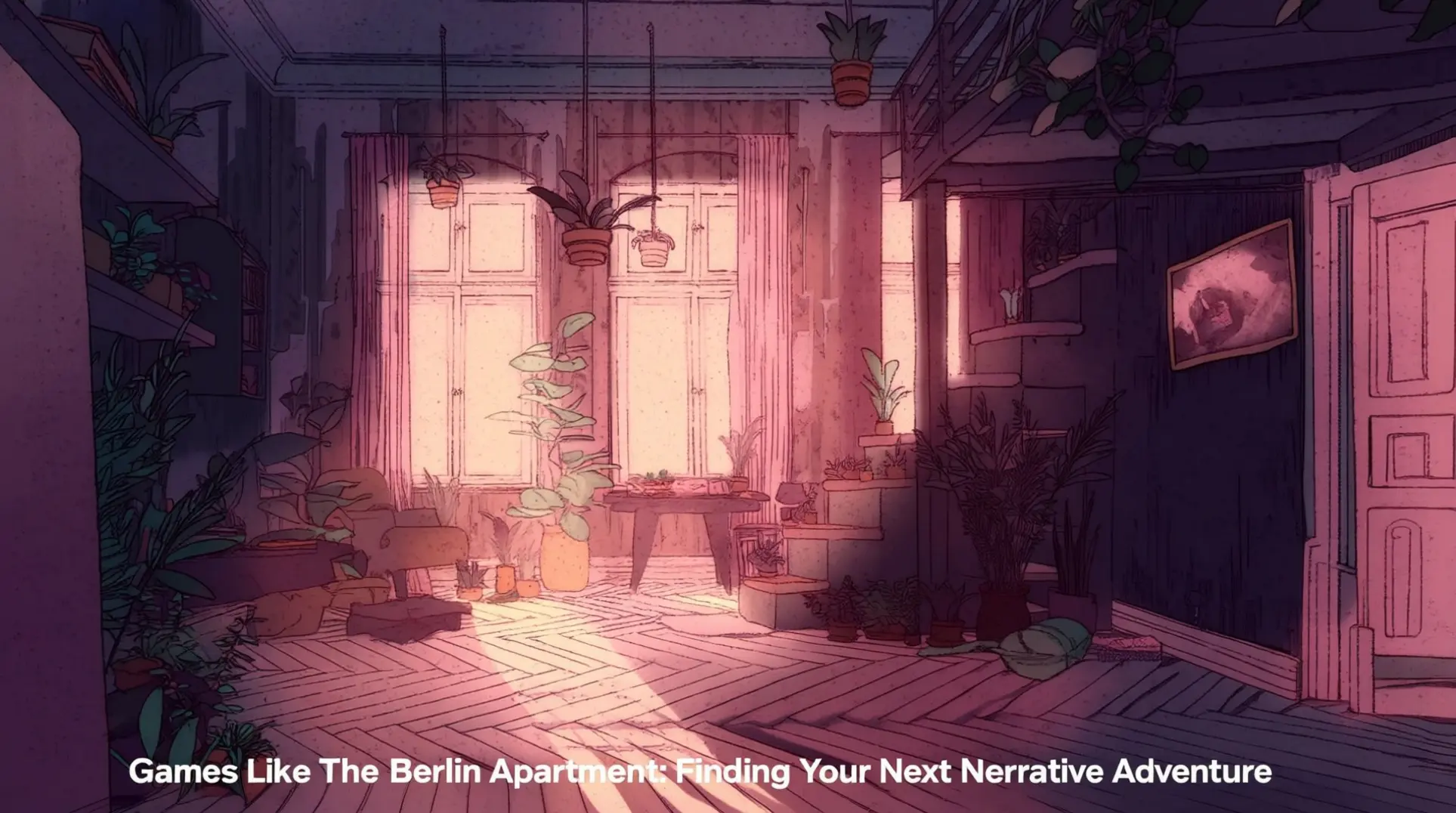
The Berlin Apartment immerses players in 120 years of German history through intimate environmental storytelling. As narrative adventures like this gain popularity, discovering games with similar emotional depth can be overwhelming. This guide explores direct competitors, hidden gems, and essential tools to help you find your next captivating narrative experience.
What Makes The Berlin Apartment Special
Release Date
The Berlin Apartment launched on November 17, 2025 for PC, PlayStation 5, and Xbox Series X|S. This first-person narrative adventure invites players to explore a single Berlin apartment across 120 years of German history. Through four self-contained vignettes, you'll uncover deeply personal stories spanning from Nazi rule through the Cold War to the COVID-19 pandemic.
The game transforms one physical space into a living time capsule. Each object, letter, and memory fragment reveals how ordinary people navigated extraordinary historical moments. This approach has drawn immediate comparisons to What Remains of Edith Finch, as both games use environmental storytelling to unpack interconnected, emotionally charged narratives.
While Edith Finch embraced magical realism, The Berlin Apartment grounds itself in Germany's somber 20th-century reality. Players piece together lives by examining period-accurate details, making history feel intimate rather than abstract.
Direct Competitors and Closest Alternatives
What Remains of Edith Finch
What Remains of Edith Finch stands as the most direct spiritual sibling to The Berlin Apartment. Both games employ first-person exploration of intimate spaces to uncover the tragic stories of deceased relatives through environmental details.
The vignette-based structure forms the backbone of both experiences. Each room in The Berlin Apartment functions like a chapter in Edith Finch, revealing self-contained narratives through discovered objects and architectural spaces. Neither game includes traditional combat or puzzle mechanics, instead prioritizing pure narrative discovery as the core gameplay loop.
Most significantly, both titles treat architecture as a living museum of personal history. The spaces themselves become storytellers, with generational memories embedded in every corner and artifact.
Gone Home
Gone Home pioneered the environmental storytelling approach that The Berlin Apartment refines. The detailed home exploration mechanics established in Gone Home directly influenced how players piece together family narratives through careful examination of domestic spaces.
Both games strip away traditional gameplay elements to focus entirely on atmospheric exploration and emotional storytelling. The spatial storytelling technique, where room layouts naturally guide narrative discovery, appears prominently in both titles. Players learn about characters not through exposition, but through the careful arrangement of personal artifacts and environmental clues.
The intimate family drama at the heart of both experiences emerges through this methodical exploration of lived-in spaces.
Firewatch
Firewatch demonstrates how contained settings can serve as primary narrators, much like The Berlin Apartment's approach. Both games prioritize character-driven narratives over traditional mechanics through atmospheric first-person exploration.
The wilderness in Firewatch and the apartment in The Berlin Apartment function as vessels for unfolding personal histories. Environmental details replace action sequences as the primary method of storytelling. Firewatch's dialogue choice system, which shapes character relationships through player decisions, mirrors The Berlin Apartment's emphasis on interpersonal connections discovered through narrative exploration.
These games prove that compelling storytelling doesn't require complex mechanics when environments are crafted with such narrative density.
The Stanley Parable
The Stanley Parable shares The Berlin Apartment's experimental approach to narrative-driven first-person exploration. Both titles use minimalist gameplay mechanics to focus attention entirely on narrative constructs and player discovery.
Where The Berlin Apartment explores historical memory through environmental details, The Stanley Parable examines metafictional storytelling conventions through similar exploratory methods. Both games demonstrate how player choices and environmental observation can drive narrative experience without traditional action elements.
This philosophical approach to interactive storytelling positions The Stanley Parable as a thought-provoking counterpart to The Berlin Apartment's historical exploration.
Historical Exploration and Time-Spanning Stories
These games transform spaces into living archives, where every room and object carries the weight of decades. Like The Berlin Apartment, they use physical locations as time capsules that preserve family histories across generations.
What Remains of Edith Finch
What Remains of Edith Finch stands as a masterpiece of environmental storytelling. Players explore the Finch family home, where each room becomes a portal to unique vignettes about how family members died across generations.
The house itself serves as a time capsule, preserving decades of personal tragedies and memories. Every space tells a different story through varied gameplay mechanics tailored to each family member's final moments.
Gone Home
Gone Home pioneered the "walking simulator" genre by transforming a 1990s family home into an intimate detective story. Players piece together personal narratives through environmental clues scattered throughout the seemingly empty house.
Set in 1995 Portland, the game uses its historical moment as more than backdrop. Cultural details from the era amplify the family's personal struggles, making the house a living archive where every object serves as a narrative key.
Pentiment
Pentiment spans 25 years in 16th-century Bavaria, following murders that unfold across decades of the protagonist's life. The story explores how choices ripple through time, affecting an entire town's legacy.
The game uses its historical setting during the Protestant Reformation to examine memory and truth. Major historical events become deeply personal as they reshape small communities, proving that even the grandest historical moments are ultimately human stories.
Character-Driven and Atmospheric Experiences
Unpacking
Unpacking presents a zen puzzle game that tells a subtle, wordless story about a person's life through environmental storytelling. Players unpack belongings across different life stages, exploring intimate relationships we develop with objects and the melancholy of moving on.
The game tells a character's life story entirely through items placed on shelves and in drawers, without traditional dialogue. Like The Berlin Apartment, Unpacking focuses on narratives embedded in domestic spaces and personal belongings, creating deeply personal storytelling where players become archaeologists of narrative.
Both games demonstrate that some of the most powerful stories are those discovered through objects and spaces. While Unpacking explores a character's life across multiple moves, The Berlin Apartment examines lives across decades in one location. This focus on personal history through objects creates a strong parallel between the two experiences.
Unique Narrative Approaches and Hidden Gems
Innovative Storytelling Mechanics
Some games turn the very act of playing into the story. Before Your Eyes straps a webcam to your face and makes every blink a ticking clock; when you physically close your eyes, the memory you were watching skips forward or vanishes forever. The mechanic isn't a gimmick-it's the theme: life slips away while we're busy blinking.
Indie titles often weld mechanic to meaning this way. A broken radio that must be tuned to reveal dialogue becomes a metaphor for repairing relationships, while scattered photographs you literally reassemble mirror trauma healing. Even without cut-scenes, environmental storytelling hides plot in coffee-ring stains, half-open drawers, and the way a hallway light flickers-inviting you to play detective with the world itself.
If you enjoy games that wink at you while they break the fourth wall, The Stanley Parable and The Beginner's Guide turn navigation into meta-commentary, making the simple act of walking down a corridor feel like arguing with the narrator.
Hidden Gem Narrative Adventures
Skip the front-page carousel and you'll find tiny games punching far above their weight. Apartment Story traps you in a single flat where mundane chores-boiling pasta, taking a shower-double as breadcrumb clues in a slow-burn thriller; it's The Sims meets Hitchcock.
Need more under-the-radar picks? Try these bite-sized wonders:
- DECARNATION - 2D pixel-art horror whose puzzles feel like fever dreams.
- UNREAL LIFE - lo-fi visuals, high-impact mystery about a girl who reads objects' memories.
- OneShot - adorable cat-child protagonist, gut-punch metafictional twist.
- Origament: A Paper Adventure - every surface is folded cardstock; the world literally unfolds as you progress.
Each delivers a complete, emotional arc in the time a AAA game spends on its tutorial.
Atmospheric Exploration Games Like What Remains of Edith Finch
If Edith Finch left you hungry for more haunted houses and whispered family secrets, start with The Vanishing of Ethan Carter. You wander a Red Valley landscape where every abandoned mine and railway bridge hides a vignette that pieces together vanished lives-no dialogue, just pure environmental sleuthing.
For a different flavor of solitude:
- Firewatch - two voices, one walkie-talkie, an entire Wyoming wilderness.
- Gone Home - a single stormy night in an empty Oregon house; read diaries, open drawers, discover why no one is home.
- Dear Esther - poetic narration drifts across a Hebridean island like sea-salt in the wind.
- Tacoma - replay holographic ghosts on a deserted space station to learn how the crew lived (and didn't).
- Abzû - no words at all, just schools of fish and ancient ruins that sing of rebirth.
Each title trusts you to explore, listen, and stitch together meaning without hand-holding-perfect companions for anyone who finished Edith Finch and immediately wanted to walk through another family's ghosts.
How to Find More Games Like The Berlin Apartment
Key Similar Games to Explore
The Berlin Apartment shares its environmental storytelling approach with What Remains of Edith Finch, making both games masters of unpacking personal histories through physical spaces. Players who loved exploring the Finch house will find similar satisfaction in piecing together a century of Berlin memories.
Direct alternatives currently gaining traction include:
- Broken Aperture - A 2025 release exploring fractured memories through photography
- As Long As You're Here - Another 2025 narrative adventure about temporal relationships
- The Honours Project - A student-developed exploration of academic legacy
These titles frequently appear together in recommendation engines alongside established classics like Firewatch, Gone Home, Call of the Sea, and SOMA. Each offers distinct takes on atmospheric exploration while maintaining the emotional core that makes The Berlin Apartment special.
For fans of the developer's style, ByteRockers' Games also publishes Constance and Let Them Trade, which share the publisher's commitment to thoughtful, narrative-driven experiences. The studio's curation by Wholesome Games and feature in Wholesome Direct 2025 further validates their focus on meaningful storytelling.
Essential Discovery Platforms and Tools
Finding your next narrative adventure requires knowing where to look beyond Steam's standard recommendations. SteamPeek.hu stands out with its indie-friendly algorithm that specifically identifies games similar to The Berlin Apartment through unique recommendation patterns.
Platform recommendations for discovery:
- itch.io - Ideal for experimental narrative games and interactive fiction
- Steambase - Uses Steam's User Tag system for curated lists
- GG.deals - Features extensive filtering by genre and Steam tags
- Backloggd and Gameye - Community-driven sites functioning like Goodreads for games
These tools help track your gaming library while surfacing community-validated titles that traditional storefronts might miss.
Mastering Steam Tags for Targeted Discovery
Steam's tagging system becomes powerful when you understand The Berlin Apartment's core descriptors: Story Rich, Walking Simulator, Atmospheric, First-Person, Exploration, and Historical. Each tag reveals a specific aspect of what makes the game resonate with players.
The 'Story Rich' tag directly reflects the game's design philosophy of uncovering personal histories through environmental details. Meanwhile, 'Walking Simulator' indicates gameplay focused on first-person exploration with light puzzles rather than traditional action mechanics.
Effective tag combinations for discovery:
- Story Rich + Walking Simulator + Adventure - Captures the narrative exploration core
- Atmospheric + Historical + First-Person - Finds immersive period pieces
- Exploration + Story Rich + Indie - Surfaces smaller studio narrative games
Steam's 'More Like This' feature generates recommendations based on these shared community tags, making it your most reliable built-in tool for finding similar experiences.
Conclusion: Finding Your Next Narrative Adventure
The Berlin Apartment proves that the most powerful stories are often the quietest ones. By turning a single flat into a 120-year time capsule, it shows how environmental storytelling-the art of letting objects speak-can make history feel intimate and personal. If that idea resonates, your next favorite game is probably already waiting.
If You Crave More Family Histories
Start with What Remains of Edith Finch or Gone Home. Both let you wander through empty rooms, piecing together love, loss, and the small moments that define generations. For a twist on the formula, Unpacking tells an entire life story without a single line of dialogue-just cardboard boxes and the belongings they hold.
If You Want Atmosphere Above All
Dear Esther trades houses for a windswept island, wrapping poetic narration around lonely cliffs. Prefer forests to shorelines? Firewatch pairs heartfelt radio banter with Wyoming sunsets, proving a walkie-talkie can carry as much emotion as any family photo.
If You Love Creative Narrative Experiments
The Stanley Parable skewers choice itself, while To the Moon rewinds memories like VHS tapes. These games don't just tell stories-they question how stories are told, perfect for players who finished Edith Finch and asked, "What else can narrative do?"
Whichever path you pick, bring curiosity and a willingness to read the room-literally. The best narrative adventures reward those who pause, look closer, and let the walls speak.
Environmental storytelling, as seen in The Berlin Apartment and its peers, turns ordinary spaces into profound narratives. By leveraging the comparisons and discovery tips provided, you can uncover more games that prioritize story over action. Start exploring these immersive worlds and let the objects speak for themselves.
More The-Berlin-Apartment Guides
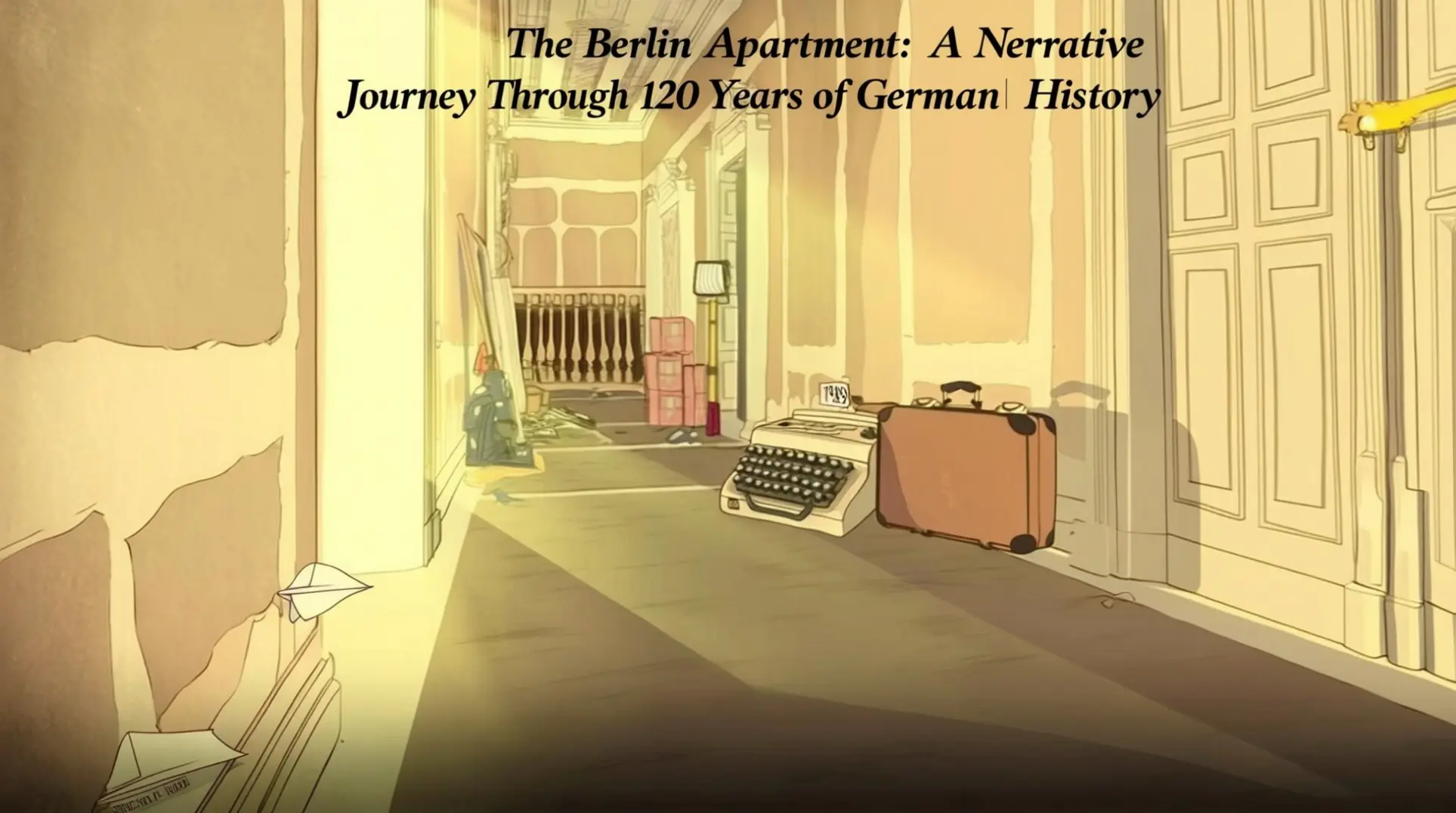
The Berlin Apartment: A Narrative Journey Through 120 Years of German History
Discover how The Berlin Apartment game uses a single apartment to weave personal stories into major historical events, from Nazi Germany to the Cold War.
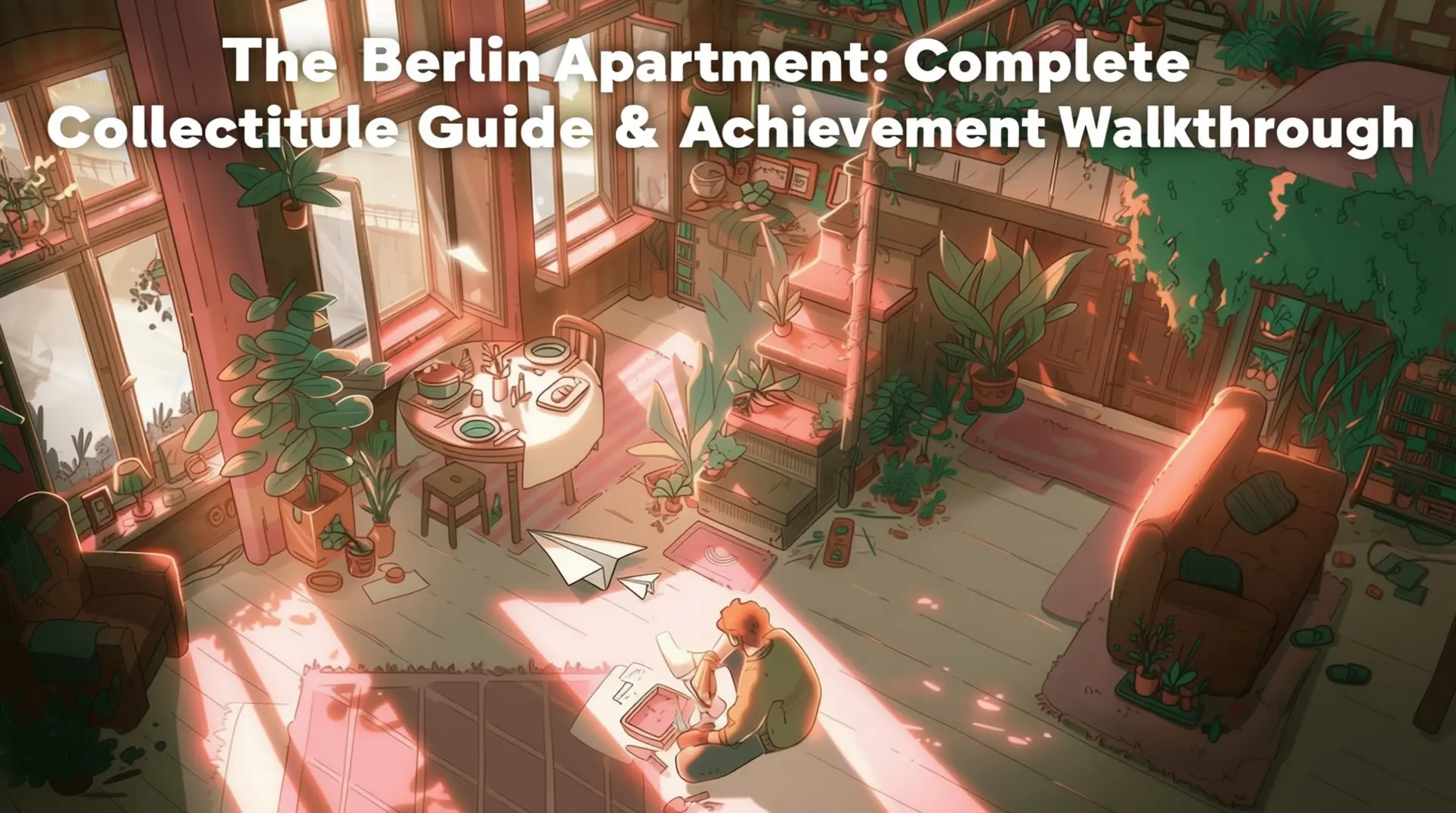
The Berlin Apartment: Complete Collectible Guide & Achievement Walkthrough
Master The Berlin Apartment with our complete guide to all relics, achievements, and 100% completion strategies. Unlock every narrative secret across all chapters.
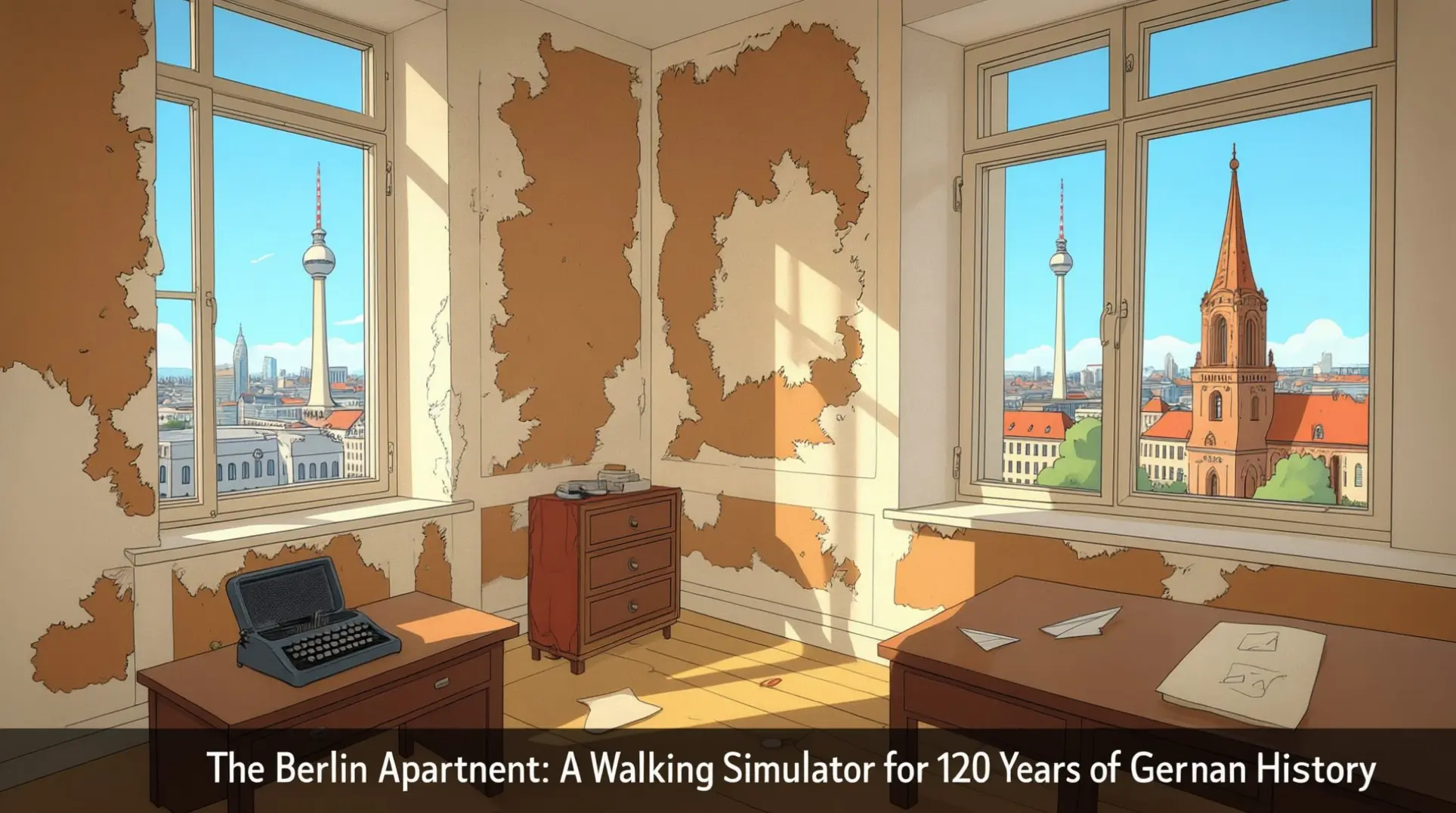
The Berlin Apartment: A Walking Simulator for 120 Years of German History
Explore 120 years of German history through the Berlin Apartment, a walking simulator that ties personal artifacts to monumental moments.
AI Tactical Companion
Consult with our specialized tactical engine for The-Berlin-Apartment to master the meta instantly.