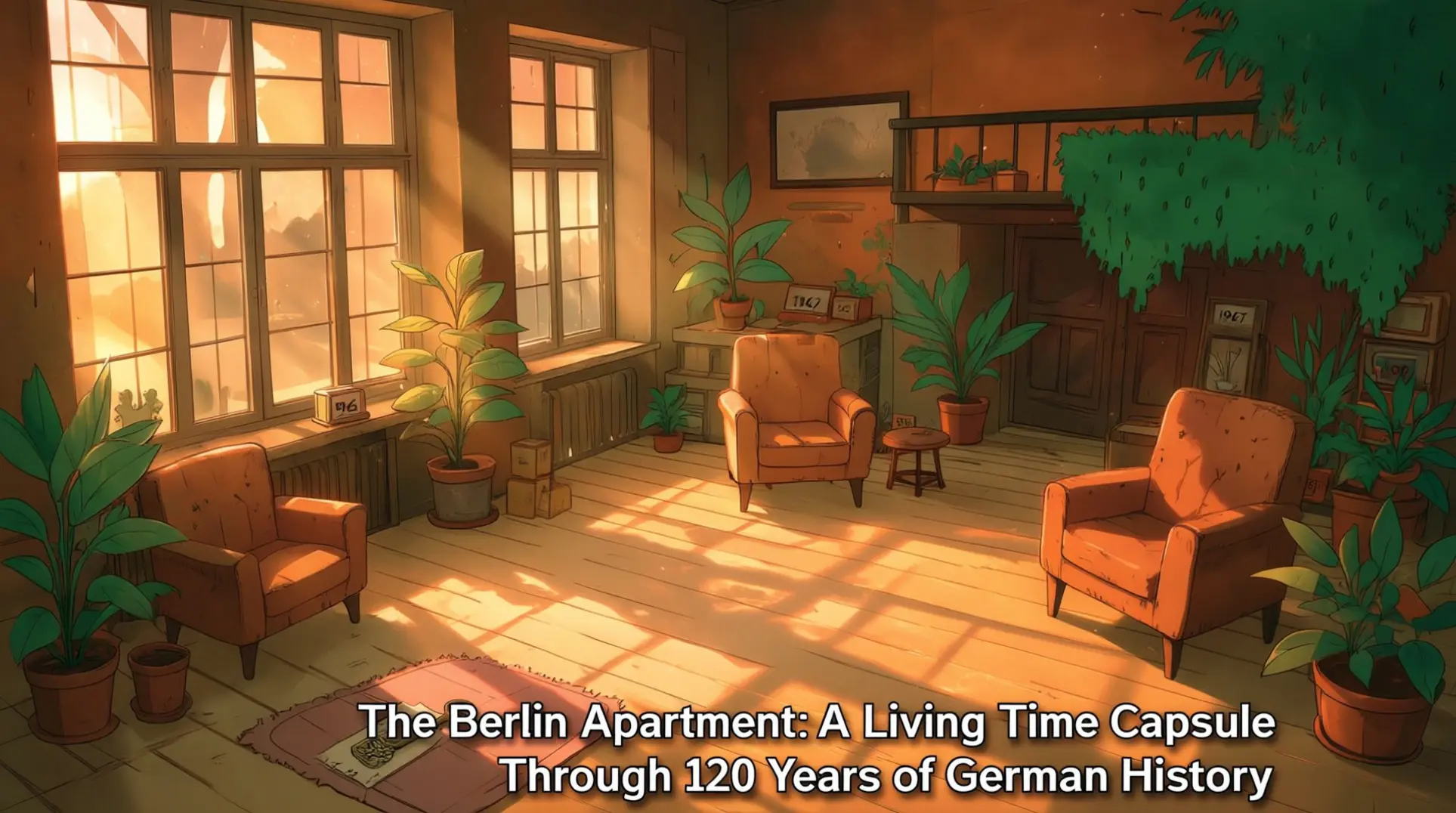
The Berlin Apartment: A Living Time Capsule Through 120 Years of German History
Introduction
What if you could walk through 120 years of history without leaving a single room? The Berlin Apartment transforms a renovation project into a living time capsule, released in 2025 to explore German history through intimate personal stories. This article examines how the game merges narrative innovation with emotional depth to create a powerful educational experience.
The Berlin Apartment transforms a simple renovation job into a living time capsule. Released on November 17, 2025, by German indie studio Blue Backpack, this first-person narrative adventure compresses 120 years of German history into the four walls of a single Berlin flat.
A Father-Daughter Journey Through Time
You experience the story as Dilara, a young girl helping her father Malik renovate the apartment in 2020. Each cracked tile and faded photograph becomes a portal to the past. Malik narrates the human stories behind every relic Dilara uncovers, turning historical events into intimate family dramas.
History Told Through Personal Moments
Rather than dry textbook summaries, the game presents history as a tapestry of love, loss, fear, and hope. The apartment's layers reveal:
- Early 20th-century dreams before the world changed
- Nazi rule seen through hidden letters and forbidden music
- Cold War division reflected in split families and sealed rooms
- Reunification celebrated in patched walls and reunited photographs
- Modern echoes including the COVID-19 pandemic's quiet isolation
Critics call it a "rare and beautiful, cozy historical narrative," praising how it merges innovative concept with deeply human storytelling.
Game Overview and Historical Context
Premise & Core Gameplay
The Berlin Apartment is a 2025 narrative adventure developed by btf that compresses 120 years of Berlin history into a single living space. Players step into the shoes of Dilara, a curious young girl who roams the apartment alongside her father Malik, a handyman hired to renovate the aging property. Every cracked tile, faded photograph, and forgotten keepsake becomes a portal to the past.
The frame story unfolds in 2020, with the renovation serving as both literal restoration and metaphorical excavation. As Dilara and Malik peel back wallpaper or pry open floorboards, relics trigger intimate vignettes from former occupants.
Historical Timeline & Eras Explored
The apartment's walls have witnessed seismic shifts in German society. Each era leaves behind tangible traces that the player can activate to experience life through the eyes of previous residents.
Key Historical Episodes
- 1933 - Nazi Rule: The first tremors of authoritarianism reach the building.
- 1945 - Postwar Reconstruction: Rubble gives way to tentative hope as families rebuild.
- 1967 - East Berlin Censorship: The Stasi's shadow looms over creative and personal freedoms.
- 1989-1990 - Reunification: Borders dissolve, and strangers become neighbors once more.
While Malik sands floorboards and rewires sockets, Dilara's discoveries stitch these disparate decades into a single, living tapestry of Berlin's soul.
Main Characters: Dilara and Malik
The Modern-Day Protagonists: Emotional Anchors and Storytellers
Dilara is a second-grader who accompanies her father Malik to work during the COVID-19 pandemic lockdowns when schools are closed. She serves as the player's first-person perspective character, experiencing the world through the eyes of a curious child.
Malik is a modern-day handyman who has purchased a dilapidated old apartment in Berlin that he plans to renovate and possibly sell. This apartment becomes the setting for the game's entire narrative, a physical space where past and present collide.
The father-daughter relationship between Dilara and Malik serves as the central emotional anchor and narrative engine for the entire game. Their bond provides the stable foundation from which historical stories unfold, creating a deeply personal connection between player and characters.
As Dilara helps with renovations, she discovers relics and traces left by the apartment's former inhabitants. These artifacts act as gateways to self-contained historical stories from different eras, transforming mundane renovation work into an extraordinary journey through time.
Malik tells Dilara stories about the previous residents based on the artifacts they find. This transforms their renovation work into an emotional and historical journey through storytelling, where each discovered item becomes a portal to another life.
Their partnership is built on shared labor and discovery. The physical act of refurbishing the apartment mirrors the process of uncovering hidden stories from Berlin's past, creating a beautiful parallel between restoration and revelation.
The game frames their experience as a historical treasure hunt where Dilara's curiosity drives the narrative forward. Malik provides practical context and emotional support, creating a perfect balance between wonder and wisdom.
Dilara actively participates in narrating some historical sequences, contributing her own ideas and perspectives to the unfolding tales. This active participation strengthens the player's bond with her character, making her more than just an observer.
Malik's presence as a grounded, contemporary figure creates a stark contrast to the historical vignettes. This contrast ensures the narrative remains emotionally anchored in the present day, preventing players from becoming lost in the past.
Their authentic father-daughter relationship provides the emotional foundation that makes the apartment's century of historical stories resonate personally with players. Through their eyes, Berlin's complex history becomes not just educational, but deeply moving.
Complete Story Timeline: 120 Years of History
1923: The Weimar Republic & Economic Turmoil
The Berlin Apartment opens its century-spanning narrative in 1923, anchoring the building within the chaos of Weimar hyperinflation and severe housing shortages. Private homes became silent witnesses to social collapse, as the apartment's walls absorbed the era's economic distress through the daily struggles of its residents.
1938: Life Under Nazi Rule
By 1938, the same walls that once echoed with inflation-era debates now trembled under Nazi rule. The apartment transforms into a stage for everyday fear, where ordinary citizens navigate oppression and face impossible moral choices during Kristallnacht. Each room carries the weight of decisions made in darkness, forever altering the building's emotional geography.
1961: The Berlin Wall Construction & Early Cold War
The narrative leaps to 1961, when the Berlin Wall's construction slices through the apartment's world like a physical wound. This chapter focuses on how political upheaval disrupts the intimate spaces of private life, turning familiar hallways into contested territory and family kitchens into negotiation tables for survival.
1987: A Divided Berlin in the Late Cold War
In 1987, the apartment stands as a time capsule within a still-divided Berlin. State surveillance permeates every corner, yet beneath the surface tension, the building holds memories of resistance and resilience. This late Cold War frame captures the persistence of division while hinting at the monumental change just beyond the horizon.
2020: The COVID-19 Pandemic Framing
The COVID-19 lockdown of 2020 serves as the game's contemporary lens, where Dilara and Malik's modern-day exploration becomes a bridge across time. As they uncover the apartment's layered history during pandemic isolation, their discoveries transform personal quarantine into a journey through 120 years of human experience.
Historical Accuracy and Educational Value
Emotional Truth Over Factual Precision
The Berlin Apartment deliberately sidesteps dense historical exposition. Instead, it prioritizes emotional and human truths over textbook-perfect accuracy. Players won't find themselves drowning in dates or political minutiae.
The game's power emerges from making players feel the passage of time within the same four walls. Historical authenticity arrives through atmosphere rather than fact sheets. Life behind the Berlin Wall becomes personally resonant through intimate stories rather than academic lectures.
Educational Value Through Personal Connection
History education happens experientially here. Players live through multiple stories in the same four walls as decades unfold around them. Each discovery creates an empathetic bridge to the past.
The apartment itself becomes a repository of memory, teaching players to see history as layers of personal stories embedded in everyday spaces. Rather than memorizing events, players engage with:
- Personal dilemmas of previous inhabitants
- Material culture of different eras
- Relationship dynamics shaped by historical forces
This approach has proven particularly powerful. One history teacher who visited Berlin's museums recognized the game's unique value in creating personal connections with historical narratives.
1933 - Packing Josef's Suitcase
Historical Context & Emotional Stakes
The year is 1933. Political tensions rise as you step into Josef's cramped Berlin apartment. Every object you choose to pack carries the weight of an uncertain future.
Core Puzzle Mechanics
This section demands careful balance between Practical Items and Personal Keepsakes. The puzzle is intentionally non-linear, encouraging thorough exploration of multiple rooms.
Where to Look
- Desk drawers often hide practical documents like passports and work permits
- Living room shelves may contain family photographs or small heirlooms
- Bedroom wardrobe holds clothing choices that reflect both necessity and identity
Selection Strategy
Consider each item's dual purpose. A sturdy winter coat serves both practical warmth and emotional comfort. Letters from loved ones weigh little but carry immense sentimental value. The game rewards players who resist rushing—hidden interactions often emerge when you revisit previously searched areas with new context.
The suitcase puzzle teaches a crucial lesson: in times of crisis, our choices define what we truly value. This philosophy carries forward into the next historical vignette.
1989 - Growing Wings
The Wall Comes Down
November 1989. Berliners celebrate as concrete barriers crumble. Amidst the chaos, you uncover artifacts that transform personal dreams into tangible hope.
Relic-Based Storytelling
Each discovered item from the Wall's debris tells its own micro-narrative. A fragment of graffiti becomes a teenager's manifesto. A discarded uniform button speaks to soldiers who chose humanity over orders.
Exploration Loop
The chapter employs a Discovery-Reaction-Progression system:
- Initial sweep reveals obvious artifacts near the Wall
- Deeper examination triggers memories and new interaction points
- Return visits to previously explored areas often yield fresh perspectives
Era-Specific Interactions
Post-reunification artifacts behave differently than pre-Wall items. A simple piece of concrete might suddenly reveal hidden text when viewed under the newfound freedom of streetlights. These mechanics mirror the historical moment—familiar objects gain new meaning in changing times.
Critical Reception and Player Experience
The Berlin Apartment has earned a Strong rating on OpenCritic, averaging 78 from 20 critics. Reviewers consistently describe it as "more than just a game; it's an emotional and immersive journey through German history."
Emotional Impact and Authenticity
Players report experiencing "emotions from both ends of the spectrum" through intimate glimpses into character lives. The anthology format transforms a single apartment into a microcosm of 20th-century Germany, where walls witness political and social shifts across five distinct eras.
Many players recommend the German audio track for maximum authenticity. The native language significantly enhances mood and emotional immersion, making historical reflections feel urgent and personal amid modern political turmoil.
Narrative Strengths and Gameplay Balance
Critics praise the game for "packing serious messages into an emotional and gripping narrative" that connects personal stories to historical events. The environmental exploration creates what players call a "poignant treasure hunt through history," where layered narratives unfold through careful observation.
However, some reviews note the minimalist gameplay can feel tedious compared to the strong narrative focus. This tension between interactive elements and storytelling represents the game's primary criticism, though most agree the emotional payoff justifies the pacing.
Legacy and Impact
Four Lives, One Century of Turmoil
The Berlin Apartment compresses 120 years of German history into the walls of a single flat. Each resident's life becomes a lens through which players witness the nation's most defining moments.
1933: The Rising Shadow
The first vignette drops players into 1933, where personal letters reveal a family grappling with the Nazi seizure of power. Everyday objects—a ration book, a child's drawing—carry the weight of impending catastrophe.
1945: Ruin and Rebirth
Post-war rubble fills the rooms in 1945. Players uncover fragments of survival: a half-burned diary, a Soviet soldier's photograph left behind. These relics piece together stories of loss and fragile hope.
1967: Divided Dreams
The 1967 segment captures life in a city split by the Wall. A student's protest flyers and banned books speak to the tension between East and West. The apartment itself becomes a character, its cracks and renovations mirroring Germany's division.
1989: The Fall
In 1989, champagne corks and crumbling wallpaper mark the Wall's collapse. Personal effects—a hastily packed suitcase, a West German newspaper—chronicle the euphoria of reunification.
Emotional Archaeology
Dilara's 2020 journey with Malik transforms these artifacts into living memories. Each discovered object triggers a vignette, creating an emotional archaeology that makes monumental history feel intimate.
The game's visual language evolves with each era. Color palettes shift from sepia-toned 1930s to the stark contrasts of 1960s Berlin. Voice acting adapts regional dialects and historical speech patterns, grounding players in authenticity.
Critics consistently highlight the experience's humane core. While cozy in presentation, the narrative achieves profound emotional depth. This balance has drawn comparisons to What Remains of Edith Finch, particularly in how environmental storytelling transforms spaces into living testaments of human resilience.
Conclusion
The Berlin Apartment proves that history resonates most through human stories, not dry facts. By prioritizing emotional truth, it turns a Berlin flat into a poignant treasure hunt through time. Consider exploring this game to connect with the past in a uniquely personal way.
More The-Berlin-Apartment Guides
The Berlin Apartment: A Narrative Journey Through 120 Years of German History
Discover how The Berlin Apartment game uses a single apartment to weave personal stories into major historical events, from Nazi Germany to the Cold War.
The Berlin Apartment: A Walking Simulator for 120 Years of German History
Explore 120 years of German history through the Berlin Apartment, a walking simulator that ties personal artifacts to monumental moments.
The Berlin Apartment: Complete Collectible Guide & Achievement Walkthrough
Master The Berlin Apartment with our complete guide to all relics, achievements, and 100% completion strategies. Unlock every narrative secret across all chapters.
AI Tactical Companion
Consult with our specialized tactical engine for The-Berlin-Apartment to master the meta instantly.