Animal Crossing: New Horizons Switch 2 Bug Hunting Guide - Maximize Bells with Flick & Seasonal Strategies
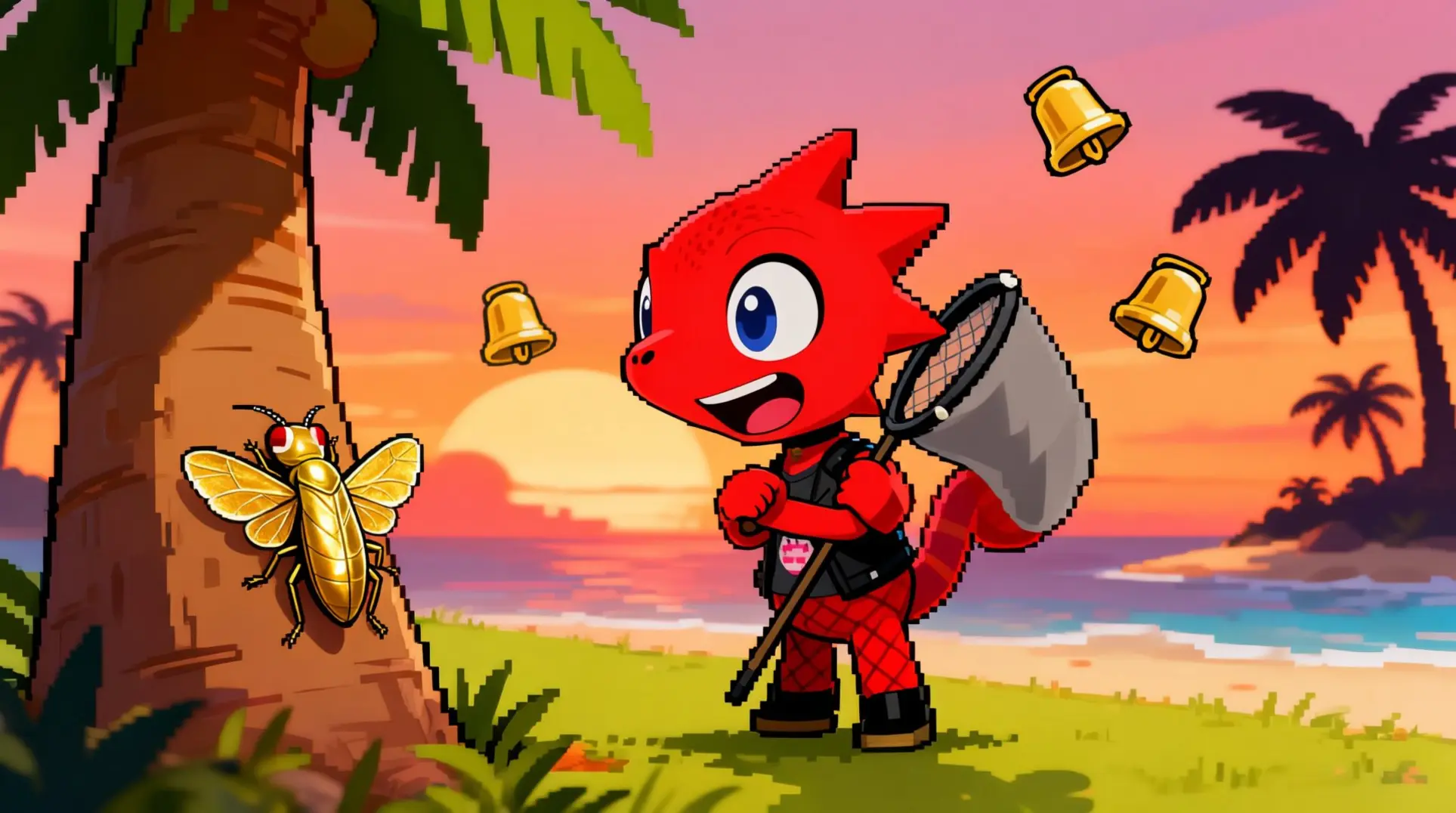
The Switch 2 Edition of Animal Crossing: New Horizons brings the same 80 bugs, but a dramatically better experience for catching them - and making Bells. This guide breaks down the seasonal spawns, Flick's profit-boosting visits, and the new hardware features that turn bug hunting from a chore into a lucrative, responsive game.
The 80-Bug Ecosystem on Switch 2
So here's the thing about the 80 bugs in Animal Crossing: New Horizons on Switch 2 - they're the exact same critters you remember from the original release, and every single one made the jump to the new hardware.
But while the roster didn't change, the actual experience of catching them absolutely did, and the Switch 2's performance boost makes a real difference when you're stalking something like the Golden Stag. Those twitchy rare spawns still vanish if you approach too quickly—their behavior is an intentional game mechanic—but the Switch 2's smoother performance makes the timing easier to execute, saving you some headaches when you finally find one.
Now, if you're here to make Bells - and let's be honest, who isn't? - you need to beeline straight for Flick whenever he shows up, because the guy pays a 50% premium on everything. That's 1.5x what Nook's Cranny offers, and that's not pocket change when you're selling high-value bugs.
Your big three targets are the Horned Hercules, Golden Stag, and Giraffe Stag, since they each go for 12,000 Bells at the store but 18,000 Bells to Flick. That's an extra 6k per bug, which means you can clear a million Bells with just a solid weekend of hunting if you play your cards right.
The real secret sauce is understanding seasonal spawn mechanics though. While the Orchid Mantis spawns on white flowers, flower color has zero influence on rarity. To increase rare bug spawns, focus on tree types, time of day, and spawn clearing cycles.
Spring Bugs
Spring Butterflies & Moths
Spring days are prime butterfly time. From 4 a.m. to 7 p.m., you'll spot Common, Yellow, and Tiger Butterflies just about everywhere on your island, and they're all worth 160 Bells each - nothing to write home about, but at least they're easy catches.
The real prize is the Peacock Butterfly, which fetches 2,500 Bells, but you'll only find it on blue, purple, or black hybrid flowers. If you haven't started flower breeding yet, you're leaving money on the table, and this one sticks around until June, so there's still time to get your hybrid garden going.
Nighttime is for moths. The regular Moth appears year-round near outdoor lights from 7 p.m. to 4 a.m. for 160 Bells, but the Atlas Moth is what you're after - 3,000 Bells and it clings to tree trunks from April through September during those same late hours.
| Bug | Northern Hemisphere | Southern Hemisphere | Time | Price | Notes |
|---|---|---|---|---|---|
| Common Butterfly | Mar–May | Sep–Nov | 4 a.m.–7 p.m. | 160 | Near flowers |
| Yellow Butterfly | Mar–May | Sep–Nov | 4 a.m.–7 p.m. | 160 | Flying anywhere |
| Tiger Butterfly | Mar–May | Sep–Nov | 4 a.m.–7 p.m. | 160 | Very common |
| Peacock Butterfly | Mar–Jun | Sep–Dec | 4 a.m.–7 p.m. | 2,500 | Hybrid flowers only |
| Moth | Year-round | Year-round | 7 p.m.–4 a.m. | 160 | Near lights |
| Atlas Moth | Apr–Sep | Oct–Mar | 7 p.m.–4 a.m. | 3,000 | On tree trunks |
Spring Beetles & Ground Insects
Spring's not just about butterflies - you've got beetles and creepy-crawlies too. The Ladybug is a spring exclusive, hanging on flowers from 8 a.m. to 5 p.m. for 200 Bells, while the Orchid Mantis (worth 2,400 Bells) prefers white flowers and stays around through November.
Stinkbugs are also flower-dwellers. The regular Stinkbug is active all day from March through October for a measly 120 Bells, but its creepy Man-faced variant (1,000 Bells) only comes out at night, from 7 p.m. to 8 a.m.
Ground insects are weirder. Ants and Flies appear year-round, but you have to work for them - ants need spoiled turnips, and flies want trash or spoiled turnips. The Mole Cricket is the oddball here, chirping underground from November through May, forcing you to dig it up, and it's worth 500 Bells.
| Bug | Location | Time | Price | Notes |
|---|---|---|---|---|
| Ladybug | On flowers | 8 a.m.–5 p.m. | 200 | Spring only (Mar–May) |
| Orchid Mantis | On white flowers | 8 a.m.–5 p.m. | 2,400 | Stays through November |
| Stinkbug | On flowers | All day | 120 | Mar–Oct |
| Man-faced Stink Bug | On flowers | 7 p.m.–8 a.m. | 1,000 | Night variant |
| Ant | Ground (spoiled turnips) | All day | 80 | Year-round |
| Fly | Ground (trash/spoiled turnips) | All day | 60 | Year-round |
| Mole Cricket | Underground (dig) | All day | 500 | Nov–May, hear chirp |
Summer Bugs (June-August NH / December-February SH)
Premium Summer Beetles (5pm-8am)
Summer nights are where the real money's at. From 5pm to 8am, palm trees become gold mines, but only if you're hunting the right beetles. The Golden Stag, Giraffe Stag, and Horned Hercules are the big three - they'll each net you 12,000 Bells a pop, which means a full inventory can fund your island for weeks.
But they're not the only ones worth grabbing. The Horned Atlas, Horned Elephant, and Cyclommatus Stag will still pull in 8,000 Bells each, so don't ignore them if they spawn.
And here's some good news for Switch 2 players: the 120 fps docked mode makes these long night hunts way less painful. No more losing an hour of progress because a wasp got you.
If you want to maximize your spawns, you'll need to prep your island. Clear out every non-palm tree and flower, then drop items on the beach to block hermit crabs from spawning. This forces the game to roll beetle spawns almost exclusively, which means more premium bugs and fewer wasted trips.
Summer Cicadas & Dragonflies
Daytime bug hunting is way more chill. Cicadas take over the trees from 8am to 5pm during July and August, and you've got four types to listen for: Brown, Robust, Walker, and Evening. The Evening Cicada is the weird one - it also shows up at 4am-8am and 4pm-7pm, so keep your ears open during those fringe hours.
Dragonflies are where things get tricky. The Banded Dragonfly is the real prize at 4,500 Bells, and it's active during the same 8am-5pm window. But it's rare and fast as hell, which means you'll need patience. Use the hold-A sneak method and wait for it to turn before you strike - spamming the net will just waste your time. Darner Dragonflies are also around, but they're not worth nearly as much.
Other Summer Insects
Not every bug is a bell-making machine, but they're still worth knowing. Fireflies only show up in June, hovering near water from 7pm to 4am and selling for a modest 300 Bells. They're more about atmosphere than profit.
Mosquitoes are the real annoyance, buzzing around June through September at literally any time of day. You can hear them before you see them, and they only net 130 Bells, so most players just swat them out of spite.
Fleas are a weird one - they'll appear on villagers from April through November. If you see a neighbor scratching and complaining, that's your cue to smack them with a net. It's weirdly satisfying and pays 70 Bells.
Finally, don't forget the Blue Weevil Beetle. It spawns on palm trees during July and August for 800 Bells, so if you're already farming for the premium stags, you'll snag these as bycatch.
Autumn Bugs (September-November NH / March-May SH)
Autumn Migrators & Grasshoppers
The autumn grasshopper crew rolls in right as summer fades, and they keep a pretty consistent schedule. You'll find Long Locusts, Rice Grasshoppers, and Migratory Locusts all hopping around on the ground from 8 a.m. to 7 p.m. daily. The Migratory Locust is the exception that proves the rule - it actually shows up a bit earlier, appearing from August through November in the Northern Hemisphere (or February to May down south), which gives you a head start on collection. This one's also your best catch at 600 Bells, while the Long Locust only nets 200 Bells and the Rice Grasshopper lands in the middle at 400 Bells.
Then there are the Monarch Butterflies, the only true migrators of the bunch. These orange beauties stick to flower patches between 4 a.m. and 5 p.m., and they're only around from September to November up north. Unfortunately, they're not worth much - just 140 Bells - but they look great in a museum exhibit.
Autumn Crickets & Rare Spawns
When the sun goes down, the cricket chorus begins. Both Crickets and Bell Crickets appear on the ground during autumn months, but the Bell Cricket is the one you actually want. It sells for 430 Bells compared to the common cricket's paltry 130 Bells, so keep your ears tuned for that distinctive chime.
Red Dragonflies also join the evening scene near ponds and rivers from late September through November. They only fetch 180 Bells, but they add nice variety to your nighttime hunting.
And then there's the real prize: Scorpions. These dangerous boys aren't technically autumn-exclusive - they run from May to October up north (or November to April in the Southern Hemisphere) - but their active hours of 7 p.m. to 4 a.m. overlap perfectly with your evening bug routine. One scorpion brings in a massive 8,000 Bells, which makes those grasshoppers look like pocket change. Just don't get stung.
Winter Bugs (December-February NH / June-August SH)
Snow-Exclusive Bugs
Once your island's covered in snow, you've got access to bugs that won't show up any other time of year. The Dung Beetle is the main event here, and it's got oddly specific requirements - it only spawns while pushing snowballs during the peak winter months (December-February in the Northern Hemisphere, June-August down south).
Two snowballs generate daily when conditions are right, but there's a multiplayer catch that trips a lot of people up: they simply won't appear if your airport gate's open. So if you're planning to hunt with friends, you'll need to close up shop first, which is a bit of a hassle.
Each Dung Beetle sells for 3,000 Bells, which makes them worth the trouble if you've got snow. And don't mix them up with the Earth-boring Dung Beetle - that's a completely different summer bug that hangs out on tree trunks instead of snowballs, so you won't find them in winter at all.
Winter-Available Regulars
Then you've got bugs that aren't exclusive to winter but just happen to be active while you're freezing. The Rosalia Batesi Beetle is a perfect example, spawning on tree stumps all day during your hemisphere's late spring to early autumn (that's November-March for Southern Hemisphere, May-September for Northern).
It'll net you 3,000 Bells, but it's noticeably rarer than other stump bugs, which means you'll want to prep a proper stump farm and clear any obstacles nearby if you're serious about finding them.
The Common Bluebottle is another winter bug, but this one's got a hemisphere bias. Southern Hemisphere players can spot it from October through February between 4 AM and 7 PM, but Northern Hemisphere folks won't see it at all during their winter. It sells for just 300 Bells, and good luck catching it - it flies high, moves fast, and only occasionally drops down where you can actually snag it.
And yeah, you've still got your usual year-round bugs buzzing around, but they're not exactly the stars of the season.
Year-Round Bugs & Special Conditions
Always Available (Any Month)
The good news? Some bugs stick around no matter what month it is, so you always have reliable targets. The Paper Kite Butterfly is probably your easiest catch - it lazily drifts above flowers from 8 a.m. to 7 p.m. and brings in 1,000 Bells, which isn't bad for year-round work.
Then you've got the cleanup crew. Ants will swarm spoiled turnips or any rotten food you leave out, and Flies show up around trash items like old boots or cans. They're only worth 80 and 60 Bells respectively, but they appear pretty much automatically when conditions are right.
Wasps are where the real money's at - shake any tree, any time of year, and these angry yellow bundles drop out. Catch one before it stings and you've got 2,500 Bells. The full year-round roster also includes Moths, Wharf Roaches, Pill Bugs, Centipedes, Spiders, Bagworms, and Snails, though those slimy guys only appear when it's raining.
Special Spawn Conditions
If you're after the big tickets, Tarantulas and Scorpions are your targets - but they don't make it easy. Both spawn on the ground from 7 p.m. to 4 a.m., and they split the year by hemisphere. In the Northern Hemisphere, Tarantulas crawl out from November through April, while Scorpions take over from May to October (Southern Hemisphere players get the reverse).
Unfortunately, there's a strict limit: only one of these dangerous bugs can spawn on ground tiles at any time. This means you can't farm both simultaneously - you'll need to clear your island's floor space and focus your hunting efforts during the right months for the species you want.
Flick Profit Maximization Strategy
Flick's 1.5x Price Multiplier Explained
Flick doesn't just buy bugs - he makes it worth your while. Every insect you sell to him nets 1.5 times what Nook's Cranny would pay, which works out to a clean 50% bonus. That Tarantula you've been hoarding? It jumps from 8,000 Bells to 12,000 Bells in his hands. The same math turns a Golden Stag from 12,000 into a whopping 18,000 Bells, so you can see how this adds up fast.
Top Bugs to Save for Flick (Highest Profit)
So which bugs deserve precious storage space? The big three - Golden Stag, Giraffe Stag, and Horned Hercules - all hit that magic 18,000 Bell price point with Flick, making them the undisputed kings. Scarab Beetles and Giant Stags aren't slouches either, climbing from 10,000 to 15,000 Bells each. Cyclommatus Stags, Scorpions, and Tarantulas sit at a solid 12,000 Bells under his bonus, so they're absolutely worth the wait.
Storage & Inventory Management for Flick
Now for the real challenge: where do you stash dozens of creepy-crawlies without your house turning into a bug hoarder nightmare? Luckily, bugs placed on furniture like tables or even storage shed roofs won't tank your HHA score, and they stay perfectly accessible. One customizable wooden table holds four bug models, so a simple four-table setup stores 16 bugs without costing you a single Bell in expansion fees. Flick only shows up roughly once every two weeks (10–14 days), which means you'll need that storage patience. When he finally arrives, make sure you've upgraded to the Ultimate Pocket Stuffing for 8,000 Nook Miles - those 40 inventory slots let you cash out your entire collection in one trip.
Bug-Off Event Profit Optimization
The Bug-Off changes everything. On the fourth Saturday of June, July, August, and September in the Northern Hemisphere (or November through February down south), Flick not only pays his usual 1.5x rate but also hands out exclusive furniture and trophies for points earned. This is your golden window: burn Nook Miles Tickets to hit untouched islands, fill your pockets with rare beetles, then sell the whole haul to fund even more tickets. It's a self-feeding profit loop that can easily net you hundreds of thousands of Bells in a single afternoon.
Net Types & Crafting
Here's the thing: you can't just buy a good net right away. You start with the Flimsy Net, which needs 5 tree branches to craft, but it only lasts about 10 catches before it snaps. So your first real upgrade comes from the Pretty Good Tools DIY bundle - that's 3,000 Nook Miles at the terminal, and it gives you the recipe for the standard Net. You'll need one flimsy net and an iron nugget to make it, which means you're basically reinforcing your old one.
Now, the Golden Net is what you're really after, but you won't see it until you've caught every bug in your Critterpedia. Once you do, it's yours, and it has roughly 90 durability, so you won't be crafting nets constantly.
If you care about looks more than stats, there are cosmetic variants like the Colorful Net, Outdoorsy Net, and Star Net. They have the same durability as the standard version and you can snag them through Nook Shopping.
Catching Strategies by Bug Type
Here's where technique actually matters. For tree beetles, you can't just sprint up - you need to hold the left stick in tiny, stuttered taps to creep up slowly from the front, which means you'll need patience. If you come from behind or move too fast, they'll be gone before you can blink.
Flying insects are way more forgiving: just swing when they're in range. The key is timing your release as they hover, so you won't waste a swing on empty air.
Now, tarantulas and scorpions are the real nightmare fuel. When one rears up on its hind legs, stop moving completely - like, freeze. You have to wait until it drops back down before you take another step, then you can inch forward. It's slow, but it works.
Mole Crickets are tricky because they're underground, so you can't just see them. You'll need to listen for their distinct chirping, then dig up the source with your shovel to flush them out.
Island Preparation for Farming
If you're serious about farming rare bugs, you need to turn your island into a spawn factory. Start by clearing all flowers, weeds, and sticks from the ground, which opens up more spawn tiles for rare beetles to appear.
Next, break those extra rocks cluttering up the place - not only does it clean things up, but you can also reposition the remaining ones into a rock garden if you're into that.
Here's the big one: remove all non-palm trees from the lower grass levels. This forces the game's spawn table to favor palm tree beetles, so you'll see way more of the valuable ones.
For optimal beetle farming, plant 8-10 palm trees in a straight line along the southern beach, leaving two empty sand tiles between each trunk. That spacing gives you room to maneuver without scaring them off.
Northern Hemisphere Monthly Guide
The NH bug economy runs on a strict seasonal clock, and you can feel the power shift every month. Deep winter - January and February - is rough; you're stuck with Emperor butterflies (4,500 Bells from Flick), Rajah Brooke's birdwings (3,750), and the sad little Paper kite butterflies (1,500) just to have something to do. March doesn't get much better, but at least the tree stumps start paying out with Miyama, Saw, and Giant stags all at 3,000 Bells each.
April finally brings some color back. Agrias butterflies and Atlas moths both hit 4,500 Bells, while M. sunset moths chip in 3,750. But May? That's when you need to pivot hard because the Goliath beetle shows up on palm trees, and that 12,000 Bell price tag means you'll be spamming beaches from 7 PM to 4 AM. June through August is the real golden window - you're farming Golden stags and Horned Hercules for 18,000 Bells each, plus those Goliath beetles. This is your chance to make absolute bank, so treat every palm tree like an ATM.
September is the cruel cutoff; Golden stags and Horned Hercules vanish after the 30th, but you can still scrape by with the 12,000 Bell group: Goliath, Horned atlas, and Horned elephant. October drops the palm beetles entirely, forcing you back to butterflies: Rajah Brooke's birdwing, Agrias butterfly, and M. sunset moth. Then November and December loop you right back to winter's slim pickings with Emperor and Rajah Brooke's again.
Pro tip: Save every palm-tree beetle you catch from June through August. When Flick finally shows, one full inventory of Golden stags and Horned Hercules pulls in 216,000 Bells.
Southern Hemisphere Monthly Guide
If you're playing Southern Hemisphere, just flip the calendar six months ahead. Your summer peak hits in January and December, and this is when your island becomes a Bell factory. Palm trunks from 5 PM to 8 AM spawn Horned Hercules and Golden stags (12,000 Bells base, so 18,000 with Flick), plus Goliath beetles (8,000 base, 12,000 with Flick) and Blue Weevil beetles. Regular tree trunks give you Scarab beetles (10,000 base, 15,000 with Flick) from 11 PM to 8 AM, while the ground spawns Tarantulas and Scorpions (8,000 base, 12,000 with Flick) from 7 PM to 4 AM.
February loses some mid-tier bugs like the Brown, Robust, and Giant Cicada, plus the Scorpion, but you keep all the high-value stags and birdwings, so the money train keeps rolling. March is weird - Tarantulas stick around, the 12,000 Bell stags remain, Atlas Moths return, and Agrias butterflies make their first appearance.
April and May are your full autumn months, and expensive butterflies take over. Agrias, Purple Emperor, and Emperor butterflies all spawn from 7 PM to 8 AM, giving you a solid 4,000 Bell floor with Flick. June and July are dead winter - no new high-ticket bugs, so farm Emperor butterflies at night and maybe stock Mole Crickets for Critterpedia completion.
September brings early spring with Honey-bees and Rainbow stags returning, while Orchid mantises (2,400 base, 3,600 with Flick) spawn on white flowers. October and November are full spring, dominated by Rajah Brooke's birdwing and Peacock butterflies near hybrid flowers, plus the weirdly scheduled Man-faced stink bug from 7 PM to 8 AM.
Quick Bell-Making Tip: December through February evenings (5 PM to 8 AM) are your palm-tree goldmine. Cycle your beaches, force-spawn those high-value stags, and you won't need to worry about turnips.
Flick Visit Planning Calendar
Here is the frustrating part: Flick's visits are completely random. He can show up any weekday (Monday through Friday) after you unlock the plaza, but he's pulled from the same visitor pool as Label, Kicks, Leif, Redd, and C.J. - and only one of them can appear per day. Isabelle will announce him in the morning, so check your plaza daily.
The only guaranteed dates are the Bug-Off tournaments, which hit the third Saturday of every summer month. For 2026, that means:
Northern Hemisphere Bug-Offs:
- June 20, 2026
- July 18, 2026
- August 15, 2026
- September 19, 2026
Southern Hemisphere Bug-Offs:
- November 21, 2025 (saved for 2026 summer)
- December 19, 2025
- January 16, 2026
- February 20, 2026
During these events, Flick buys bugs at 1.5x Nook's price and takes commissions for handmade models - one per visit, ready the next day. The real strategy is hoarding. Fill your home storage or litter your beach with palm tree stags and rare butterflies so when Flick finally appears, you're not scrambling. He'll buy unlimited quantities, so that stockpile becomes your retirement fund.
Switch 2 Edition Enhancements & Tips
Performance Improvements for Bug Catching
Let's be honest, catching dragonflies on the original Switch could feel like a coin flip. The Switch 2 Edition changes that completely - net swing speed is now under 80 ms thanks to the Joy-Con 2's optimized wireless stack and internal improvements, which means timing-sensitive catches like dragonflies, scorpion dodges, and tarantula lunges actually feel responsive instead of laggy.
New Features Affecting Bug Collection
Here's where the Switch 2 Edition really shines for hoarders. But the flex potential is real with 4K Critter Dioramas on the new Display Base furniture, which renders individual wing scales and hairs at 4K/60 fps. Your collection stops being just numbers in a Critterpedia and becomes actual showcase art.
Multi-island decorators get some love too. The Cross-Isle Item Search (ZL+ZR text bar in house storage) highlights every slot containing a specific bug across all visited islands, which streamlines both decorating projects and Flick model planning.
And the cherry on top? One-Click Mass Release at Flick pays that 1.5× value on all non-model bugs instantly, so you're not stuck releasing critters one by one for profit maximisation anymore.
Mastering the bug economy is about timing, preparation, and leveraging the Switch 2's performance upgrades. From hoarding high-value stags for Flick to optimizing your island for rare spawns, a strategic approach can fund your entire island. Now, with smoother controls and better tools, your next big catch is just a net swing away.
More animal-crossing-new-horizons-switch-2-edition Guides

Ultimate Animal Crossing: New Horizons Switch 2 Island Design Guide
Learn how to design your perfect island in Animal Crossing: New Horizons Switch 2 Edition. Master layout fundamentals, villager housing, path design, terraforming, and achieve 5-star ratings.
The Complete Switch 2 Time Travel Guide for Animal Crossing: New Horizons
Learn how to safely time travel in Animal Crossing: New Horizons on Switch 2, including benefits, risks, advanced strategies, and performance improvements.
Animal Crossing: New Horizons Fishing Guide - Switch 2 Edition Strategies & Tips
Master fishing in Animal Crossing: New Horizons with our complete guide. Learn rod upgrades, shadow identification, pier fishing, money-making strategies, and Switch 2 exclusive features.
AI Tactical Companion
Consult with our specialized tactical engine for animal-crossing-new-horizons-switch-2-edition to master the meta instantly.