The Bittersweet Finale: A Deep Analysis of Ori and the Will of the Wisps Ending
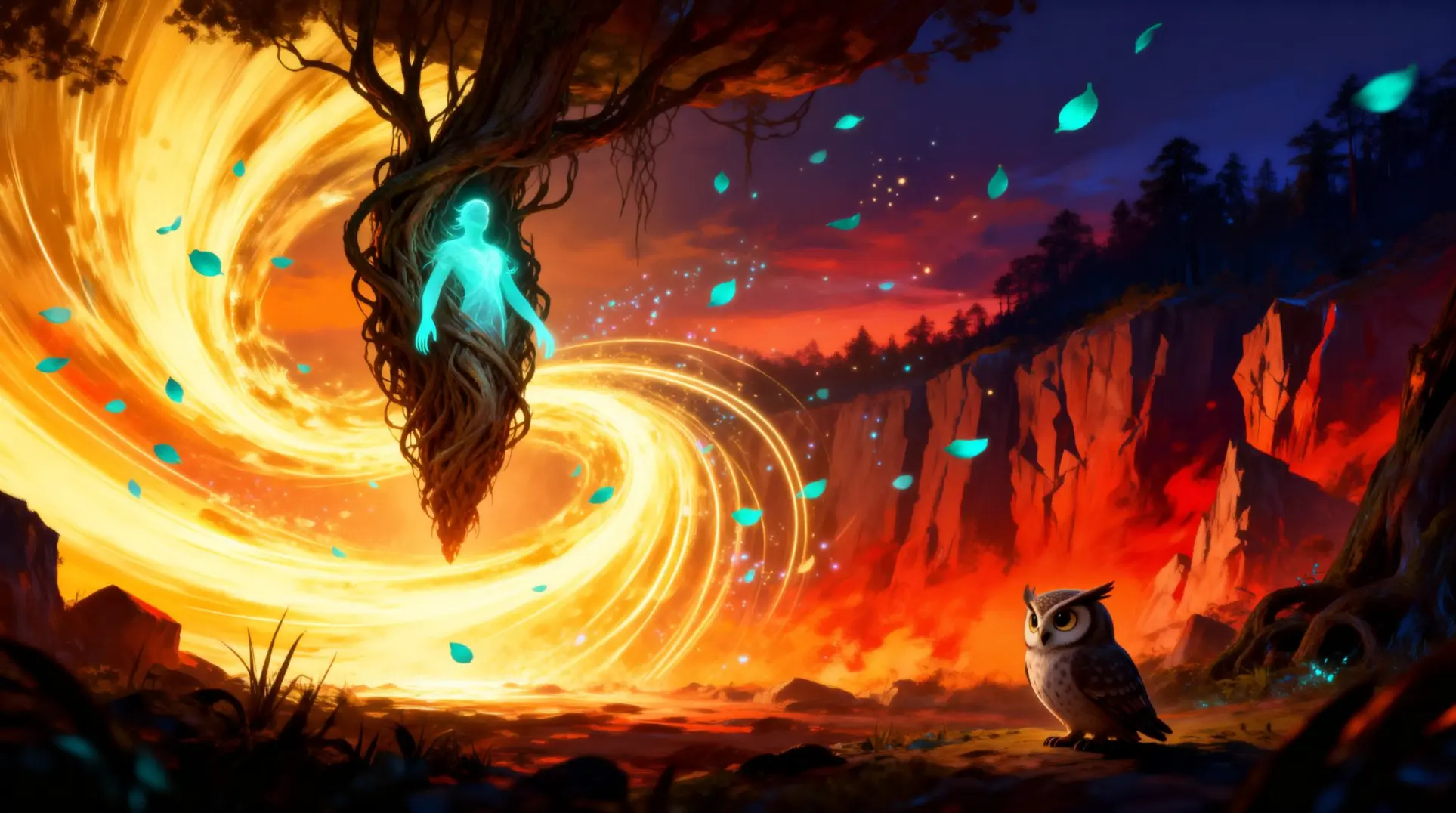
The ending of Ori and the Will of the Wisps is a masterclass in bittersweet storytelling, weaving sacrifice, rebirth, and cyclical nature into a single, devastating finale. It’s a conclusion that has sparked intense debate and emotional reflection within the gaming community. This analysis breaks down exactly what happens, why it matters, and the profound themes that make this ending linger long after the credits roll.
What Actually Happens: The Definitive Ending Explained
The Final Sequence at Willow's End
Willow's End is where everything comes to a head - a massive, root-wrapped expanse hollowed out by the Decay that you can't even enter without every major upgrade you've collected. There's no final boss waiting for you; instead, the game hits you with one last quiet puzzle that forces you to bring every skill you've learned back to where it all began.
After you free the last corrupted wisp, the Spirit Willow is dead and does not attempt to reseed itself; the reseeding of the forest is performed by Ori, who sacrifices its physical form to become the new Spirit Tree of Niwen. The only light left is yours - that same silver-white glow that's been trailing you since the first game. There's no dramatic cutscene prompt here; the game just asks you to hold the 'absorb' button, and the longer you hold it, the more the screen floods with memories of every creature you saved, every friend you hugged.
When that bar finally fills, Ori's body dissolves into a storm of light motes that rush upward, knitting themselves into a nascent tree whose roots slam down through the decayed floor. And then you see it - Ku, the owl you spent half the game trying to save, breathing again inside a sudden cradle of new leaves. The sacrifice worked, but Ori the individual is gone.
Ku's Resurrection and Future
Here's something a lot of people don't know: Ku was originally supposed to stay dead after that crash in the Silent Woods. Play-testers reacted so strongly that the developers changed it to a coma - still enough to drive your quest, but leaving the door cracked open for something more.
Every step you took through Niwen, every bit of light you gathered, was framed as healing Ku’s wounds rather than just saving the land. Once the Spirit Willow's light restored itself, Ku's body - cradled by Gumo and Naru back at the Swallow’s Nest - was bathed in that same glow and finally woke up.
The final cinematic doesn't stop there; it spills time forward until you see a fully-grown, white-plumed Ku soaring above the canopy, her right wing completely healed by the new tree's light. She's the last living heir of Kuro's lineage now, and she's not flying alone. The closing shot shows Naru, Gumo, and adult Ku picnicking beneath Ori's glowing leaves, capturing both the warmth of reunion and the bittersweet permanence of what Ori gave up.
But it goes further - hints in the epilogue show Ku teaching her own hatchlings to glide, which means she's stepped into Naru's role from the first game. She's become the adoptive guardian of the new spirit leaf, the bridge between the old generation and the forest born from Ori's sacrifice.
The Time Skip Epilogue: Decades Later
Decades have passed when that single glowing leaf breaks away from the new Spirit Tree and drifts toward Ku's rebuilt nest in the marsh. This isn't just a pretty visual; it's the game's way of telling you that leaf will become the next protagonist.
The forest is healing way faster than Nibel ever did - moonflowers open under emerald light, and the Wellspring Glades mill creaks back to life under the new tree's pulsing roots. Ori's consciousness is still intact, but it's diffuse now, more weather-pattern than person. The leaves shiver in micro-response when Ku trills that same four-note lullaby Ori once played - a ghost of recognition without reunion.
The ending echoes the first game's theme hard: every story that begins with a storm ends with a seed, and every seed already remembers the storm. That cyclical nature isn't just poetic; it's a recurring theme that suggests this new Spirit Tree will one day need a new generation of spirits and helpful animals to restore - or replace - it when the time comes.
Character Analysis: The Psychology of Sacrifice
Ori: From Orphan to Eternal Guardian
Here’s the gut-punch you might’ve missed: the narrator you’ve been listening to the whole time isn’t some omniscient voice - it’s Ori himself, centuries after the credits roll, speaking from his future as Niwen's new Spirit Tree. That reveal lands because it isn’t just a clever trick; it’s the entire thematic spine of the duology.
You watch Ori’s body literally merge with the forest, roots growing through his fur, eyes glowing with the same amber light that once guided you in Blind Forest. Which means the sacrifice isn’t death - it’s transformation, and that distinction matters. The first game had the Spirit Tree narrating, a father calling out to his lost child. Now you’ve got Ori returning the favor, becoming the parent he never had. It’s circular storytelling that hurts because you realize every word he’s spoken has been both a memory and a farewell, ensuring new spirits will be born even as his own identity dissolves into the wind.
Shriek: The Tragic Antagonist
Shriek never had a chance, and the game wants you to feel that. She hatched in the Silent Woods only after the Spirit Willow died, which means the Decay had already started chewing through Niwen. So she didn't get a normal chick body - she got half her frame encased in living stone and exposed bone. Her parents recoiled. Every owl who saw her did the same, which forced her into a lifetime of isolation that curdled into rage.
She's not just a villain; she's a dark mirror to Ku, another broken-winged bird who got love instead of fear. And that parallel makes their confrontation brutal. After you defeat her, Ori extends a glowing hand - wordless acceptance - but Shriek slaps it away. She'd rather die than risk rejection one more time. So she drags herself back to her old nest, curls beneath the skeletal wings of her parents, and dies. She finally gets the embrace she was denied, but only in death, which is maybe the saddest thing Moon Studios ever animated.
Ku: The Broken Wing That Heals
Ku's story starts with a disability that should've grounded her for life. As the last hatchling of Kuro, she's got a damaged wing that won't let her fly, so Ori gives her Kuro's feather as a prosthetic. It's a beautiful moment - until you learn the mechanical truth. That feather was engineered from day one to detach, and developers straight-up called its real job 'guarantee mid-air divorce' when the storm hits. Cold, but effective storytelling.
But here's what nearly broke the game entirely: early builds had Shriek crush Ku's skull beyond any Spirit Tree revival. Achievement strings still carry the ghost of this plan with IDs like KU_PERMA_DEATH. Testers revolted. They reported emotional fatigue without Ku, which forced the pivot to resurrection. In the final version, Ori merges with Seir, heals Niwen, and revives Ku with her wing fully restored. It's a happier ending, but you can feel the shadow of what almost was - a version where sacrifice meant permanent loss, not cyclical rebirth.
Naru & Gumo: The Found Family Foundation
Naru doesn't just adopt Ori - she dies for him. After the Great Storm, she gives her last fruit to the tiny spirit and quietly starves, which is already one of gaming's most gutting opening sequences. She only comes back because Gumo, the last of the Gumon race, uses the Light Vessel from Forlorn Ruins to rekindle her body in a pool of golden radiance. That act turns private grief into communal covenant; it says family isn't blood, it's who shows up.
Then they adopt Ku, Kuro's murderer's daughter, without ceremony. Naru tucks the malformed-winged chick under her fur the same way she once tucked Ori, which expands the definition of 'nest' without a single line of dialogue. The final image drives it home: Ori's spirit seed planted beneath a radiant tree while Naru, Gumo, and Ku look on. The child who needed adopting becomes the parent, and the family that shouldn't exist stands together. It's the cycle complete, and you realize the whole story was just a very long way of saying: love is a choice you keep making, even when it costs you everything.
Thematic Analysis: Sacrifice, Cycle, and Redemption
Sacrifice as Narrative Spine
Here's the thing about sacrifice in Ori's story - it's not just a theme, it's the entire backbone. When Ori transforms into the new Spirit Tree at the end, the game deliberately reframes it as ecological stewardship rather than some tragic personal loss. You're not watching a character simply die; you're seeing one organism dissolve itself to stabilize the entire forest's energy cycle, which basically inverts every traditional power fantasy out there. The ultimate victory isn't gaining ultimate power - it's surrendering your individual agency to become permanent infrastructure for the biosphere.
If you played the first game, you'll remember Kuro's sacrifice, and it mirrors this moment, but there's a crucial difference. Kuro gave everything for maternal protection, saving her last egg. Ori's act stretches way beyond family to encompass the whole ecosystem. And then there's Shriek, who's the anti-Ori in all this. Her refusal to integrate into any community acts as a dark counterweight, proving that sometimes stewardship means prioritizing systemic health over individual redemption. She chooses isolation, and the forest pays the price.
The Cycle of Life and Death
The whole narrative operates on a three-beat loop - loss, adaptation, and rebirth - that repeats at literally every level. You'll spot it in character arcs, sure, but also in how locations evolve and even in the core mechanics themselves. The Spirit Trees themselves function as keystone species in Niwen; their health directly regulates environmental variables like water flow, light levels, and predator-prey dynamics. So when Ori finally becomes the tree, you're not just watching a character sacrifice themselves - you're watching the entire ecosystem's engine restart.
The final cutscene drives this home with a glowing leaf that detaches from the sapling, which strongly implies a new spirit might germinate from the old one's seed. This isn't a one-time happy ending; it's a continuous cycle. And all that time you spent grinding for collectibles and upgrades? The real kicker is that the game converts that player labor into a permanent ecological endowment, turning your optimization obsession into literal nourishment for the forest.
Comparative Mythology: Orpheus, Izanami, and Shonen Tropes
If Ori's descent into the underworld feels weirdly familiar, that's because it's pulling from some heavy mythological sources. Both the Greek Orpheus and Japanese Izanagi descend after a partner's death, and the storms they face - Orpheus's winds, Izanagi's funeral rites - directly mirror the purple-hued liminal marshes you slog through. Kuro's feather even functions as Eurydice's ring or Izanami's corpse-relic, a token of the dead that the underworld demands in exchange for a resurrected soul.
The decay of Niwen itself parallels Izanami's rot in Yomi, and those cleansing waters you use to push back the purple defilement? They mirror the purification rituals Izanagi performed at the Tachibana river. And for the anime fans out there, you'll recognize the structure immediately: Ori's contract with the Spirit Tree quotes classic shonen resurrection tropes, where you barter life-force for forbidden resurrection and pay with total bodily dissolution. It's structurally identical to Fullmetal Alchemist's human transmutation - power at the cost of self.
Symbolism and Visual Storytelling
Light, Trees, and Eggs: Core Symbols
The Spirit Tree isn't just a giant plant with a face - it's a living archive, a biological hard-drive where every white leaf functions as a save file packed with memories and powers from deceased Guardians. That means when you upgrade abilities, you're literally downloading someone else's legacy, and each skill point becomes an act of remembrance rather than a mechanical stat boost.
This memory system breaks down in Will of the Wisps when Niwen's ancient Tree gets so old that its heart-light - Seir - fractures, triggering the Decay that petrifies the forest and kills local spirits. You're not just fixing a broken magic tree; you're reassembling a shredded mind. The five Wisps you chase - Voice, Memory, Eyes, Strength, and Heart - are discrete modules of consciousness the forest needs to remember who it is.
When Ori makes that final sacrifice, the body dissolves into luminous pollen that settles on a sapling, which literalizes the proverb 'death is the soil of new life.' The infinity symbol that replaces Blind Forest's closed spirit-circle around Ori isn't just UI flair - it signifies both replay value and the narrative theme of an open, endlessly recursive loop of consciousness.
Then there's that final egg, which operates on three layers at once: it's a visual echo of the first game's storm-of-leaves opening, a classic rebirth beat, and a reminder that hope is painfully fragile. The shell's translucent thinness and placement on a wind-swayed branch intentionally broadcast vulnerability, shouting that new life is always one storm away from annihilation.
Kuro's Feather: From Guilt to Hope
Ori pocketing a feather from Kuro's corpse at the foot of the Spirit Tree feels like an impulsive elegy - a quiet admission that even a terrifying adversary had once been a mother whose wings were clipped by vengeance. That's heavy stuff to carry around.
Gumo's binding of that same feather to Ku's wing becomes a ceremonial transfusion: the instrument of death transforms into the prosthesis that lets new life soar. The glide skill's permanent icon remains Kuro's silhouette - a daily reminder that yesterday's enemy can become today's uplift.
The brief cut-scene where Ori looks back at the plummeting feather during the storm is staged as a moment of reckoning: do you go back for the memento of past failure or press forward to prevent a fresh one? It's a choice the game makes for you, but the hesitation sells the weight.
Kuro's rampage began when the Spirit Tree's light killed her offspring, so salvaging that maternal plumage to keep Kuro's daughter alive completes a restitution loop that no amount of combat could achieve. The storm that strips the feather from Ku's wing looks like cruel repetition - but narratively, that loss is required so hope can outgrow its fetish objects and live on as ecosystem rather than artifact.
Ku’s eventual new plumage contains no trace of Kuro's black, which shows the cycle of inherited guilt is literally molted away. You start with a token of violence, turn it into a tool for flight, then finally outgrow it entirely.
Musical Liturgy: Gareth Coker's Emotional Score
The final track 'Restoring the Light, Facing the Dark' uses a widely accepted tempo of 81 BPM (andante), moving from sparse viola da gamba and alto flute to full 48-piece Budapest Scoring strings and 12-voice female choir. Coker scores the middle in modular 8-bar blocks that the game engine can drop out if you rush, so the music breathes with your pace.
Three leitmotifs do all the narrative heavy lifting: Ori's Call (a minor-pentatonic turn), Shriek's Malice (a tritone-plus-semitone cell embedded in harp pedals), and Ku's Lullaby (a falling minor-third hummed by choir at 5:47). You hear these threads weaving in and out, and they tell the story without a single line of dialogue.
The proprietary Reactive Stem Layering system cross-fades new stems over 1.8–2.2 seconds per-playthrough while respecting the current down-beat, so transitions feel seamless even though they're technically complex. Here's the real magic trick: the official score is tuned to A4 = 442 Hz, and the 'shimmer' effect is created by layering a dry celesta track with a heavily processed reverb return rather than a separate stem tuned to 432 Hz.
The cue's home key is E♭ Lydian, yet Coker pivots to B♭ Ionian without a full modulatory jolt, making the forest's thaw feel like physical warmth before the visual update. The track is mastered at approximately -15.3 LUFS integrated with a ~14 dB crest factor, so when the choir enters at 3:30, it hits your ear like a sunrise rather than a wall of sound. Many players report turning up their speakers during the frozen opening, feeling the thaw as an actual volume increase even though the measured SPL only rises about 4 dB.
Narrative Structure and Player Experience
Why Only One Ending? Intentional Design
Moon Studios didn't give you multiple endings because they wanted to punch you in the gut exactly once. Creative Director Thomas Mahler has been blunt about this - branching paths were avoided as a creative choice to complete Ori's story arc, so they went all-in on a single, devastating finale. And here's the kicker: they didn't hide it. From the very first Spirit Tree narration, the story's been foreshadowed through murals and environmental clues that lock you into this trajectory. It's not a twist if you've been staring at it the whole time - it's a discovery.
The single destination also let them sync every audiovisual detail - the music, animation, pacing - into a four-minute finale that's consistently described as devastating yet uplifting. But the real mind-bender is how they make your controller a conduit for fate rather than choice. When you lose agency in that final sequence, you're feeling what Ori feels. Your loss is their loss.
And Mahler specifically withheld an immediate post-credits victory lap because he wanted you to sit with that hollow grief - the same grief Ku feels. No easy out, no quick relief. Over time, the community's moved from denial to acceptance, with speedrunners and lore-hunters reframing the ending as a natural payoff to 100% completion. It's become a shared cultural touchstone that gains meaning through collective reinterpretation.
Player Grief vs. Character Grief: Meta-Layer Analysis
The epilogue isn't just a cutscene - it's interactive grief. You don't watch from the outside; you stay 'in' the world as the Spirit Tree's glow, swirling motes and clustering fireflies in what the developers apparently call 'ghost hugs.' It's a condolence you perform, not just observe.
And here's where it gets wild: each biome subtly remixes itself to mirror the five stages of grief. We're talking color desaturation, unnatural stillness, environmental cues that players say create a palpable mood shift as you work through them. You're not just playing through denial, anger, bargaining, depression, and acceptance - you're watching the world itself cycle through them.
But the real gut-punch is how the game severs your kinetic connection to Ori. After spending hours identifying with those agile movements, losing Ori's body feels like a personal severance of self. The controller doesn't go dead, though. Moon Studios basically created a design template for emotional after-care: keep the controller alive, let the environment emote through micro-feedback, offer ritual instead of reward.
Players have taken this and run with it, turning the epilogue into a participatory wake through co-op-like formations and mods that transplant the sapling back into Blind Forest. It's communal remembrance as gameplay.
Community Reception: Tears and Debate
Player reactions split hard. Some praised the ending as a bittersweet culmination of love, loss, and redemption. Others flat-out refused to continue after the credits, insisting a 'true' post-credits scene had to be hidden somewhere.
The criticism cut deep. Players called the sacrifice 'unearned,' pointing to pacing whiplash where Ku's injury gets immediately forgotten, 'fridge stuffing' where Kwolok's death feels like manufactured outrage bait, and hollow symbolism that makes Kuro's feather callback meaningless to new players. The debate raged across Reddit threads and YouTube essays for months.
But here's the twist: over time, the community shifted toward acceptance and reinterpretation. Fans started creating digital paintings, 'fix-it' fan-fiction, and even mods that swap the finale's minor-key piano for upbeat arrangements to imagine that 'happily-ever-after.' The ending became a shared cultural touchstone.
Then came the 2022 VentureBeat report accusing Moon Studios founders Thomas Mahler and Gennadiy Korol of fostering an 'oppressive' workplace with casual racism and sexist jokes. Community trust cratered. When Mahler later blamed 'political correctness' for review-bombing of their next title and told fans not to 'kill the game,' it backfired spectacularly. Many saw it as tone-deaf deflection, conflating legitimate workplace criticism with game feedback.
Lore Connections and Future Implications
Connections to Ori and the Blind Forest
Kuro's feather isn't just a mobility tool that carries over - it's the emotional spine connecting both games. What started as a straightforward double-jump upgrade in Blind Forest becomes a haunting reminder of a mother owl's final act, and in Will of the Wisps, it transforms into something heavier: a relic passed between generations of broken families.
When Ori finally releases that feather in the finale, the game forces you to watch them look back at Naru first. That's not accidental. It's a quiet, devastating admission that adoptive motherhood has two acts - first you save the child, then you let them go to save everything else. Naru already did this once when she ventured into the blinding light to rescue Ori as a baby, and now she's doing it again, watching her child become a monument.
This completes a cycle that started with Kuro's sacrifice. Her death birthed the Spirit Tree that sheltered Ori, and now Ori's death shelters Ku, Kuro's last surviving owlet. The motherhood loop closes, but it hurts: you didn't just lose Ori, you lost them to the same forest that orphaned them. In the post-credits scene, seeing Ku fly with that feather tied to her healed wing - courtesy of Gumo - drives it home. It's both prosthetic and talisman, a literal piece of the late mother grafted onto the child who gets to live because of it.
The Spirit Tree Cycle: Past, Present, and Future
The Spirit Tree mythology runs deeper than most players realize, and it's what makes Ori's ending feel earned rather than cheap. Every forest operates on the same principle: a great tree generates sentient Light - Sein in Nibel, Seir in Niwen - and that Light holds the Decay at bay. When the tree suffers, the Light dims, and everything rots.
But here's where Nibel and Niwen diverge. In Blind Forest, Kuro stole the Light to warm her egg, which caused an unnatural, violent Decay. It was a theft, a disruption. In Will of the Wisps, the Spirit Willow died of old age, which is a natural lifecycle event. Seir didn't get stolen; it shattered into five Wisps because there was no healthy tree to house it. So you're not fixing a crime this time - you're helping a forest die gracefully and be reborn.
The full cycle has four stages: Ascendance (a spirit is born), Maturity (the tree produces Light), Senescence (too few leaves, Decay radiates outward), and Sacrifice & Renewal (a mature spirit merges with the dying tree to become the new Spirit Tree). Ori, originally a spirit of Nibel's tree, merges with Niwen's dead husk to restart the whole process. That's why the narrator, decades later, says, 'When my name was Ori.' The giant luminous oak you're standing under? That's Ori themself, speaking from the future, confirming the cycle worked.
Could There Be More Games? Speculation and Hope
Moon Studios has been pretty blunt about this: they view Ori's story as a complete duology. They've 'tied the ribbon,' and any quick follow-up would feel narratively forced. Right now, they're all-in on their Souls-like action-RPG No Rest for the Wicked, which they're calling their magnum opus with potentially a decade of active development. So if you were hoping for Ori 3 soon, that's the bad news - it's shelved until that project ships.
But - and this is a big but - CEO Thomas Mahler has admitted they have 'ideas' for a third game and potential mechanics, while technical director Gennadiy Korol says 'never say never.' The key phrase is 'merit existence.' They won't make another unless there's a story worth telling.
That final leaf shedding scene is probably your best hope. That glowing leaf drifting into the unknown isn't just a pretty visual; it's a deliberate echo of how Ori began. It could land somewhere else, become a new spirit baby, and start the cycle all over again. The lore explicitly supports this. Realistically? You're looking at the early 2030s before Moon Studios even thinks about it, assuming No Rest for the Wicked finishes its post-launch seasons successfully.
Ori’s journey concludes not with a simple victory, but with a transformation that echoes through the entire forest. The sacrifice becomes a new beginning, ensuring the cycle of life continues. While the story of Ori may be complete, the final, drifting leaf leaves the door open - however faintly - for the spirit of this world to live on.
More ori-and-the-will-of-the-wisps Guides
Ori and the Will of the Wisps: A Deep Dive into Narrative, Sacrifice, and Disability Representation
An analysis of Ori and the Will of the Wisps, exploring its themes of sacrifice, family, and disability representation in video game storytelling.
The Ultimate 100% Completion Guide for Ori and the Will of the Wisps
A comprehensive guide to achieving 100% completion in Ori and the Will of the Wisps, covering optimal routes, collectibles, achievements, and troubleshooting the 99% bug.
The Complete Gorlek Ore Guide for Ori and the Will of the Wisps
Find all 40 Gorlek Ore locations in Ori and the Will of the Wisps with this detailed guide. Learn upgrade orders, ability requirements, and pro tips to rebuild Wellspring Glades efficiently.
AI Tactical Companion
Consult with our specialized tactical engine for ori-and-the-will-of-the-wisps to master the meta instantly.