Complete Ghost of Yotei Beginner's Guide: Essential Tips for Starting Atsu's Journey
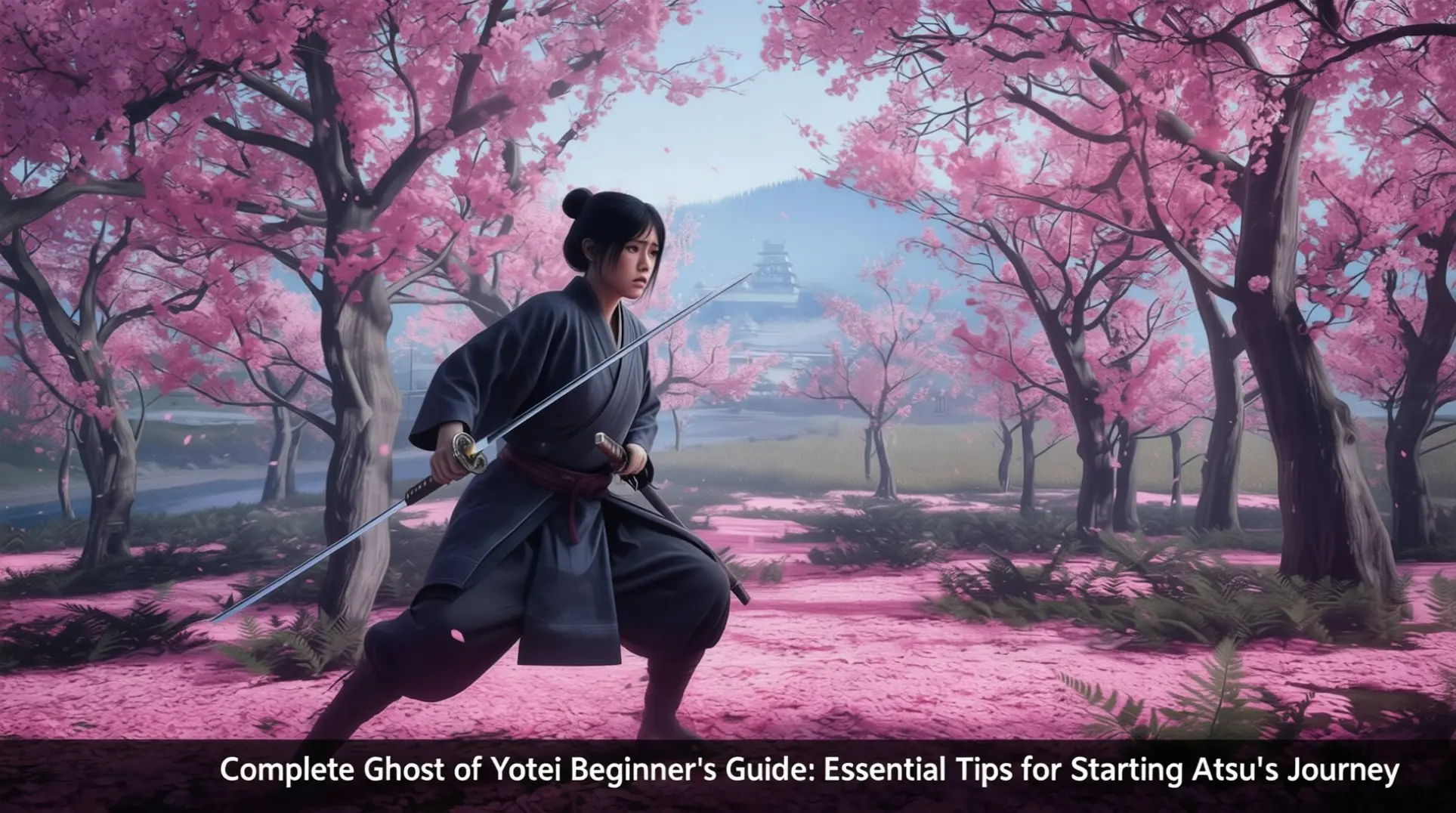
Ghost of Yōtei releases on October 2, 2025, for PlayStation 5. The game is set in Ezo: the untamed northern frontier of modern-day Hokkaido, in 1603 at the start of the Edo period. This harsh, frigid environment contrasts sharply with Tsushima's temperate climate, and takes place over 300 years after the original game's events.
You play as Atsu: a young female mercenary seeking vengeance against the Yōtei Six, the ruthless figures who murdered her family 16 years prior. Her personal quest for revenge unfolds against a backdrop of political upheaval and cultural transformation in this dangerous frontier.
The game introduces major gameplay changes. The stance-based combat system is completely replaced by a new system featuring five distinct weapons. A new musical instrument enhances cultural immersion, while three cinematic modes allow you to tailor the visual experience. This guide will equip you for Atsu's journey—no prior experience needed.
Essential First Steps (Your First 2 Hours)
Master the Prologue: Your First Hour
The prologue in the Yotei Grasslands region serves as an extended tutorial. This opening area teaches fundamental mechanics before unleashing you into the wider world. The full story spans 26 missions across the prologue and three chapters. Your first hours focus on establishing the foundation for this epic journey.
The opening kanji-drawing sequence uses motion controls via Touch Pad swiping. Take your time with this gesture; it establishes your connection to the spirit world. Your first major objective is "Confront the Snake," the first target of the Yōtei Six. This encounter serves as your graduation exam from the tutorial phase.
After the prologue, the transition to open world unlocks the full map. You'll gain access to broader exploration and optional activities.
Develop Your Combat Philosophy
The combat system emphasizes positioning and timing over raw power. Master these fundamentals and you'll overcome challenges even with basic equipment. Stealth approaches work for many early encounters. Observing patrol patterns and using environmental cover will preserve your resources for mandatory fights.
Early skill investment should focus on your preferred playstyle. Resist the temptation to spread points across multiple trees; depth beats breadth in the early game.
Secure Resources and Progress
Resource gathering is crucial for equipment maintenance. Collect herbs, ore, and crafting materials as you explore; your gear degrades faster than you expect. Early bounty hunting provides profitable practice opportunities. These optional targets let you hone your skills while earning currency for upgrades.
Main story progression should take priority over extensive side content. The narrative missions unlock essential abilities and gear that make exploration safer.
Follow the recommended early route:
- Village hub
- Forest area
- Shrine
- Ruins
- Optional zones
- Castle entrance
This path balances story progression with manageable challenges and resource opportunities.
Mastering Combat Fundamentals
Ghost of Yotei completely replaces Ghost of Tsushima's stance system with five distinct melee weapons. Each weapon offers unique tactical advantages and requires different combat approaches.
Weapon Arsenal and Tactics
The weapon-based counter system is fundamental to combat success. Understanding each weapon's strengths and exploiting enemy weapon vulnerabilities must be understood and exploited.
| Weapon | Tactical Advantage |
|---|---|
| Katana | Balanced |
| Dual Katanas | Speed/aggression |
| Spear/Yari | Reach/control |
| Heavy Weapon/Ōdachi | Power |
| Kusarigama | Versatility |
Quick-Swap Mechanism: This system allows transitioning between weapons mid-combat. The flexibility lets you adapt your strategy to different enemy types and situations.
Defensive Fundamentals
Perfect parry timing is crucial for effective combat. The dodge mechanic features timing-based execution similar to the parry system, requiring precise input windows.
Positioning: Combat emphasizes positioning, timing, and environmental awareness over raw power. Mastering these elements is more important than simply dealing damage.
- Parry and dodge timing windows must be learned through practice
- Environmental awareness provides tactical advantages
- Positioning determines combat effectiveness more than weapon choice alone
The Spirit System
Spirit Meter: This meter affects combat capabilities and determines aggression/defensiveness levels. Managing your Spirit meter effectively will dictate your combat effectiveness throughout encounters.
Exploration and World Navigation
Fox Dens and Shrines: Rewards for the Curious
Fox Dens: Marked by distinctive red-leaved trees throughout Ezo, these locations spawn a fox to follow. Following the fox leads you to an Inari Shrine.
Shrines: Also known as Shrine Climbs, these 13 locations challenge you to reach elevated sacred sites. Each Shrine provides Major Charms and upgrade materials.
Charms: These are socketable gear pieces that enhance combat, stealth, and survivability. Collecting them from Shrines significantly improves your capabilities.
- Fox Den Completion: Finding all 11 unlocks the "Guardian of Inari" trophy.
- Shrine Completion: Completing all 13 is required for the "Body, Mind, and Spirit" trophy.
Navigating Ezo Without a Minimap
Golden Ginkgo Leaf Navigation: This system replaces traditional minimaps and compasses entirely. It uses visual cues rather than a corner map.
Wind Direction: The Gust Wind mechanic guides you toward tracked objectives. You can also use the Traveller's Map for orientation.
This navigation approach encourages environmental awareness. You'll need to pay attention to landmarks and natural cues for immersion.
Hidden Wonders and Secret Objectives
Hidden objectives, revenge tales, and vanity gear are scattered throughout Ezo. These secrets reward thorough exploration beyond main collectibles. Environmental clues lead to these optional treasures. Keep your eyes open for anything unusual in the landscape.
Character Progression and Skills
The Altar System and World-Anchored Progression
The progression system is world-anchored, requiring you to physically visit Altars of Reflection throughout the Ezo region to earn skill points. There are 61 altars scattered across the map.
You interact with each altar using a touchpad swipe motion to receive your skill points. All choices are permanent, as there is no respec option available.
Altars of Reflection: Sacred sites that grant skill points when discovered and activated.
- Finding 30 altars unlocks the Moments of Reflection trophy.
The Four Skill Trees
The game features four distinct skill trees: Combat, Stealth, Survival, and Spirit. Each tree offers unique abilities that cater to different playstyles.
- Combat tree: Focuses on direct confrontation abilities and weapon mastery.
- Stealth tree: Focuses on infiltration and silent combat techniques.
- Survival tree: Focuses on resource management and endurance improvements.
- Spirit tree: Focuses on supernatural abilities and mystical techniques.
Early Game Strategy and Phased Progression
Strategic altar discovery is crucial for efficient progression. The game naturally divides into three phases based on how many altars you've found.
Phase 1 progression covers your first 5-7 altars and should focus on survivability and basic combat skills. These early choices establish your foundation for the challenges ahead.
Phase 2 specialization begins around altars 8-15, where you should focus on developing specific playstyles. This is when you commit to either stealth, combat, or a hybrid approach.
Phase 3 optimization starts at altar 16 and beyond, allowing you to fine-tune your build with advanced skills. By this point, your character identity should be well-established.
Stealth and Alternative Approaches
Core Stealth Mechanics
Tall Grass Concealment: Crouching in tall grass using the R3 button makes Atsu fully invisible to enemies. This is your most reliable basic stealth tool.
Visual feedback systems keep you informed. Yellow outlines and on-screen prompts clearly indicate when you're in position for a stealth kill. These systems help you understand your stealth status at all times.
Environmental Mastery
Snow deformation creates a tactical layer. Both you and enemies leave tracks in the snow, which can be used to your advantage.
Line-of-Sight Breakers: Various environmental features can break enemy vision:
- Carts
- Walls
- Hanging cloth
Denser environments with increased verticality create a richer stealth playground with multiple approach angles.
Weather systems provide powerful distractions. Blizzards naturally muffle sound and reduce visibility, enabling riskier stealth approaches. Enhanced environmental features allow for complex strategies beyond simple hiding.
Advanced Enemy Tactics
Not all enemies fall to basic stealth attacks. Specific talents are required to stealth-kill Brutes and Leaders, forcing you to adapt your approach.
Resource Management and Economy
Understanding the Three Core Economy Elements
Three core elements drive the economy: Coins, Crafting Materials, and Bounties. Coins serve as the primary currency for upgrades and purchases. Bounty hunting is the most lucrative method for earning coins.
Crafting Materials are divided into three categories:
- Precious Woods/Metals: Limited resources crucial for high-tier upgrades
- General Crafting Materials: Used for ammunition, dyes, and basic upgrades
- Trading Resources: Items exchangeable at merchants for coins or other goods
Trading, Upgrades, and the Yōtei Shadow Inn
Yōtei Shadow Inn serves as the central trading hub. It houses merchants who facilitate weapon upgrades across melee weapons, bows, bombs, and firearms. Metal is crucial for weapon and armor upgrades.
Strategic trading requires understanding merchant specializations. This knowledge prevents wasted resources and maximizes transaction value. Proper resource management ensures you avoid upgrade bottlenecks.
Strategic Progression and Resource Management
The early game strategy focuses on bounties for income while collecting essential materials. This dual-purpose approach establishes your economic foundation efficiently. Prioritize coin generation over immediate upgrades during this phase.
As you progress, invest in the comprehensive weapon upgrade system. The Abandon Tale feature allows saving progress before major equipment investments. This lets you test upgrades without permanent commitment.
In later stages, manage precious woods and metals carefully. These limited resources should be reserved for high-tier upgrades only. Understanding when to trade versus when to craft becomes critical for avoiding bottlenecks.
Common Beginner Mistakes to Avoid
Progression Pitfalls: Building Your Character Wisely
All skill choices are permanent and irreversible. There is no respec option in Ghost of Yotei.
- Wasting early points on flashy abilities: Beginners often spend precious skill points on impressive but inefficient abilities. Invest in core survivability skills first to establish a strong foundation.
- Treating it like a traditional RPG: Approaching the skill system like conventional RPGs leads to inefficient exploration and character building. This system rewards focused specialization over generalization.
- Scattering skills across all trees: Spreading investment across all skill trees dilutes your effectiveness. Choose one or two trees to master before branching out.
- Neglecting stealth capabilities: Ignoring stealth makes infiltration missions unnecessarily difficult. Even minimal investment in stealth tools transforms challenging infiltrations into manageable puzzles.
- Spreading weapon upgrades too thin: Upgrading all five weapon types equally creates five mediocre options. Focus on mastering two or three weapons instead of remaining mediocre at all five.
- Ignoring the quick-swap system: Not experimenting with the quick-swap weapon system limits your combat flexibility. Practice switching weapons mid-fight to exploit enemy vulnerabilities.
- Neglecting the Spirit meter: The Spirit meter system is central to both combat and exploration. Understanding its regeneration and expenditure mechanics is crucial for success.
- Skipping defensive fundamentals: Focusing only on offensive abilities while neglecting defensive and mobility options creates critical vulnerabilities. Mastering perfect parry and dodge timing is non-negotiable for survival.
Combat Missteps: Beyond Button-Mashing
Treating combat like button-mashing instead of emphasizing positioning and timing leads to repeated failure. Focus on deliberate actions over rapid attacks.
- Mashing without strategy: Button-mashing ignores the importance of positioning and timing. Study enemy tells and attack windows to maximize your effectiveness.
- Underestimating environmental tools: Underestimating environmental interactions and stealth mechanics removes your most powerful advantages. Use shadows, high ground, and interactive objects to turn difficult situations in your favor.
Exploration Errors: Missing What Matters
Rushing through tutorial areas causes missing critical early Altars of Reflection. These permanent bonuses shape your entire journey.
- Rushing the tutorial: Speeding through early zones means permanently missing critical Altars of Reflection. Explore thoroughly before leaving each tutorial area.
- Poor altar planning: Poor altar discovery planning leads to missing nearby opportunities. When you find one Altar, search the surrounding area carefully—others are often clustered nearby.
- Misunderstanding navigation: Not understanding the golden ginkgo navigation system will have you wandering aimlessly. Learn to read these trees as they point toward secrets and objectives.
Economic Blunders: Managing Your Resources
Early financial mistakes include upgrading all armor at once. Resource management determines your power curve throughout the game.
- Upgrading everything simultaneously: Upgrading all armor pieces at once drains resources inefficiently. Upgrade one piece at a time to maintain steady progression.
- Luxury over necessity: Prioritizing luxury weapon upgrades instead of essential combat effectiveness upgrades wastes precious coins. Focus on functional improvements before cosmetic enhancements.
- Hoarding materials: Poor resource management, especially metal inventory for upgrades, stalls your progression. Sell excess materials regularly while maintaining a reserve for critical upgrades.
- Ignoring bounty hunting: Ignoring bounty hunting means skipping the most lucrative coin-earning method. Even early bounties provide funds that make a significant difference.
Advanced Tips for Early Game Advantage
Combat Mastery
Perfect Parry Timing: Master this by focusing on enemy weapon movement rather than body movement. The optimal timing occurs at the attack animation apex, not the contact moment.
Wind-up Parry Technique: Execute your parry during the wind-up animation for better success rates. This advanced method dramatically improves your defensive consistency.
Combat emphasizes positioning, timing, and environmental awareness over raw power. Build your skills progressively by starting with single enemies before adding complexity gradually.
Strategic Progression
Phase 1 Progression: Your first 5-7 Altars should focus exclusively on survivability upgrades. This foundational investment determines your early-game success.
Bounty hunting is the most lucrative early-game income source. Prioritize these contracts to fund equipment upgrades efficiently.
Abandon Tale Feature: This allows strategic progression by letting you exit quests to focus on equipment upgrades when needed. Use it tactically to maintain optimal momentum.
Golden Ginkgo Navigation: This system only points to actively tracked objectives. Manage your quest tracking carefully to avoid wasted travel time.
Optimization Techniques
Weapon Alignment System: When your weapon counters an enemy type, you achieve increased stagger damage. This makes strategic weapon swapping during combat a tactical necessity, not a preference.
Spirit Meter: This resource generates through successful attacks and Perfect Parries, fueling your special abilities. For parry-focused builds, light armor offers the best mobility to maximize both meter generation and defensive positioning.
Focus on learning 2-3 favorite weapons rather than mastering all options. Deep proficiency with a limited arsenal proves more valuable than shallow knowledge of every weapon type.
Environmental distractions like blizzards create valuable stealth opportunities. Use these natural events to bypass threats or set up ambushes when direct confrontation isn't ideal.
FAQ: Ghost of Yotei Beginner Questions
Fox Dens and Exploration
Q: How many Fox Dens are there, and what's the reward for finding them all? A: Fox Dens: There are 11 total in the game. Finding all of them unlocks the "Guardian of Inari" trophy.
Q: How do I actually find Fox Dens in the world? A: Fox Den Markers: Look for red-leaved trees as visual cues. Following the foxes that appear will lead you to Inari Shrines.
Weapon System Basics
Q: What's the best weapon for a beginner to start with? A: Katana: This is the most recommended early weapon for beginners. You start with it by default, and it's a balanced, reliable option for learning the ropes.
Q: I heard the stance system is gone. What replaced it? A: Weapon Alignment System: The stance system has been completely replaced with 5 distinct melee weapons. This provides more diverse combat experiences than the old stance variations.
Q: What are all five weapons and what makes each one special? A: Melee Weapons: Each weapon serves a unique tactical purpose:
- Katana: Balanced and reliable
- Dual Katanas: Major upgrade, great against spear enemies
- Spear/Yari: Top-tier reach and defensive positioning
- Heavy Weapon/Ōdachi: Heavy damage and stagger potential
- Kusarigama: Tactical flexibility with varied reach
Mastering Combat with Weapon Swapping
Q: Should I stick with one weapon or swap between them? A: Strategic Weapon Swapping: This is a tactical necessity. You'll need to switch weapons based on enemy types and situations to stay effective.
Conclusion: Starting Your Journey Right
Master the Fundamentals, Reap the Rewards
Mastering combat fundamentals is crucial for success in Ghost of Yotei. The game rewards patience and strategic thinking over aggressive play, making calculated approaches far more effective than reckless rushing.
Strategic skill progression prevents common pitfalls that beginners face. Taking time to understand systems leads to better experience overall, as each mechanic interconnects to create a cohesive whole.
Explore Ezo and Shape Your Path
Ezo: The vast northern region where your adventure takes place. This expansive land rewards curious players who take time to investigate its secrets.
Thorough exploration provides significant advantages. Hidden rewards and valuable resources await those who venture off the beaten path and delve into every corner of the world.
The unique progression system encourages meaningful choices. Every decision you make shapes Atsu's capabilities and your personal playstyle, creating a customized journey.
Your Journey Begins Now
Each section of the guide builds upon previous knowledge. Return to earlier chapters as needed to reinforce concepts and discover new applications for fundamental skills.
Atsu: The protagonist whose path you forge through the challenges ahead. The journey as Atsu is both challenging and rewarding.
Embrace the difficulties ahead, trust in the strategies you've learned, and forge your legend in the lands of Ezo.
More Ghost-of-Yotei Guides

Complete Ghost of Yotei Beginner's Guide: Essential Tips for Starting Atsu's Journey
Master Ghost of Yotei with our comprehensive beginner's guide. Learn combat mechanics, exploration tips, and strategic progression through Ezo.
Ghost of Yotei Clue Card System Master Guide: How to Track Quests and Find Secrets
Master Ghost of Yotei's innovative clue card system with our complete guide to quest tracking, Yotei Six hunting, and exploration mechanics. Learn how to interrogate enemies, find Ugetsu, and discover secrets across Ezo.
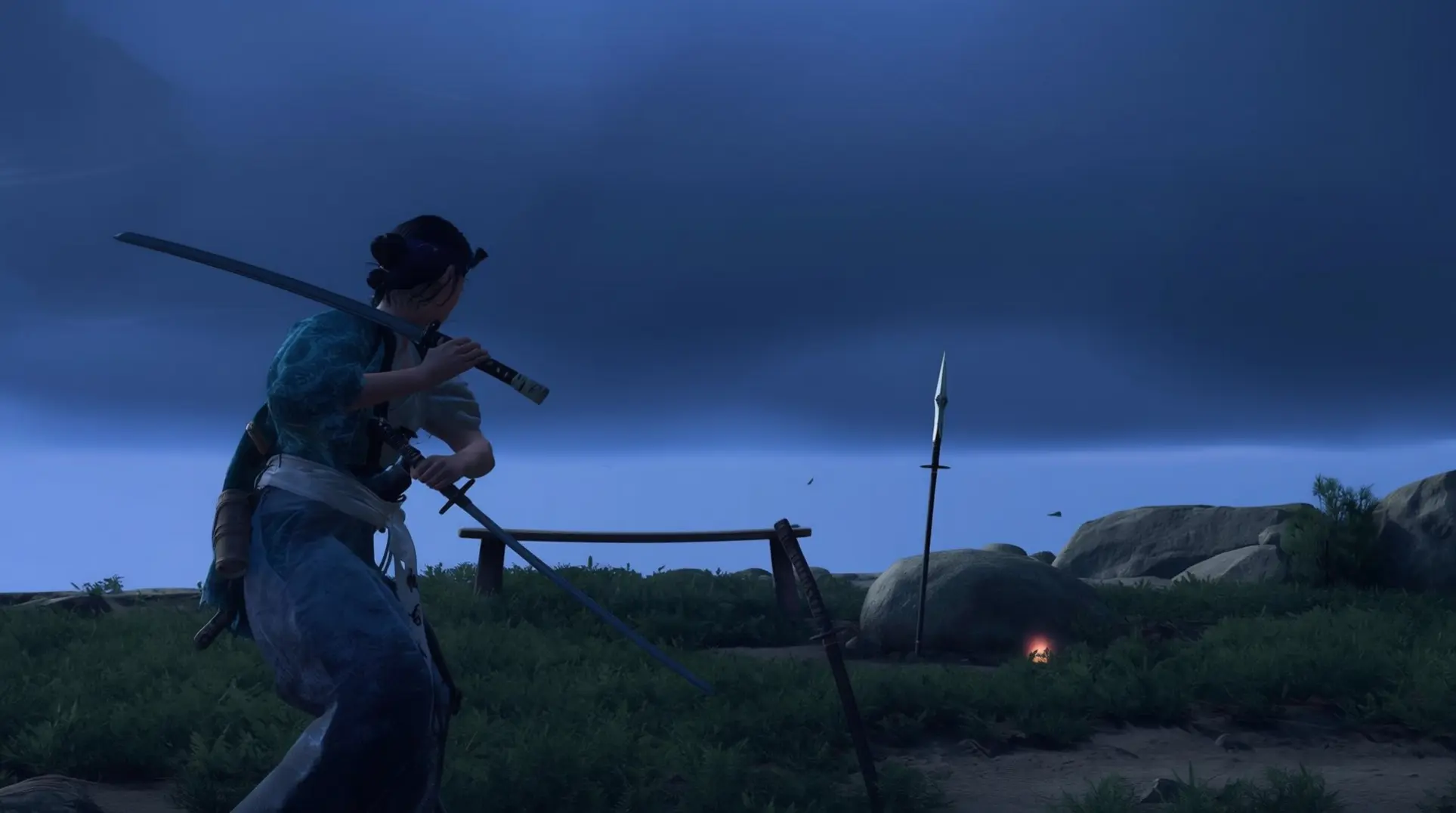
Ghost of Yotei Weapon Tier List 2025: Best Builds & Combat Styles
Master Ghost of Yotei's combat with our definitive weapon tier list, optimized builds, and combat style guide for 2025. Learn which weapons dominate.
AI Tactical Companion
Consult with our specialized tactical engine for Ghost-of-Yotei to master the meta instantly.