Ghost of Yotei Clue Card System Master Guide: How to Track Quests and Find Secrets
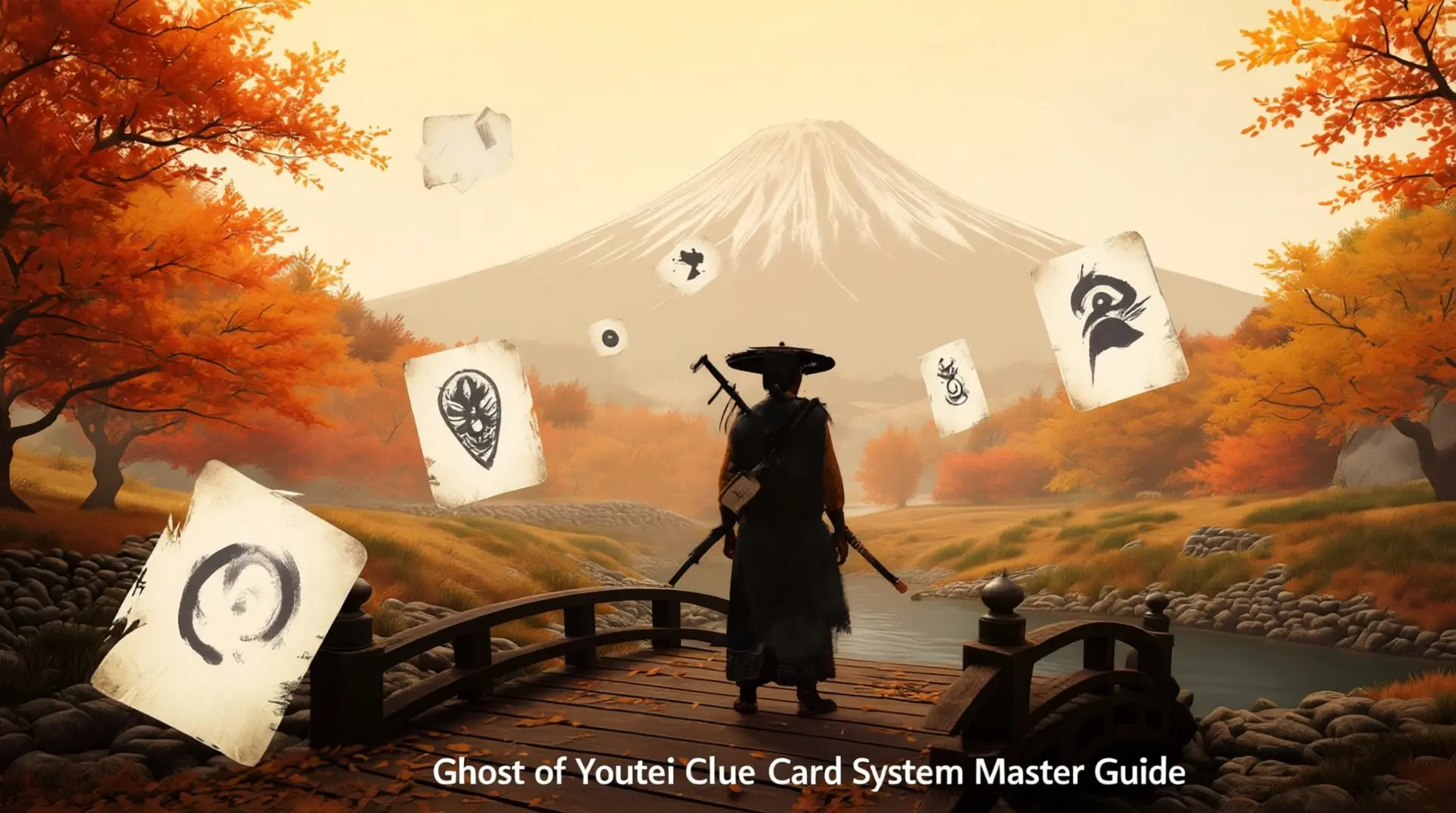
Ghost of Yotei's clue card system represents a revolutionary approach to open-world exploration that transforms how players engage with Atsu's journey of vengeance. This innovative mechanic replaces traditional quest tracking with a tangible, visual system where players collect clue cards through interrogation and exploration. As Atsu uncovers information about the Yotei Six—the group responsible for destroying her family—she draws new cards that visually represent available adventures and targets. The system was specifically designed to make activities less repetitive than Ghost of Tsushima by offering organic, player-driven discovery that invites exploration through curiosity rather than checklist completion.
Understanding the Clue Card System
How to Acquire Clue Cards
The primary method for acquiring clue cards is through the Interrogation system. Players can disarm and interrogate enemies during combat to receive clue cards as rewards, choosing from options provided to tailor information gathering to their preferred playstyle.
Settlers also provide clue cards after certain battles. For example, you can get a Clue Card for the Saito quest from a Settler after completing a battle, and the Old Inn Settler provides information on the Yotei Six, allowing you to choose who you want to learn more about (Kitsune or Oni) and obtain corresponding clue cards.
Use the spyglass to scout for discoverable locations like Altars of Reflection. This scouting tool is activated with Up on D-Pad and vibrates the controller when hovering over distant points of interest worth investigating.
- Disarm enemies during combat to unlock interrogation opportunities
- Choose your reward card from interrogation options
- Receive cards automatically from settlers after specific battles
- Use the spyglass to scout for discoverable locations like Altars of Reflection
- Obtain post-game clue cards automatically after finishing the main story through Unfinished Business tales
The Clue Card Interface
The clue card system is accessed through in-game menus where players can track achievement progress and manage their collected clues. The UI is highly configurable with customizable presentation, multiple input devices, and configurable touch controls for accessing the clue system.
The UI design minimizes on-screen clutter in favor of environmental cues. The world itself tells players where to go rather than relying on traditional markers, creating an organic discovery-based approach rather than a traditional checklist-style journal.
- Navigate using landmarks, horse mount, and Gust Wind mechanic alongside the clue card system
- Configure interface options including presentation and touch controls
- Track progress and manage collected cards through the menu interface
- Access Unfinished Business tales automatically after completing the main story
Tracking the Yotei Six
Key Regions for Yotei Six Hunting
The Yotei Six are located across six distinct regions. These regions each have unique characteristics for hunters to explore.
- Yotei Grasslands
- Ishikari Plain
- Tokachi Range
- Nayoro Wilds
- Teshio Ridge
- Oshima Coast
The Yotei Grasslands region contains 6 bounty targets in addition to Yotei Six camps. The Saito Compound is located in the southern coastal area beyond Shirahige Falls, while the Saito Recruitment Camp is found near the Nupur River west of Serpent's Pass.
The Nayoro Wilds region contains no enemy camps, making it unique among the six explorable regions. Note that the Saito Encampment is marked red on the map but does not count as a Yotei Six Camp despite its appearance.
Camp Locations and Rewards
There are 22 Yotei Six Camp locations spread across the game world. Players must conquer these camps by defeating all enemies to unlock new quests and Altars of Reflection, which serve as fast travel points throughout the regions.
Clearing camps grants access to these Altars and unlocks additional content. The Nayoro Wilds region is the only area without any enemy camps.
Intelligence Gathering and Target Order
Players gather intelligence on Yotei Six members by visiting specific locations. At these locations, they can ask for the whereabouts of either the Oni, Kitsune, or Dragon and Spider.
The Oni is located in the Ishikari Plain region and serves as an ideal first target. His questline teaches players how to use the Yari (spear). The Kitsune is Lord Saito's spymaster and is recommended as the second target after defeating the Oni. The Kitsune's locations can be quickly found through intelligence gathering.
Ugetsu the Storyteller and Mythic Tales
Finding Ugetsu
Ugetsu the Storyteller's primary location is the Forbidden Shrine at the southernmost tip of the Oshima Coast, where he waits beside the stairs leading to a tiny shack. This location is also called the Home of the Storyteller, and Ugetsu serves as narrator for both single-player Mythic Tales and potentially the multiplayer Legends mode.
Ugetsu is a nomadic figure who moves between multiple fixed locations across Ezo. His movement appears triggered by player progression, with new Mythic Tales becoming available at different stages. Players must travel to the Forbidden Shrine and speak with Ugetsu to begin their first interaction. Finding Ugetsu is required to unlock certain armor sets, as he serves as the gateway to Mythic Tales.
- Forbidden Shrine, Oshima Coast: Primary location and starting point
- Storyteller's Rest, Ishikari Plain: Where he appears for The Undying Samurai Mythic Tale
- Sakuru Woods near Mother Daughter Tree, Teshio Ridge: Where he appears for The Crimson Kimono Mythic Tale
Mythic Tales Overview
Mythic Tales are special side quests marked with brown icons on the map that reward legendary gear and techniques. They provide unique bonuses for stealth, spirit generation, and stagger damage. These quests are worth prioritizing early as they offer game-changing armor sets. Ugetsu functions as a stationary quest giver at each location, granting access to these powerful rewards.
| Mythic Tale | Location | Reward |
|---|---|---|
| The Undying Samurai | Ishikari Plain, Nakagoya Spring | Undying Samurai Armor Set |
| The Crimson Kimono | Teshio Ridge, Sakuru Woods near Mother Tree | Crimson Kimono Armor |
| The Storm Blade | Oshima Coast | Storm Blade weapon |
| The Way of the Kusarigama Sensei Tale | Not specified in available facts | Kusarigama Spirit Attack ability |
The Storm Blade Mythic Tale unlocks the 'Way of the Kusarigama' trophy, and The Way of the Kusarigama Sensei Tale is the first of three tales required for the same trophy. The Undying Samurai quest involves seeking out a legendary unkillable warrior and defeating them to earn the armor set. The Crimson Kimono quest concludes with a cutscene where Atsu dons the crimson kimono, focusing more on narrative and exploration than direct combat.
Some armor sets like the Onryo Armor are obtained in pieces across different quests. Mythic Tale armor can be upgraded by following Gold Ginkgo Leaf icons on the map, which mark Revenge Tale Card quests.
Advanced Clue Card Strategies
The clue card system empowers players to drive their own experiences through strategic choice. You can prioritize which leads to follow and in what order, creating a personalized web of exploration rather than a linear path.
Efficient Exploration Techniques
The spyglass is described as "the best way to play" Ghost of Yotei for scouting discoverable locations. Press Up on the D-Pad to activate it, and watch for controller vibrations when hovering over distant points of interest. This fundamental exploration tool helps identify points of interest like Altars of Reflection from a distance.
This tool works seamlessly with your clue cards to guide you toward secret hideouts and unique regions. When you interrogate enemies, you'll receive cards that reveal locations across the map, and clearing these hideouts rewards various upgrades. The system encourages organic discovery rather than following traditional map markers. Instead of dense text logs, the revamped journal provides visual tracking that's easy to manage.
- Use the spyglass to scout before heading into unknown territory
- Follow controller vibrations to find hidden points of interest
- Complement your scouting with the Gust Wind mechanic and horse mount for faster navigation
- Look for environmental cues rather than UI markers to guide your path
Managing Your Clue Deck
Strategic prioritization is key when building your clue collection. After interrogating enemies or speaking with settlers, you can often choose which clue card to receive based on your current objectives. The Old Inn Settler exemplifies this choice, letting you decide whether to learn about the Kitsune or Oni branch.
This branching approach means exploration becomes a web of possibilities that you curate yourself. The Yotei Six are a group of key targets you can investigate, with members including Kitsune, Oni, Dragon, and Spider, each offering different clue paths.
- Prioritize clues based on your immediate upgrade needs
- Visit specific locations to ask about particular Yotei Six members
- Speak with settlers after battles to obtain additional cards, such as the Saito quest card
- Manage multiple objectives visually through the card-based journal system
The UI design minimizes on-screen clutter, letting the world itself tell you where to go. This visual management system makes tracking multiple quests straightforward without overwhelming text logs.
Side Quests and Additional Activities
Side quests integrate deeply with the clue card system to reward players with targeted information. Rather than following objective markers, you unlock new areas and objectives by obtaining specific cards.
Notable Side Quest Examples
The Old Inn quest demonstrates progression gating through clue cards. After completion, players receive cards specifically related to Mount Yotei, showing how the game guides you toward new objectives. The Old Inn Settler provides crucial information about the Yotei Six, letting you choose which faction to investigate. You can decide whether to learn more about the Kitsune or Oni, receiving corresponding clue cards based on your selection.
The A Mad Pursuit mission showcases how specific locations serve as intelligence hubs. Atsu heads to places like Ishikari Market to hunt for clues on targets, illustrating how the game anchors its quest structure in memorable locations. Players gather intelligence on Yotei Six members by visiting specific locations. You can ask about the whereabouts of factions like the Oni, Kitsune, Dragon, and Spider to receive targeted clue cards.
The clue card system extends to combat encounters as well. Settlers may provide clue cards after certain battles, such as obtaining a card for the Saito quest from a Settler following a fight. The interrogation mechanic allows players to question enemies and strategically choose which clue card to receive.
Key interrogation mechanics include:
- You can choose which clue card to receive, enabling strategic prioritization based on current objectives
- Interrogations reveal secret hideouts across the map, with clearing these locations rewarding various upgrades
- Following clues leads to discovering new areas like Oni-scarred lands or deceptive snow regions, encouraging organic exploration
The system's visual approach makes tracking multiple objectives straightforward. The unique clue card system and revamped journal provide a visual way to manage quests without dense text logs.
Comparison with Ghost of Tsushima
From Text Journals to Visual Clue Cards
Ghost of Tsushima relied on a traditional text-based journal system for quest tracking. Ghost of Yotei replaces this entirely with a character-driven visual menu featuring clue cards. These are physical cards that Atsu draws for each uncovered clue, creating a tangible collection that tracks available adventures. This new system makes keeping track of quests "a breeze" compared to Tsushima's clunky journal, providing a more streamlined and engaging process.
Player-Driven Discovery Over Environmental Guidance
The clue card system in Yotei actively invites players to new areas and quests through collected clues. This contrasts with Tsushima's approach, which relied more on following environmental cues like wind and animals. Yotei's system allows players to "drive your own experiences" rather than following predefined markers. The visual clue card system integrates quest discovery and management directly into core gameplay loops, particularly for hunting the Yōtei Six and building the Onryō legend.
Integrated Investigation and Reduced Repetition
In Yotei, the map doubles as the quest log where players can cycle through different clue cards. This integrates quest tracking directly into the exploration interface. Clue cards are obtained through interrogation mechanics where players gather information from enemies. The system helps track branching options in Atsu's adventures, offering more flexibility than Tsushima's more linear quest structure. Directors state Yotei's system is designed to be less repetitive, with a commitment to not make players "do the same things over and over again."
Mastering Ghost of Yotei's clue card system transforms the game from a linear revenge story into a personalized investigation where players drive their own experiences. The key takeaways include using the spyglass for efficient scouting, strategically prioritizing clue cards based on current objectives, and leveraging interrogation mechanics to uncover secret hideouts. By embracing the visual card-based tracking system, players can navigate Ezo's six distinct regions with purpose, hunting the Yotei Six while discovering Mythic Tales and side quests that enrich Atsu's journey. This innovative approach to quest management makes exploration more engaging and deeply integrated into the narrative, offering a fresh take on open-world navigation that rewards curiosity and strategic thinking.
More Ghost-of-Yotei Guides

Complete Ghost of Yotei Wolf Companion Guide: Recruit & Master All 10 Wolf Allies
Master the wolf companion system in Ghost of Yotei. Learn to recruit all 10 wolf allies, unlock abilities, and build unbreakable bonds.
Complete Ghost of Yotei Beginner's Guide: Essential Tips for Starting Atsu's Journey
Master Ghost of Yotei with our comprehensive beginner's guide. Learn combat mechanics, exploration tips, and strategic progression through Ezo.
Ghost of Yotei Weapon Tier List 2025: Best Builds & Combat Styles
Master Ghost of Yotei's combat with our definitive weapon tier list, optimized builds, and combat style guide for 2025. Learn which weapons dominate.
AI Tactical Companion
Consult with our specialized tactical engine for Ghost-of-Yotei to master the meta instantly.