Used & Refurbished Gaming Hardware: What to Buy and What to Avoid in 2026
The used market is a real opportunity in 2026 — if you know the traps. Mechanical keyboards are the best deal in gaming, headsets are the one thing to never buy second-hand, and the difference is knowing what to inspect. Category-by-category verdicts, platform protections, and a full red-flag checklist.
By GamepadSquire — August 2, 2026Verified
Used & Refurbished Gaming Hardware: What to Buy and What to Avoid in 2026
The second-hand market for gaming peripherals has never been bigger — or better organized. Dedicated refurb platforms now offer warranties, enthusiast marketplaces move thousands of listings a week, and the flood of hardware bought during the early-2020s boom years is hitting the resale market at the same time. For a savvy buyer, that means genuine deals. It also means a minefield, because every category has a different failure profile: controllers get sold for a reason, mechanical keyboards are practically immortal, and headsets are the one thing you should almost never buy second-hand.
This guide breaks the used and refurbished market down category by category — what's worth buying, what to run from, which platforms actually protect you, and exactly what to check before you hand over money. It's a synthesis of community experience across Reddit's hardware marketplaces, refurb-platform policies, and independent refurb testing published over the past year.
The 30-Second Verdict
| Category | Verdict | Why |
|---|---|---|
| Mechanical keyboards | ✅ Best used deal in gaming | Switches rated for 50–100M presses, hot-swap sockets make them field-repairable, and enthusiast supply is massive |
| Controllers | ⚠️ Buy only if you can test | The mechanical parts last, but stick drift is usually why they're being sold — and new hall-effect pads are cheap |
| Mice | ⚠️ Good deals, one real risk | Switch wear causes double-click, and feet/grips degrade — but the QC lottery is already sorted by the first owner |
| Headsets | ❌ Skip used entirely | Hygiene, degraded earpads, cable wear — and the savings are the worst of any category |
Why the Used Market Looks Different in 2026
Three shifts have reshaped what "buying used" means this year.
First, hall-effect sticks killed the used-controller value proposition at the low end. Drift-resistant magnetic stick tech that used to cost $150+ now appears in controllers at $30–60 new. When a brand-new drift-proof pad costs less than a used standard controller with worn potentiometers, the calculus changes.
Second, the mechanical keyboard boom of 2022–2024 dumped millions of boards into the wild. Enthusiasts who bought four keyboards each are consolidating to one or two daily drivers, and community marketplaces like r/MechMarket see thousands of new listings every week. Supply pressure means used prices sit well below replacement cost — often 40–55% off retail — even for near-mint boards.
Third, refurbishing got professionalized. Amazon Renewed, Back Market, and eBay's Refurbished program now sell graded, tested, warrantied hardware at meaningful discounts, which gives risk-averse buyers a middle path between "new at full price" and "used from a stranger."
The result: used gaming hardware is a genuinely good market in 2026 — if you know which categories are safe and which are traps.
Controllers: Buy, But Only With a Stick Test
Controllers are the most personal piece of gaming hardware, and the used market around them is the most treacherous. Here's the honest version: the mechanical parts — buttons, triggers, bumpers — are rated for millions of actuations and routinely outlive the console generation they shipped with. A well-treated controller has decades of life left. The problem is the analog stick module, which is a consumable part. Potentiometer sticks physically wear against their resistive track, and the result is stick drift — the failure that ends more controllers than anything else.
That's the fundamental tension of buying a used controller: drift is invisible in a listing photo, and it's usually the reason the previous owner moved on. Community threads about Xbox controller drift are endless, and a recurring theme in them is the person who bought a "lightly used" pad and found it drifting within weeks. Drift is a schedule, not a lottery — on a used controller, you're buying however much stick life the previous owner didn't use up.
So the rules for used controllers are simple:
- Only buy with a return window or an in-person test. eBay, Amazon Renewed, and Back Market listings all give you one. Facebook Marketplace deals don't — which is why the best local deals are also the riskiest.
- Test the sticks specifically. In a game or a controller test app, move each stick to the edge and release slowly; watch for the cursor or camera creeping. Check both sticks, then check dead zones in all eight directions.
- Press every button and trigger — including the shoulder buttons, which take a beating on fighting and racing games.
- For wireless controllers, verify the battery. A used wireless pad with a degraded battery is a $15–25 replacement part you should price in. Also confirm the dongle/charging cable is included — proprietary accessories are where "used" deals quietly stop being deals.
The 2026 Twist: Why New Hall-Effect Pads Changed Everything
Here's the awkward part for the used market: drift-proof controllers got cheap. The GameSir Cyclone 2 — a TMR-stick pad with hall-effect triggers and 1000Hz wireless — costs about $56 new. The Flydigi Vader 4 Pro, with hall-effect sticks, back paddles, and adjustable tension, runs about $60. Even flagship hall-effect options like the Gulikit KK3 Max sit well under $100.

When a new drift-proof controller with a warranty costs $56, a used $45 standard controller with unknown stick wear stops making sense for most buyers. The used market now only wins in two situations: budget desperation (a $15–20 used pad beats a $30 new one if you test it), and premium features you can't get cheap new — which brings us to the one used controller that's still a smart buy.
The One Used Controller Worth Hunting: Xbox Elite Series 2
The Elite Series 2 is the classic used-controller play: new it costs $180, used units routinely sell for half that, and nothing else in that price range offers four back paddles, adjustable-tension sticks, and trigger stops. If you want paddles without paying flagship retail, the used Elite market is the way in.

The catch is that the Elite has a documented durability record — grip peeling, bumper breakage, and yes, stick drift are all recurring complaints in owner feedback, and the design's complexity means more that can fail. Community consensus is that the Elite 2 is a great controller that you should never buy without testing. If the price is too good and the seller won't demo it, walk away — the used Elite market is also where you'll find units that drifted, got returned to Amazon, and were resold with "minor cosmetic wear" in the listing.
Mice: Great Deals, One Real Risk
The used mouse market is the enthusiast community's favorite secret. Enthusiast marketplaces and eBay are full of mice that were bought, tried for a week, and sold because the shape didn't fit the buyer's grip — which means you can pick up flagships at 40–50% off with almost no actual use on them. Community sentiment in mouse circles is genuinely positive here: regulars note that buying second-hand means someone else already sorted the QC lottery, and the unit you receive is a proven survivor rather than a fresh gamble.
The one real risk is the switches. The vast majority of gaming mice use mechanical switches — Omron and similar — which physically wear and eventually develop the infamous double-click: one press registering twice, which wrecks drag-and-drop, rapid-fire shooters, and anything precision-adjacent. It's a well-documented failure across brands after a few years of heavy use, and it's the reason many used mice are being sold. Optical-switch mice avoid the failure mode entirely, and some software lets you raise debounce time to mask early signs — but on a used mechanical-switch mouse, you're buying remaining switch life.
Other wear points to check: mouse feet/skates (worn feet feel scratchy and change the glide), grip rubber (degrades into a sticky mess on some models), scroll wheel rattle or skip, and for wireless, battery health and the dongle — a missing dongle on a Logitech Lightspeed mouse is a $20+ replacement and a deal-killer.

When used mice win: flagship shapes and sensors at half price — the Superlight-class market is exactly this, and it's the most common "bought it, shape wasn't for me" listing on the marketplaces. If you've never tried a shape, buying it used is also the cheapest way to find out.
When used mice lose: the budget tier. A brand-new Logitech G305 Lightspeed is $40 with a full warranty and fresh switches. A used one at $25 with unknown switch wear and a possibly-lost dongle isn't a deal — it's a trap for people who see a percentage off and stop thinking.
Keyboards: The Cheat Code
If you take one thing from this guide, make it this: mechanical keyboards are the single best gaming hardware category to buy used, by a wide margin.
The structural reasons are rock solid. Modern switches — Cherry MX, Gateron, Kailh, and their peers — are rated for 50 to 100 million actuations, which works out to a decade or more of daily typing before a statistical failure on the most-used keys. Cases are aluminum or thick polycarbonate and basically indestructible. The PCBs almost never fail. And the hot-swap revolution of 2022–2024 produced millions of boards where you can pull every switch out with a sub-$10 puller and drop fresh ones in — meaning a used board with one scratchy or chattering switch is a two-minute fix, not a repair job.
Add the market dynamics and it gets even better. Enthusiast marketplaces move thousands of boards a week, sellers with verified trade histories are the norm, and a recent independent refurb test that bought twelve used boards across r/MechMarket, Drop, Amazon Renewed, and eBay found real-world savings of roughly 50% — with ten of twelve boards arriving in better condition than described. The only complete dud in that test was an older Razer board whose proprietary software refused to recognize it. Which brings us to the one trap:
The old gaming-brand software trap. Older Razer, Logitech, and Corsair boards show up on eBay and Facebook Marketplace at tempting prices — and many of them have been dropped from their manufacturer's software. The keyboard still types, but the RGB, macro, and remapping features you're paying for are dead. It's the single most common mistake in the used keyboard market.
What to buy instead: hot-swap boards with open-source QMK/VIA firmware — Keychron's K-series and Q-series, Drop CTRL/SHIFT, Glorious GMMK, NuPhy. QMK firmware is community-maintained and can't be abandoned by a manufacturer, so the board keeps its full feature set forever, and any switch can be refreshed for the cost of a new set.
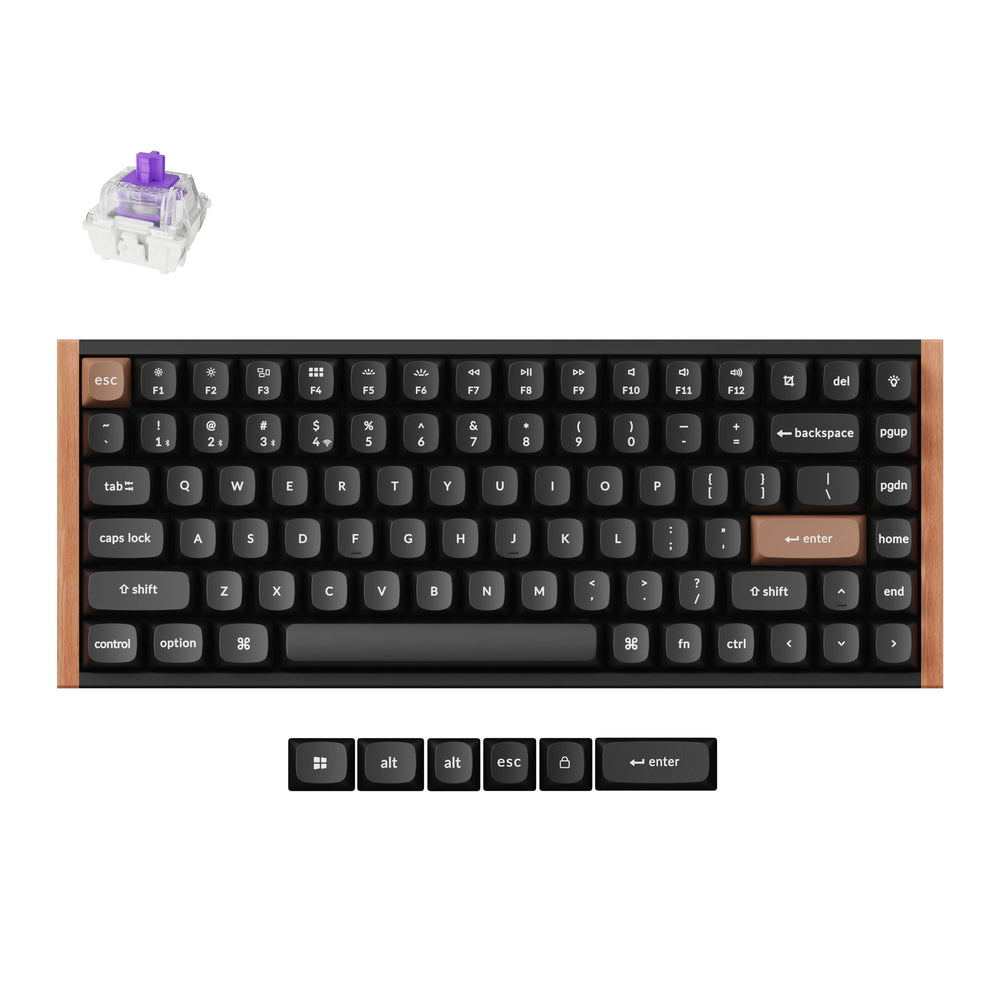
What to inspect: ask for a typing test video and listen for one switch that sounds different (a candidate for chatter — one press registering twice); check for glossy "shine" on the WASD and space keys (ABS keycap wear, cosmetic but tells you actual usage); ask about the USB-C port, which is the one component that genuinely wears out from rough cable insertion; and on RGB boards, ask for a video of all LEDs cycling — dead rows are common on older boards.
Headsets: Just Don't
Every category so far has been "buy, with caveats." Headsets are the exception: skip used gaming headsets entirely.
The reasons are a stack of small problems that add up. Earpads absorb sweat and skin oils for however long the previous owner used them — pleather flakes, foam compresses, and the cushioning that made the headset comfortable is already half-dead when you get it. Even with a thorough disinfecting (alcohol wipes on the chassis, washing the pads), you're starting from someone else's worn-out consumables. Then add the mechanical failure modes: driver rattle at volume, kinked and dying cables on wired sets, degraded mic foam, and battery wear on wireless ones.
The economics are the final nail. Budget new headsets are so good in 2026 that used savings barely exist — a new Razer Kraken V3 X is $40, and the sub-$50 tier is genuinely competitive with pricier options. If you factor in replacing the earpads ($15–30 for most models) — which you should, because that's the difference between "used" and "gross" — the used deal is gone entirely. The only exception worth considering is a professionally refurbished unit where the listing explicitly states the earpads were replaced, and even then, the value is marginal against new budget options with full warranties.

If a headset budget of under $50 is the goal, buy new. That's the entire advice.
Where to Buy: Platforms Ranked by Protection
Not all used markets are equal. Here's how the platforms stack up, from most to least protection:
| Platform | Protection | Best For |
|---|---|---|
| Amazon Renewed | 90-day Renewed Guarantee — the strongest return policy in refurb | Keychron, Logitech, mainstream picks at 25–35% off |
| Back Market | Minimum 12-month warranty + 30-day returns on every order | Graded (Fair/Good/Excellent) refurb peripherals and consoles |
| eBay | Money Back Guarantee — 30 days from delivery; look for the "eBay Refurbished" / "Manufacturer Refurbished" badges | Everything, if you check seller feedback and read listings |
| r/MechMarket, r/MouseMarket, r/hardwareswap | Community-enforced: PayPal Goods & Services mandatory, timestamped photos, confirmed-trade flair | The best prices (40–55% off) from vetted enthusiasts |
| Drop Marketplace | 30-day returns on B-stock | Enthusiast boards, near-zero risk at moderate savings |
| Facebook Marketplace / Craigslist / OfferUp | None — cash or platform escrow only | In-person testing; meet publicly, never pay via payment apps |
Two platform rules apply everywhere. First, PayPal Goods & Services or a credit card only — both give you chargeback rights. Zelle, Venmo, Cash App, and crypto have essentially no buyer protection: once sent, the money is gone. Second, badges matter — "Manufacturer Refurbished" or "eBay Refurbished" means an actual refurbishment process; a random seller labeling a closet keyboard "refurbished" means nothing.
Red Flags: Walk Away From These
Some problems are universal across every category and platform:
- Payment via Zelle, Venmo, Cash App, or crypto. No buyer protection, and sellers who insist on it are usually scammers. Non-negotiable.
- Stock photos instead of actual unit photos. You need to see this device — close-ups of the sticks, the feet, the keycaps, the port. Marketing photos mean the seller has something to hide.
- "Refurbished" with no refurbishment described. Legit refurb listings say what was done — "new earpads installed, deep cleaned, tested." Vague language is a red flag.
- A seller who won't demo the unit. A thirty-second video of the sticks moving, the keys typing, or the buttons clicking is trivial for an honest seller. Refusal means hiding something.
- Missing accessories on wireless gear. Dongles, charging cables, and receivers are expensive to replace and easy to lie about.
- Prices that are too good. A "like-new" Elite Series 2 at $60 or a Superlight at $70 is either stolen, broken, or a clone. There's no fourth option.
The Universal Inspection Checklist
Print this, or keep it on your phone:
- Controllers: stick drift test (both sticks, all directions, slow release) → every button and trigger → shoulder buttons → battery/charging port → dongle included
- Mice: double-click test on both buttons (click-and-drag slowly) → scroll wheel smoothness → feet condition → grip rubber → cable kinks / dongle
- Keyboards: typing test video (chatter, stabilizer rattle) → keycap shine on WASD/space → hot-swap socket feel → USB-C port wiggle test → RGB cycling video → software/firmware support check
- Headsets: (only if you must) earpad condition and replaceability → driver rattle at high volume → cable integrity → mic test
Bottom Line
The used and refurbished gaming hardware market in 2026 is a real opportunity, but it's sharply tiered. Mechanical keyboards are the safest, highest-value used buy in all of gaming — durable components, field-replaceable switches, and enormous supply mean you can cut your cost in half with minimal risk if you stick to hot-swap boards with open firmware. Mice and controllers are worth it with testing — the savings are real on premium gear, but you're buying remaining switch and stick life, so only buy with a return window or an in-person test. Headsets are the one category to avoid — hygiene and worn consumables eat the savings, and new budget options are too good.
The through-line is protection: buy where you have a return window or chargeback rights, pay with methods that can claw money back, and never buy a device you can't verify. Do that, and the used market is one of the best ways to stretch a gaming budget in 2026. Skip the checks, and you're just buying someone else's problem.
Related Guides
Buying Guide
Where to Buy Refurbished Gaming Hardware in 2026: Platforms Ranked by Trust
Manufacturer outlets, eBay Certified Refurbished, Amazon Renewed, and Back Market — every refurb platform ranked by warranty strength, return window, and scam risk, with the price benchmarks that separate honest deals from traps.
Buying Guide
ROG Ally X vs Lenovo Legion Go: Which Should You Buy in 2026?
The two Z1 Extreme Windows handhelds finally face off on price: the Ally X's 80Wh battery and 24GB RAM versus the Legion Go's 8.8-inch 1600p screen, detachable FPS controllers, and clearance price. Same chip, opposite philosophies — here's the 2026 verdict.
Buying Guide
Razer DeathAdder V4 Pro vs Logitech G502 X PLUS: Which Should You Buy in 2026?
Two $150 wireless flagship mice with opposite philosophies: the 56g Razer DeathAdder V4 Pro is the ergonomic esports specialist with true 8K polling and 150-hour battery; the 103.7g Logitech G502 X PLUS is the 13-button hybrid work/play legend with infinite scroll and PowerPlay. Here's which one to buy in 2026.