Turtle Beach
Turtle Beach Stealth Ultra II Wireless Controller Review
Good
$199.99
The most aggressively specified Xbox-licensed controller ever — TMR sticks, 8kHz wired polling, touchscreen tuning — held back only by an unproven reliability record. 8/10; pre-order only if day-one ownership matters.
Connectivity
2.4GHz wireless (Xbox/PC) + Bluetooth (Android/smart TVs) + USB-C wired
Sticks
Anti-Drift TMR (tunneling magnetoresistance)
Polling
Up to 8kHz wired / 1kHz wireless (PC)
Buttons
Tactile microswitch face buttons; 4 mappable microswitch back buttons
Pros & Cons
Pros
- TMR thumbsticks — the most advanced contactless sensor class in any Xbox-licensed controller, drift-free by design
- 8 kHz wired / 1 kHz wireless polling on PC, a first for the Xbox-licensed category
- Full touchscreen onboard tuning: mapping, dead zones, triggers, audio, RGB — no software required mid-game
- Most complete bundle at $199.99: rapid-charge dock, charge-through hard case, 10-ft cable, spare thumbcaps
- Notification gimmicks deleted in favor of functional customization
- GateShift profiles and Pro-Aim Focus Mode add genuinely useful competitive tuning
- Bluetooth + 2.4 GHz + wired triple connectivity covers Xbox, PC, Android, and smart TVs
Cons
- Predecessor's reliability record — disconnects, dead triggers, DOA reports — and no evidence yet on the sequel's quality control
- Battery regresses to 12 hours default (34 in Eco) versus the original's 30-hour claim
- Onboard profiles drop from 10 on the original to 3
- 76 g heavier than the predecessor at 322 g
- No swappable stick or D-pad modules at a price where the Elite Series 2 includes them
- Zero independent testing at launch — every performance claim is manufacturer-stated
Overview
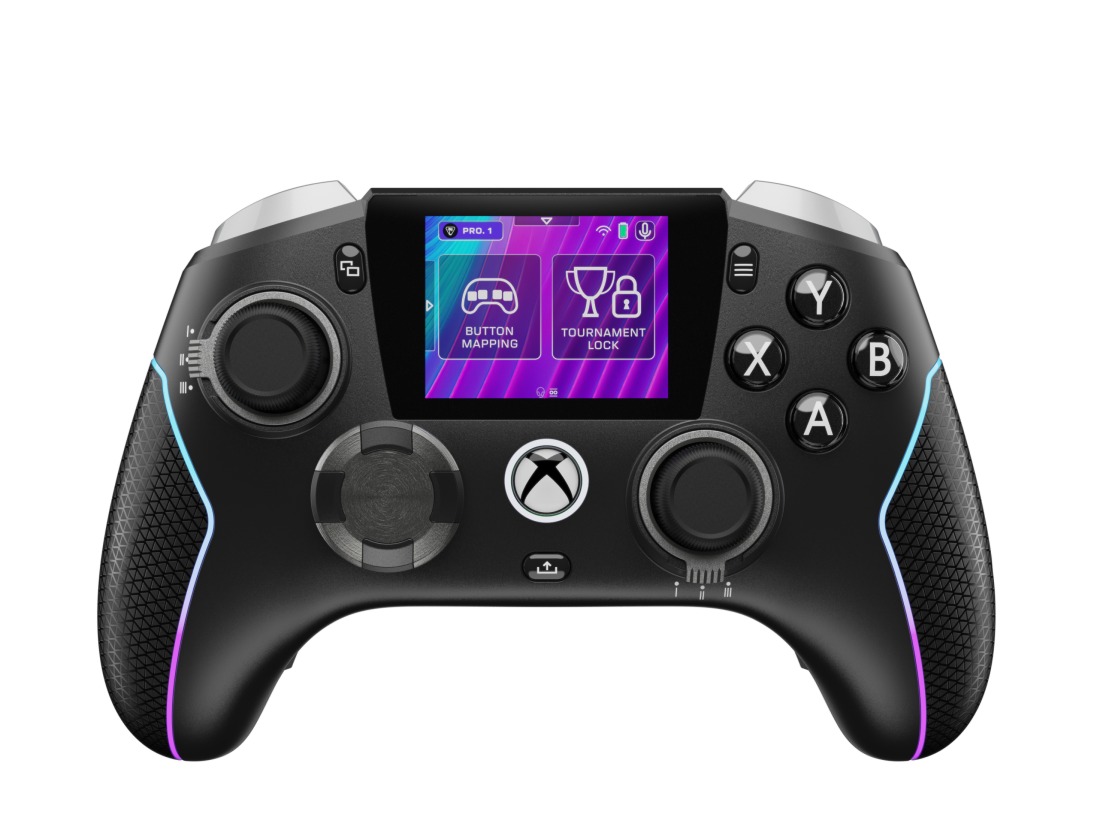
The Turtle Beach Stealth Ultra II is the successor to the controller that came closer than any third-party pad to dethroning the Xbox Elite Series 2 — and it launches November 12, 2026 at $199.99, pre-orders already live. Announced October 20 with a spec sheet that reads like a community wish list for the original Stealth Ultra, the sequel swaps Hall-effect sticks for TMR sensors, doubles down on the onboard display by making it a full touchscreen, and becomes one of the first Xbox-licensed controllers to advertise an 8 kHz wired polling rate on PC.
The original Stealth Ultra earned enthusiast-press scores in the 9/10 range for its feature completeness, then spent two years accruing a spottier owner record — disconnects, dead triggers, and out-of-box failures that dragged its Amazon average to roughly 3.5 stars (see our full Stealth Ultra review for that history). The Ultra II is, in effect, Turtle Beach answering both stories at once: the spec sheet answers the enthusiasts, and the redesign addresses the gimmicks and questionable choices owners complained about.
This is a launch-window assessment built from verified manufacturer specifications, day-one press coverage, and the documented track record of the predecessor. No retail units have shipped and no independent latency or reliability measurements exist yet — anyone who tells you otherwise this week is guessing. What the record does support is a clear picture of what this controller is, what it fixes, and where the risk sits.
Build Quality and Design
At 322 g, the Stealth Ultra II is a noticeably denser object than its 246 g predecessor — a 76-gram increase that reflects a larger, brighter capacitive touchscreen and what Turtle Beach describes as a premium-materials rebuild with reinforced ergonomic grips. Weight in this tier is a preference, not a flaw: the Elite Series 2 runs heavier with its metal components, and the community split on the original Ultra's light feel — some hands read it as cheap — was among the most repeated critiques of that pad. The Ultra II lands closer to the substantive end of the spectrum.
The face buttons move to tactile microswitches, matching the original's crisp 5-million-click switch specification while addressing the "overly clicky" character that divided owners on the first model's ABXY cluster. The circular D-pad carries over, which fighting-game players tolerated on the original but never loved; it remains non-swappable. Four microswitch back buttons return, still non-removable, still mappable across three onboard profiles.
The bundle remains the most complete in the premium tier: the magnetic Rapid Charge Dock, a hard-shell travel case with a charge-through window so the pad recharges inside the case, a 10-foot USB-A to USB-C cable, the wireless transmitter, and four alternate thumbcaps in the box. At $199.99 nothing here is sold separately — the same packaging strategy that made the original's price defensible.
Physical dimensions sit at 167 × 108.23 × 66.47 mm with a 3.5 mm headset jack handling stereo output and mic input. The construction story that matters — long-term durability of the new screen hinge area, the touch panel, and the revised wireless hardware — is precisely the part no one can verify before units ship.
Key Features
- Anti-Drift TMR thumbsticks — tunneling magnetoresistance sensors replace the original's Hall-effect modules. TMR is the current high-water mark for contactless sensing: finer resolution and better power efficiency than Hall, with the same drift-free physics.
- Connected Command Touch Screen — the original's 1.5-inch non-touch display becomes a full touchscreen for adjusting button mapping, stick response, dead zones, trigger behavior, audio profiles, and RGB without leaving the game. Three onboard profiles store per-game configurations.
- GateShift analog profiles — a physical slide switch toggles three virtual stick-gate profiles, each tunable by gate shape (circular and alternatives) for movement-heavy or precision-demanding titles.
- 8 kHz wired / 1 kHz wireless polling — on PC, wired mode polls at up to 8,000 Hz, wireless at up to 1,000 Hz. Among Xbox-licensed controllers this is first-of-its-kind territory; only PC-only pads like SCUF's Nemesis Pro 8K have advertised it previously.
- Adjustable hair triggers and trigger stops — two-stage trigger tuning carried over and refined from the original.
- Four mappable microswitch back buttons — assignable to any input, including Pro-Aim Focus Mode.
- Pro-Aim Focus Mode — a hold-to-activate sensitivity reducer for long-range aiming, assignable to any mappable button, adjustable from the screen or the Swarm II app.
- 2.4 GHz + Bluetooth + USB-C — lag-free 2.4 GHz wireless for Xbox Series X|S, Xbox One, and Windows 10/11; Bluetooth for Android devices and smart TVs; wired USB-C for PC play and charging.
- Swarm II companion app — the customization suite succeeds the widely criticized Control Center 2 software of the original.
- Adjustable RGB and vibration — lighting effects double as battery-level indicators; vibration intensity is tunable from the screen or app.
Performance
On paper, the input pipeline is the strongest ever shipped on an Xbox-licensed controller. TMR sensors with 8 kHz wired polling would have been unthinkable on a console pad two years ago; the original Ultra's Hall sticks were already drift-free, and the sensor upgrade is about resolution and power draw rather than drift prevention. Windows Central's launch coverage frames TMR as strictly more precise than Hall — the consensus among hardware specialists — and the 1 kHz wireless polling rate triples the effective reporting speed of typical console wireless protocols.
Independent measured numbers do not exist yet. No review outlet has latency-tested a retail unit, and the first GamepadLA-style measurements will be the real verdict on whether the 8 kHz figure translates into meaningful click-to-photon gains. Until then, the honest read is: the specification leads the category, the implementation is unproven.
Battery is the one spec that regressed on paper. The original advertised 30 hours and delivered 20–25 in practice; the Ultra II advertises 12 hours out of the box, extendable to 34 in Eco power modes. Turtle Beach attributes the difference to the bigger, brighter touchscreen — a reasonable trade if the Eco mode holds up, but a default-mode figure that sits behind both its predecessor and the 30-hour-class headsets-adjacent competition. The dock mitigates the routine case; the 34-hour Eco claim needs verification once units ship.
The reliability question is the elephant. The original's owner record — wireless disconnects, dead triggers, DOA units — is the single biggest reason to wait rather than pre-order, and no launch-day spec sheet can answer it. The screen is also new risk surface: a touch panel on a controller that gets thrown in a bag is a durability unknown in a way the original's smaller display was not. The foundation for optimism is that Turtle Beach kept the parts owners liked (bundle, sticks, back buttons, on-controller tuning) and cut the parts they didn't (the notification-mirroring gimmick that never worked reliably is gone entirely, replaced by what launch coverage describes as pure functional customization).
Pros and Cons
Pros:
- TMR thumbsticks — the most advanced contactless sensor class in any Xbox-licensed controller, drift-free by design
- 8 kHz wired / 1 kHz wireless polling on PC, a first for the Xbox-licensed category
- Full touchscreen onboard tuning: mapping, dead zones, triggers, audio, RGB — no software required mid-game
- Most complete bundle at $199.99: rapid-charge dock, charge-through hard case, 10-ft cable, spare thumbcaps
- Notification gimmicks deleted in favor of functional customization — the most common criticism of the original, addressed
- GateShift profiles and Pro-Aim Focus Mode add genuinely useful competitive tuning
- Bluetooth + 2.4 GHz + wired triple connectivity covers Xbox, PC, Android, and smart TVs
Cons:
- Predecessor's reliability record — disconnects, dead triggers, DOA reports — and no evidence yet on whether the sequel's quality control is better
- Battery regresses to 12 hours default (34 in Eco) versus the original's 30-hour claim; the bigger screen is the cost
- Onboard profiles drop from 10 on the original to 3
- 76 g heavier than the predecessor at 322 g; weight gain may divide owners who liked the light feel
- No swappable stick or D-pad modules at a price where the Elite Series 2 includes them
- Zero independent testing at launch — every performance claim above is manufacturer-stated
Who Should Buy This
Xbox Series X|S and PC players who want the most technically advanced licensed controller available and value on-controller tuning over swappable hardware modules. Competitive players who play wired on PC get the most from the 8 kHz polling; Xbox-only players still benefit from TMR sticks and the trigger system. It is also the right pick for anyone who wanted the original Stealth Ultra but sat out its quality-control lottery — with the caveat that sitting out two or three weeks for first-owner reports is the rational version of that caution.
Skip it if you need PlayStation or Switch support — this is an Xbox-licensed pad and neither is in its job description. Skip it if you want proven long-term reliability today rather than a promising spec sheet; the Elite Series 2's years of firmware maturity and the discounted original Ultra (now commonly under $80) are the conservative picks. And if you game across all platforms, the drift-free multiplatform picks cost less and travel further.
Alternatives to Consider
- Xbox Elite Series 2 ($179.99) — the incumbent: swappable sticks and D-pads, paddle system, years of firmware maturity. No Hall/TMR sticks, heavier, and its own stick-drift history. Still the default recommendation for module swappers, and the anchor of most best Xbox controller roundups.
- SCUF Nemesis Pro 8K ($199.99) — the PC-focused 8 kHz rival at the same price; PC-only, so Xbox players are excluded, but it matches the polling headline with an established competitive pedigree.
- Turtle Beach Stealth Ultra (original, ~$77 street) — heavily discounted, same bundle philosophy, Hall sticks instead of TMR, and the full documented reliability history — good and bad — of two years on shelves. Our full review covers the trade in detail.
Verdict
The Stealth Ultra II is the most aggressively specified Xbox-licensed controller ever assembled: first TMR sticks in the category, first 8 kHz wired polling, a touchscreen that does what the original's display should have done from day one, and a bundle that embarrasses cheaper rivals. At $199.99 with the dock and case included, the price is defensible against everything except the question no spec sheet can answer — whether this generation ships with the same quality-control variance that haunted the last one.
Score: 8/10 — Excellent on specification and design intent, held back from more only by an unproven reliability record, a battery regression in default mode, and the complete absence of independent testing at launch. Pre-order only if day-one ownership matters; everyone else should let the first owner reports and latency measurements land — two weeks of patience converts every unknown in this review into a known.
Full Specifications
| Connectivity | 2.4GHz wireless (Xbox/PC) + Bluetooth (Android/smart TVs) + USB-C wired |
|---|---|
| Sticks | Anti-Drift TMR (tunneling magnetoresistance) |
| Polling | Up to 8kHz wired / 1kHz wireless (PC) |
| Buttons | Tactile microswitch face buttons; 4 mappable microswitch back buttons |
| Triggers | Adjustable hair triggers + trigger stops |
| Display | Connected Command Touch Screen (full-color, touchscreen) |
| Profiles | 3 onboard profiles |
| Gate | GateShift: 3 analog stick gate profiles, selectable gate shapes |
| Battery | Up to 12h out of box / 34h Eco mode |
| Weight | 322g |
| Dimensions | 167 x 108.23 x 66.47 mm |
| Audio | 3.5mm stereo output + mic input |
| Platforms | Xbox Series X|S, Xbox One, Windows 10/11, Android, smart TVs |
| Software | Swarm II companion app |
| In Box | Controller, Rapid Charge Dock, wireless transmitter, 10ft USB-A to USB-C cable, 4 thumbcaps, charge-through hard case |
| RGB | Customizable RGB with battery-level indicators |
The Verdict: Good
The most aggressively specified Xbox-licensed controller ever — TMR sticks, 8kHz wired polling, touchscreen tuning — held back only by an unproven reliability record. 8/10; pre-order only if day-one ownership matters.
— GamepadSquire
Related Buying Guide
Buying Guide
Best PC Controllers 2026: The Definitive Roundup
From the $19.99 budget king to the sub-millisecond esports monster — every PC controller worth buying in 2026, ranked by use case with verified specs and community sentiment.
Buying Guide
GuliKit KK3 vs KK3 Max: Which KingKong Controller Should You Buy?
GuliKit's KK3 Max flagship and the stripped-back 2025 KK3 look like siblings but aim at different buyers: the Max brings 992Hz wired polling, four magnetic back paddles, trigger locks, NFC and a replaceable battery, while the $35 KK3 counters with newer TMR sticks and macOS support — and measurably slower wireless. Full latency-table comparison, stick verdict, and QC reality check.


