RimWorld Animal Feeding Guide: Pen Management & Kibble Production
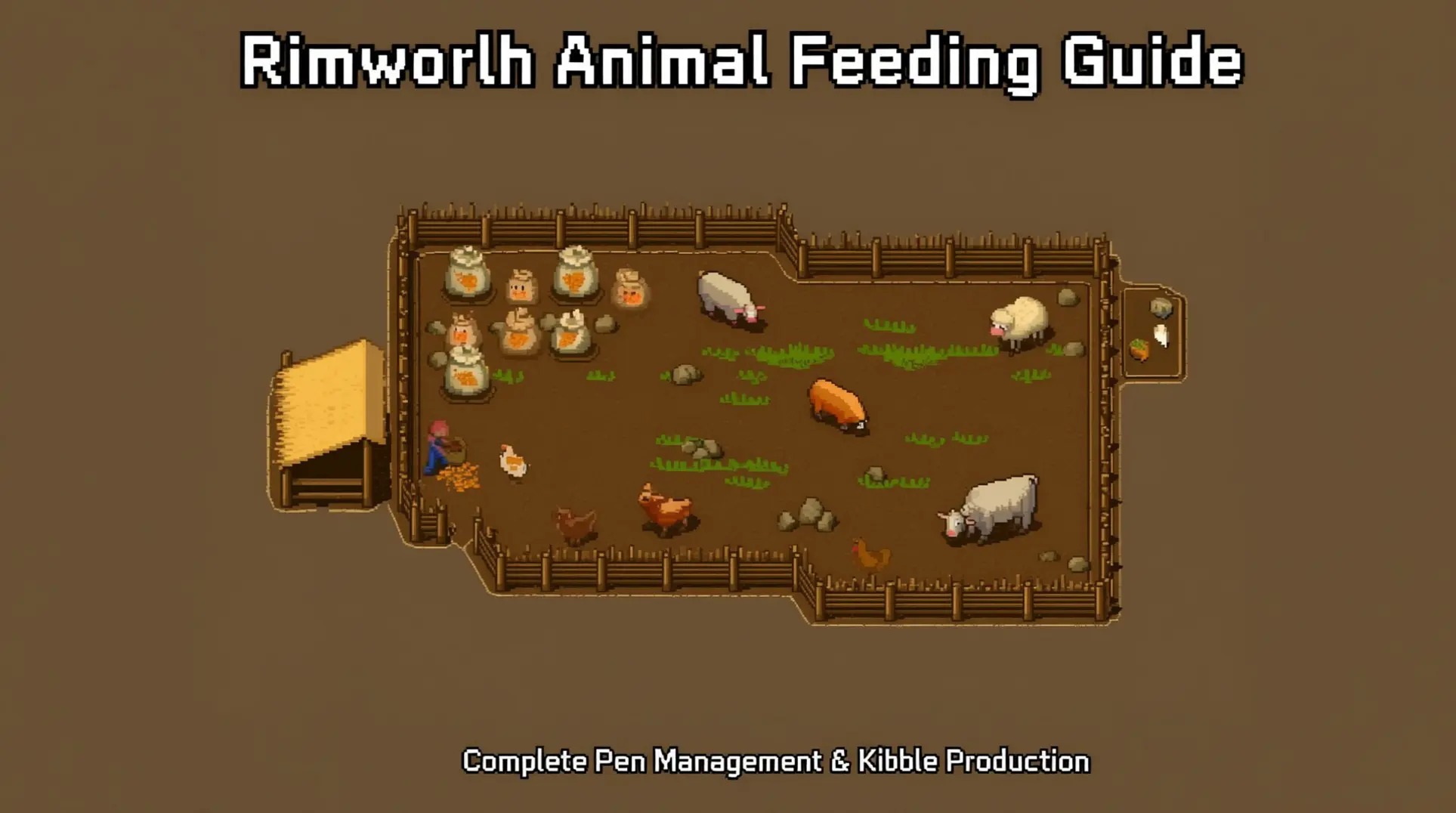
Quick Reference: Animal Feeding Stats
- Kibble Efficiency: 375% nutrition gain from 20 meat + 20 vegetables/hay → 50 kibble
- Haygrass Nutrition: Superior to natural grazing per tile
- Feeding Times: Herbivores (year-round grazing), Carnivores (meat/corpses), Omnivores (flexible)
Feeding Animals in RimWorld Pens
Properly feeding penned animals is essential for maintaining a healthy and productive colony. The foundation of pen management begins with design.
Pen Design Fundamentals
- Pens must be fully enclosed by fences or walls with at least one animal flap for colonist access.
- The size of the pen directly dictates how many animals it can support through natural grazing alone.
- A larger area allows more grass and dandelions to grow, which are the primary natural food sources for most grazers.
Natural Grazing and Supplementation
Animals will automatically graze on this vegetation, which is nutritionally sufficient in temperate seasons.
Harvested haygrass provides superior nutrition per tile compared to natural vegetation. This makes it a critical resource for supplementing your animals' diet.
A well-timed harvest from a dedicated haygrass field, stored as hay, is the most efficient way to create a supplemental food stockpile for lean times. Rather than relying solely on what grows naturally in your pens, proactive cultivation ensures consistent nutrition year-round.
Winter and Arid Biome Planning
This becomes critical during winter or in arid biomes when ground vegetation dies. Without a plan, animals will quickly starve.
The solution is to place a critical-priority stockpile zone for hay or kibble inside the pen itself. This allows animals direct access to food during snowfall.
The Animal Barn Strategy
Optimal strategy involves constructing a small, roofed animal barn within the pen.
- This structure protects the hay from degrading in the rain.
- It provides shelter for the animals.
- By keeping food under a roof and inside the pen, you ensure year-round feeding.
- This automates animal care and prevents starvation-induced breakdowns in your food supply chain.
Producing Kibble in RimWorld
While proper pen design is foundational, what animals eat inside those pens is equally important. Kibble represents one of the most efficient ways to sustain your livestock population.
Kibble is a highly efficient, non-perishable animal feed crafted at the butcher table. Its recipe requires 20 meat and 20 vegetables or hay to produce 50 kibble.
Kibble Efficiency
This combination yields remarkable efficiency benefits:
- 375% nutrition efficiency compared to raw ingredients
- 50 kibble from 20 meat + 20 vegetables/hay
- More total nutrition than raw ingredients
- Converts waste into valuable resources
For example, a colony with 10 muffalo requiring 25 nutrition each per day can sustain them with just 250 kibble daily, which requires minimal ingredients compared to other feeding methods.
Production and Benefits
The production process is simple. Once a colonist is assigned to cooking, they will combine the resources at a butcher table.
This makes kibble an ideal solution for managing surplus meat and low-value crops. Its most significant strategic advantage is the ability to use any type of meat, including human meat or insect meat, which colonists refuse to eat in meals.
By turning these morally fraught or undesirable resources into kibble, you efficiently convert waste into valuable, safe sustenance for your animals. This prevents negative mood debuffs for your pawns.
Storage Advantages
Furthermore, kibble has an infinite shelf life and does not require freezing. This allows for easy stockpiling in simple barns or animal pens.
This combination of extreme efficiency, safe disposal of unwanted meat, and perfect preservation makes kibble an essential tool for any colony managing a large animal population.
Animal Feeding Strategies in RimWorld
Efficiently feeding your animals is critical to a stable colony. Animals are categorized by diet, and understanding these categories is key to successful management.
Dietary Classifications
- Herbivores (e.g., muffalo, horses) eat vegetation.
- Carnivores (e.g., wolves, cats) require meat or corpses.
- Omnivores (e.g., pigs, bears) consume both.
Tailor your strategy to their needs for optimal colony efficiency.
Herbivore Feeding
For herbivores, the most efficient method is designating a large, unfenced growing zone of dandelions in their allowed area. This allows them to graze freely and eliminates hauling labor.
Dandelions are ideal because they require low work to maintain but provide high nutrition. This creates a self-sustaining system where animals naturally harvest their own food.
In winter or on arid maps, stockpile haygrass indoors. It doesn't rot and is highly efficient. Place storage areas within animal pens to ensure easy access during harsh seasons when natural vegetation dies back.
Carnivore Feeding
Carnivores are best managed by allowing them access to a stockpile zone containing animal corpses or raw meat. This turns hunting spoils and predator kills into a resource, saving higher-quality meals for colonists.
This strategy is particularly effective for colonies with active hunting operations, as it ensures no meat goes to waste while providing reliable nutrition for your predator animals.
Omnivore Feeding
Omnivores are highly flexible. They can graze, scavenge corpses, or eat simple meals, making them resilient to seasonal changes and resource shortages.
This adaptability makes omnivores excellent choices for new colonies or those in challenging biomes where consistent food sources might be uncertain.
Key Tips
- Always restrict animals from fine/lavish meal stockpiles.
- Use haygrass for year-round herbivore sustenance, especially through winter.
- For large carnivore packs, consider a dedicated corpse freezer or ranch them in areas with natural predators to auto-hunt for them.
Conclusion
Mastering animal feeding in RimWorld transforms your colony from struggling with constant animal starvation to maintaining self-sustaining livestock operations.
By implementing proper pen design with adequate grazing space, utilizing the incredible efficiency of kibble production, and tailoring feeding strategies to each animal type's dietary needs, you can create automated feeding systems that require minimal pawn intervention.
Remember that harvested hay provides better nutrition than natural grazing, kibble offers 375% nutrition efficiency while safely disposing of unwanted meats, and seasonal planning is essential for winter survival. With these strategies, your animals will thrive year-round, providing valuable resources and companionship without becoming a management burden.
More RimWorld Guides

The Ultimate RimWorld Colony Blueprint: Mastering Room Sizes, Layout Efficiency, and Defensive Architecture
Complete guide to RimWorld base building covering optimal room dimensions, defensive killbox design, temperature management, and strategic material selection for colony survival.

The Ultimate RimWorld Base Design Guide: Optimal Layouts for Maximum Efficiency
Master RimWorld base design with our comprehensive guide covering optimal room sizes, defensive architecture, material selection, and scalable colony planning for maximum survival and efficiency.

The RimWorld Material Mastery Guide: From Basic Components to Advanced Fabrication
Complete guide to RimWorld resource management covering components, advanced components, neutroamine, plasteel, steel, and cloth. Learn crafting strategies and acquisition methods for colony survival.
AI Tactical Companion
Consult with our specialized tactical engine for RimWorld to master the meta instantly.