Goodnight Universe Analysis: How a Psychic Baby Game Explores Love, Isolation, and Communication
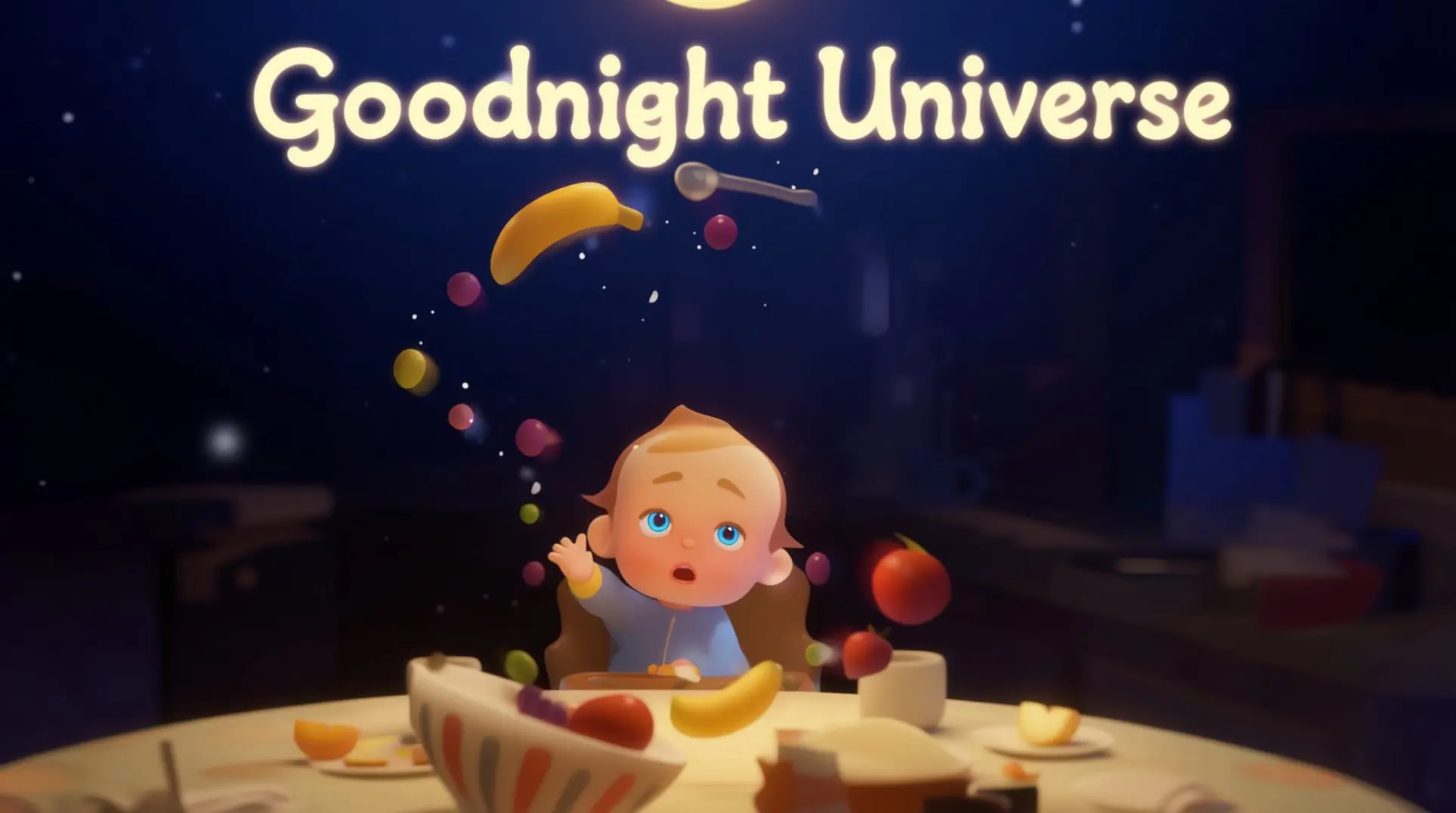
What if your greatest enemy wasn't a monster or a villain, but your own inability to speak? In Goodnight Universe, you play as Isaac, a six-month-old infant with an adult mind and latent psychic powers, trapped in a desperate struggle to connect with his grieving family. This analysis explores how the game masterfully uses its unique premise and mechanics to tell a story about love, isolation, and the extraordinary cost of being understood.
Isaac's Dual Nature: The Adult Mind in an Infant's Body
The Communication Barrier: Why Isaac's Greatest Foe Isn't the Corporation
Polygon's review crystallizes the game's central tension: your greatest foe is communication. Isaac emerges as a six-month-old infant whose mind races far ahead of his physical form, creating an agonizing disconnect between thought and expression.
The game presents Isaac as a genius trapped inside the fleshy prison of a baby body, possessing adult-level cognition but limited to producing "a slurry of coos and squeals." This fundamental limitation manifests through:
- Verbal isolation: Isaac's only vocal outputs remain "soft coos" and "typical tyke tantrums," despite his "strangely adult inner voice"
- Emotional complexity: His "complexity of feelings" far exceeds his physical capabilities, creating internal storms he cannot externalize
- Family disconnection: The game's primary conflict emerges from Isaac observing his grieving family's struggles while remaining unable to participate meaningfully
- Love unexpressed: Isaac's deepest desire-to be "loved and accepted"-remains locked behind an insurmountable communication barrier
This inability to communicate transforms from mere inconvenience into the game's emotional core, generating palpable isolation and desperation that permeates every interaction.
How Isaac's Psychic Powers Serve as His Only Means of Expression
When words fail, Isaac's extraordinary abilities become his lifeline to the world. The telepathy mechanic operates through a deliberate process that mirrors the frustration of communication itself:
- Signal searching: Players close Isaac's eyes and turn his head like a radar dish, hunting for mental frequencies
- Mind tuning: Once locked onto a signal, Isaac can access others' internal monologues
- Emotional excavation: These telepathic connections reveal hidden anxieties, hopes, and private struggles his family conceals
- Expression through action: When telepathy isn't enough, Isaac employs telekinesis-swiping to slide toys, pulling levers, or rearranging items-to communicate non-verbally
The game's facial tracking system (via webcam or VR headset) creates an intimate bridge between player expressions and Isaac's psychic abilities. This transforms his powers from simple problem-solving tools into acts of connection, with Game Informer noting these moments become "truly moving through interactivity that you just don't see often."
Isaac's telepathy and telekinesis thus evolve beyond supernatural abilities-they become his desperate attempts to be heard, understood, and ultimately loved by a family he can observe but not truly reach.
The Evolution of Isaac's Psychic Abilities: From Domestic Chaos to Cosmic Power
Early Game: Telekinetic Hijinks and Domestic Mischief
Isaac's powers first manifest as the ultimate toddler fantasy. From his crib-height perspective, he discovers he can move objects with his mind and change TV channels by blinking. These abilities aren't grandiose-they're the kind of supernatural baby mischief that turns a small domestic space into a pressure cooker of impossible hijinks.
The genius lies in the communication barrier: Isaac possesses an adult-level internal monologue but can only express himself through baby coos and tantrums. This limitation creates a perfect storm where well-intentioned psychic interventions spiral into chaos. Every attempt to help his fractured family becomes another example of why you can't leave this particular baby alone for five minutes.
Mid-Game Shift: When Psychic Powers Become Survival Tools
The narrative takes a sharp turn when Isaac escapes a mysterious captor. His powers evolve from domestic tools to weapons of necessity. Here's how the transformation unfolds:
- The Escape: Isaac uses telekinesis to smash surveillance drones
- The Revelation: A shadowy tech corporation has been monitoring his abilities
- The Shift: Powers become survival mechanisms against corporate exploitation
- The Homage: The story embraces '80s adventure movie aesthetics, moving from intimate family drama to broader sci-fi conflict
Polygon's review notes this transition as a move toward "sci-fi sentimentality," where the game becomes "far less invested in Isaac's story" and more focused on the corporate threat. The psychic abilities that once rearranged living room furniture now dismantle machinery and protect his family from encroaching danger.
Late Game: Cosmic Awareness and Emotional Resolution
The climax presents Isaac with an impossible choice. His powers have evolved into cosmic awareness-an expanded consciousness that connects him to the universe itself. Players on Steam Community threads specifically created discussions titled "SPOILER! Just wanna talk about the ending (the good one)" to unpack this emotional resolution.
The final act crystallizes around a fundamental tension:
- Universal Connection: The seductive pull of his expanded psychic abilities
- Human Love: The fragile, imperfect bonds of family that ground him
- The Cost of Time: Using his powers to mend emotional fractures while confronting profound loneliness
Isaac's journey concludes not with the mastery of his powers, but with their integration into something more human. The supernatural premise ultimately serves universal themes: family, love, and the delicate balance between extraordinary perception and fundamental human needs.
Narrative Themes: Family, Time, and the Cost of Extraordinary Power
The Domestic Pressure Cooker: Family Dynamics at Crib Height
The entire story unfolds from crib height, transforming a modest family home into a pressure-cooker stage. This restricted viewpoint magnifies every gesture, every whispered argument, every slammed door.
- Isaac's Paradox: Adult-level cognition and latent psychic powers trapped inside an infant's body create unbearable dramatic tension.
- The Mind-Reading Lens: Isaac's abilities reveal both polished surface interactions and the emotional storms underneath, exposing hidden tensions.
- Family Portrait: A mother wary of repeating past mistakes, a father focused on income and stability, and a teenage sister weighing life-altering decisions.
- Design Philosophy: Intimacy is framed through helplessness-Isaac's mind sees everything while his infant body dictates how that vision reaches the world.
The game opens with the grandfather's death, using this loss as the cornerstone that propels the family's daily struggle to keep their household intact.
Innocence vs. Exploitation: The Corporate Threat to Childhood
The central conflict emerges through a calculated, step-by-step escalation between Isaac's innocent desires and corporate exploitation:
- The Discovery: Aio Corporation identifies Isaac's mysterious psychic powers as a valuable resource.
- The Dehumanization: They view Isaac not as a child, but as a tool to be weaponized for profit.
- The Kidnapping Attempt: Aio tries to abduct Isaac, directly threatening his deepest desire-to be loved and accepted by his family.
- The Resolution: The narrative concludes with the majority of Aio Industries being arrested for their crimes.
This progression starkly contrasts the innate human need for family with the cold, calculated interests of a corporation seeking to exploit the vulnerable.
The Emotional Cost of Time: Grief and Growth in Goodnight Universe
Time moves relentlessly forward in Goodnight Universe, carrying both healing and new wounds. The game opens with the patriarch's death, using this cornerstone of grief to examine how a family absorbs shock while trying to reassemble daily routines.
- Accelerated vs. Physical Development: Isaac's adult-level cognition trapped in an infant's body creates a poignant contrast between mental growth and physical helplessness.
- Daily Reconstruction: The narrative explores how families rebuild after loss, focusing on the daily work of keeping a household intact.
- Temporal Echoes: The design keeps returning to what a single day means, how decisions reverberate through time, and who absorbs those echoes within a family unit.
Through these themes, Goodnight Universe becomes a meditation on love, belonging, and the steady movement of time through grief and growth.
Gameplay Integration: How Psychic Mechanics Reinforce Narrative
Camera as Controller: Blinking, Smiling, and Emotional Detection
Goodnight Universe's most immersive way to play is with a webcam, evolving the blink-based controls from Before Your Eyes into a full-body interface. The system lets you blink at a light to flick it on or off, or close your eyes over an area and reopen them to reassemble the environment-turning scattered blocks into a tower in an instant.
Step-by-Step: How the Camera Controls Work
- Blink to Interact: Look at an interactive light source and blink once to toggle it.
- Eye-Shut Reconstruction: Stare at a cluster of objects, close your eyes, and open them to see the pieces snap into a new configuration.
- Emote to Express: Smile or frown to trigger joy or sadness events-though the detection is finicky.
- Over-Emote for Accuracy: Because the camera struggles with subtle expressions, exaggerated smiles and frowns are often required.
The novel face-tracking technology creates an interactive layer that reads your face and reacts accordingly, but the emotional detection is less reliable than the mechanical interactions. Players report having to over-exaggerate smiles and frowns for the camera to register the difference, making those moments feel less impactful compared to the precise blink-based puzzles.
The Telepathy 'Tuning' Mechanic: Hearing Thoughts as Storytelling
The standout webcam feature is the telepathy "tuning" system, praised by Game Informer as the "favorite use of the eye controls." By closing your eyes and slowly turning your head like a radar dish, you search for a psychic signal. When the signal locks, you open your eyes to hear a character's internal monologue.
- Radar-Style Scanning: Rotate your head while eyes are shut to locate the correct emotional frequency.
- Binaural Storytelling: Headphones deliver whispered thoughts that pan left or right as you "tune," creating an intimate soundscape.
- Narrative Uniqueness: These moments produce "really memorable instances of storytelling you can't get in other games."
- Infant Perspective: As six-month-old Isaac, you interpret adult emotions-anxiety, love, frustration, fear-through this psychic radio.
The mechanic's success lies in its synergy between webcam precision and audio design, turning simple head movements into a powerful narrative lens.
Player Agency vs. Linear Narrative: How Much Control Does Isaac Really Have?
Despite the inventive controls, Goodnight Universe remains a fundamentally linear tale. Most playtime is spent "watching the world play out around you, and reacting accordingly, occasionally nudging the virtual stage play along using your psychic powers."
- Micro-Agency: Choices affect emotional tone and minor scene variations rather than branching outcomes.
- Contextual Texture: Decisions "add context and texture to your story, and what your character is feeling in the moment."
- Heightened Impact: The fixed structure makes "some of the larger emotional moments hit harder by prompting me to engage with them."
- Philosophical Framing: The game asks, "how would you behave as a baby with intelligence and agency beyond comprehension?"
These small diversions grant a sense of individual agency within a predetermined storyline, reinforcing themes of loneliness and the isolation of being trapped inside one's own skin.
Comparative Analysis: Goodnight Universe vs. Before Your Eyes
From Blink-Based Tragedy to Psychic Baby Adventure: Narrative Scope Expansion
Before Your Eyes delivered a tightly focused 90-minute experience centered on one person's life review. The entire narrative revolved around the intimate tragedy of a single character's journey, using blinking as both mechanic and metaphor for life's fleeting moments.
Goodnight Universe dramatically expands this foundation into something messier, more ambitious according to Kotaku. The experience now spans approximately 3.5 hours and ventures far beyond personal tragedy. Here's how the scope has evolved:
- Narrative Breadth: From single-character tragedy to multi-layered family drama with supernatural elements
- Genre Blending: Pure emotional storytelling now incorporates science fiction and psychic powers
- Emotional Complexity: Explores deeper themes of identity, family bonds, and cosmic responsibility
- Character Connections: Expands from solitary reflection to complex intergenerational relationships
While Before Your Eyes asked players to consider one life, Goodnight Universe challenges them to contemplate an entire family's destiny through the impossible perspective of a psychic infant.
Technical Evolution: Camera Controls from Gimmick to Integral Mechanic
The webcam-based controls that defined Before Your Eyes have undergone a fundamental transformation. Where the original game built its entire identity around eye-tracking as narrative design, the sequel takes a more measured approach.
The Implementation Journey
- Before Your Eyes: Eye-tracking was the story - every blink literally advanced time and narrative
- Goodnight Universe: Camera controls become optional gameplay mechanics for activating psychic powers
- Player Choice: Traditional mouse, keyboard, and controller inputs work completely independently
- Technical Reality: Some players report constant webcam recalibration issues, leading many to abandon camera controls entirely
This shift reflects a maturation in the developers' approach. While Polygon criticizes the camera as feeling like a "half-hearted gimmick," Game Informer and others praise the meaningful integration when players choose to engage with it. The key difference: Goodnight Universe treats camera controls as an enhancement rather than a requirement.
Why Isaac's Journey Represents a Riskier, More Complex Narrative
Isak's story as a 6-month-old baby with adult intelligence who cannot communicate presents unique narrative challenges that Before Your Eyes never attempted. This high-wire act balances intimate family moments with universe-altering psychic abilities.
The complexity manifests in several ways:
- Perspective Paradox: Playing as an infant with cosmic powers but no voice creates inherent tension
- Thematic Weight: Explores identity, love, and family from an impossible vantage point
- Mechanical Density: Introduces traditional puzzle-solving alongside narrative exploration
- Tone Management: Must seamlessly blend cozy domestic scenes with reality-bending psychic drama
This ambitious approach earned Goodnight Universe the 2024 Tribeca Games Award, yet critics warn it risks creating a muddled story by mixing disparate tones. Where Before Your Eyes succeeded through elegant simplicity, its successor embraces complexity - making it both more ambitious and potentially more divisive.
Goodnight Universe is a bold evolution from its predecessor, trading intimate tragedy for a complex, multi-layered family drama viewed from crib height. By weaving its psychic mechanics directly into themes of communication and helplessness, it creates a poignant, if sometimes messy, narrative about the fundamental human need to be loved. Ultimately, Isaac's journey reminds us that the most powerful connections often transcend words.
More Goodnight-Universe Guides
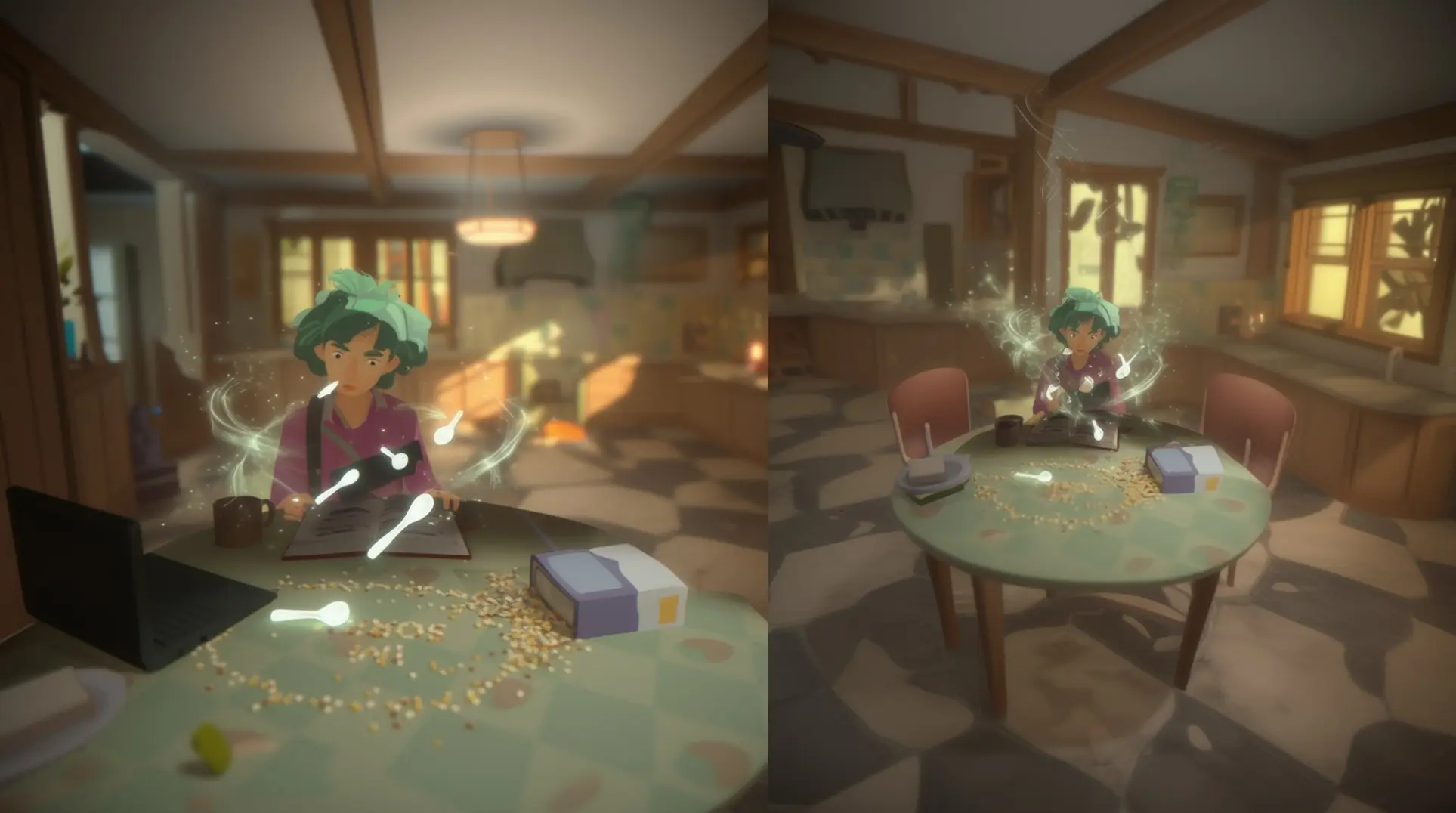
Goodnight Universe: Master Psychic Baby Narrative Choices
Master Goodnight Universe's narrative choices as psychic baby Isaac. Learn blink mechanics, moral dilemmas, and multiple endings in this guide.
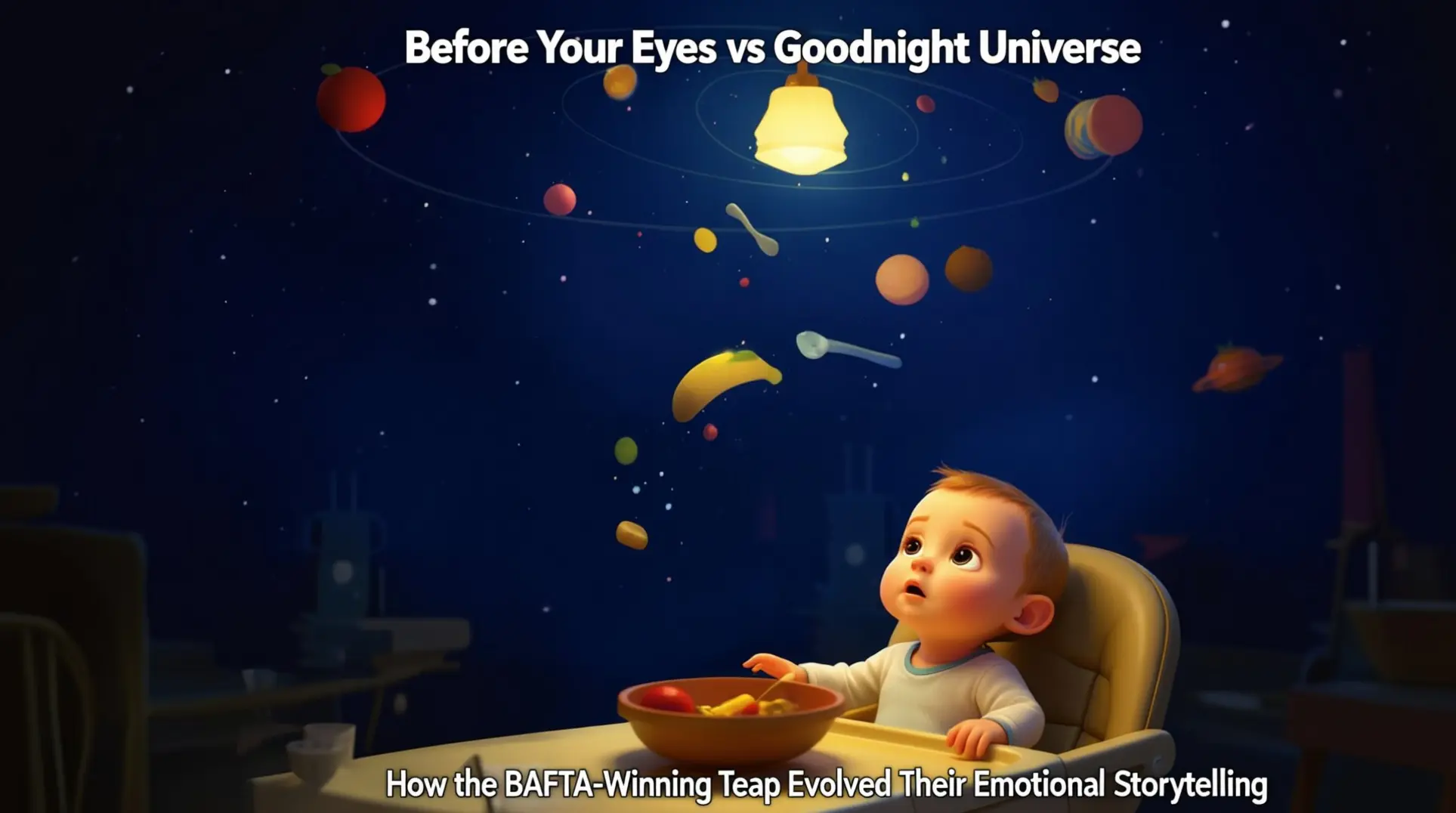
Before Your Eyes vs Goodnight Universe: How the BAFTA-Winning Team Evolved Their Emotional Storytelling
Explore the developer evolution from Before Your Eyes to Goodnight Universe as Nice Dream Games refines emotional storytelling through innovative mechanics and unique perspectives.
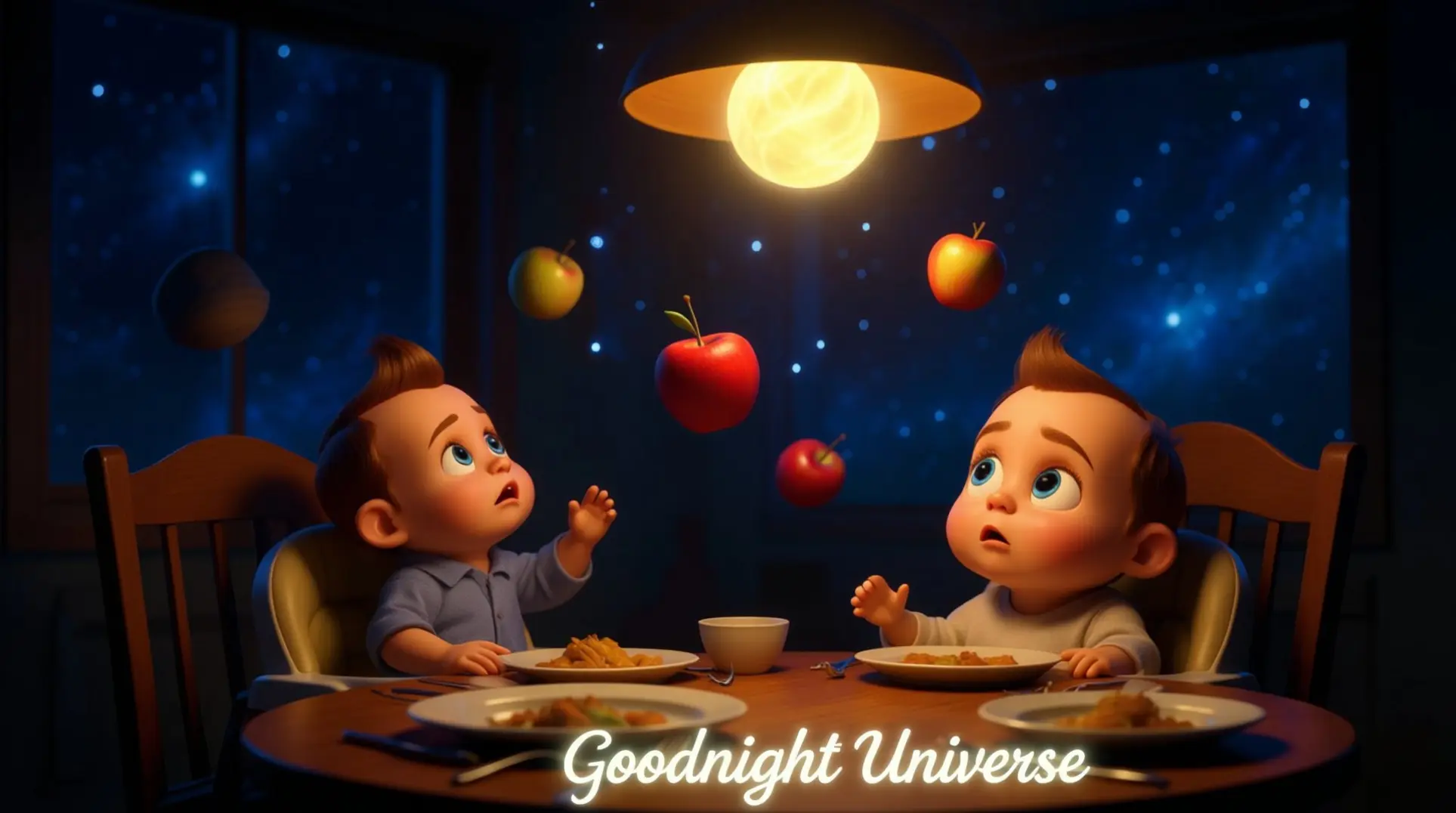
Goodnight Universe: Nice Dream Games' Psychic Baby Adventure Redefines Emotional Storytelling
Nice Dream Games' Goodnight Universe launches November 11, 2025, featuring psychic baby Isaac and innovative face-tracking technology.
AI Tactical Companion
Consult with our specialized tactical engine for Goodnight-Universe to master the meta instantly.