Roman vs Celtic Paths in Anno 117: Cultural Strategy Guide
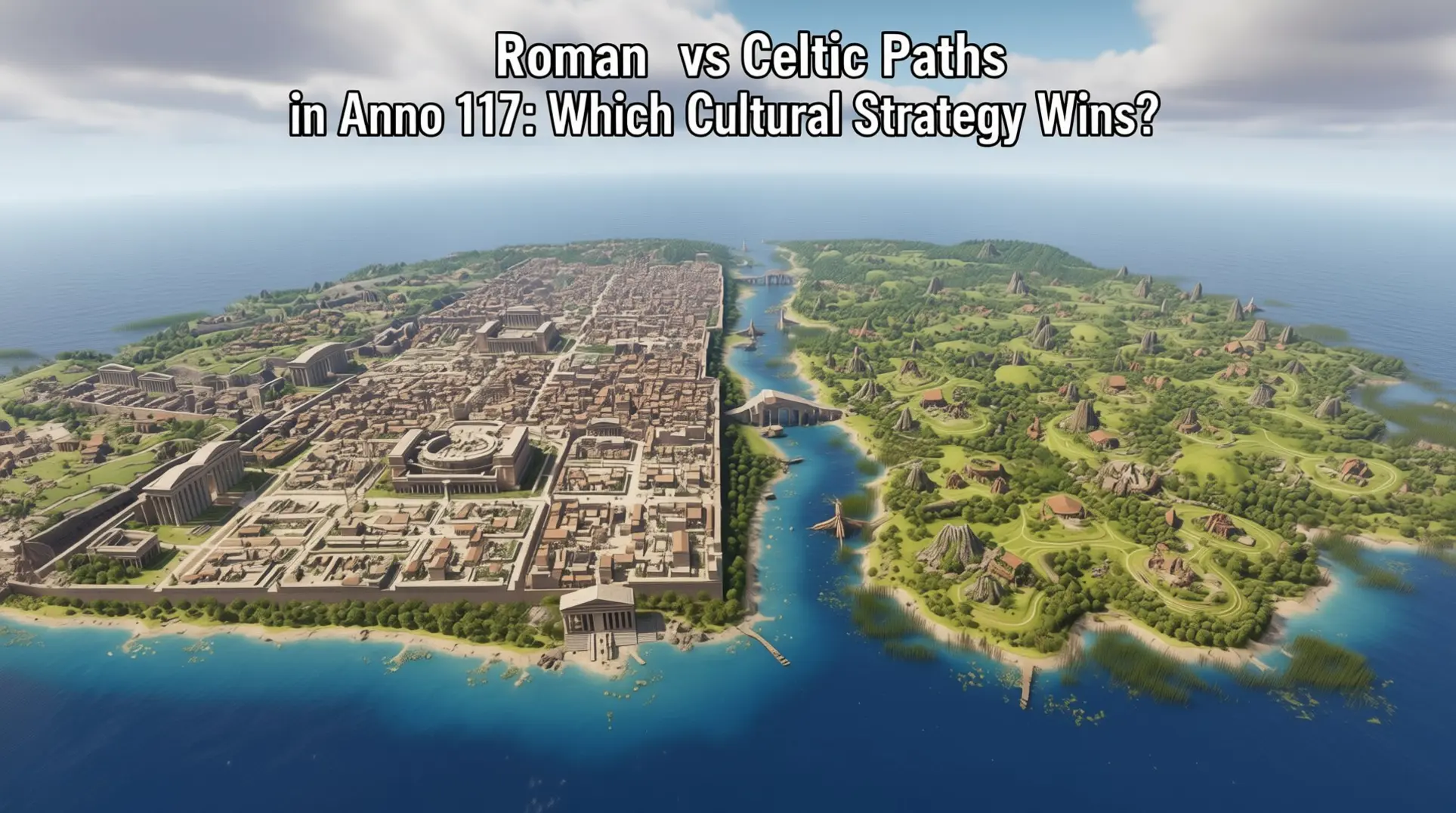
The cultural choice between Roman and Celtic paths in Anno 117: Pax Romana represents the game's most impactful strategic decision. Players face a fundamental choice: Romanize Albion through imperial expansion or preserve Celtic traditions through tribal resistance. This decision shapes every aspect of gameplay, from economic systems and population management to military strategy and diplomatic relations.
With three distinct citizen upgrade paths—Roman, Romano-Celtic, and Celtic—players can create sophisticated hybrid societies by choosing cultural paths for individual tier 1 houses before upgrading them. The campaign's geographic framing around Albion (the Celtic region) and Latium (the Roman core) highlights the cultural divide that defines your entire gameplay experience, encouraging multiple playthroughs to master both strategic approaches.
Foundational Cultural Differences
Starting Positions and Initial Advantages
Starting in Albion provides access to unique Celtic buildings and resources, including eel fisheries and wattle-and-daub housing that utilize wetland-specific materials. The Celtic path emphasizes following old traditions and "living with the land," unlocking unique Celtic technologies and population tiers.
Celtic Starting Advantages:
- Access to unique Celtic resources like eel fisheries
- Specialized building types such as wattle-and-daub housing
- Celtic population tiers including Celtic blacksmiths
- Environmental adaptation technologies
The Celtic path presents a more challenging diplomatic position for maintaining positive relationships with the Roman Emperor. Players must manage the tension between the indigenous Celtic population and encroaching Roman influence, creating a complex dynamic that requires careful cultural management.
Starting in Albion offers a more complex and potentially rewarding challenge, forcing players to master cultural dynamics early on. This environmental tension between Celtic traditions and Roman expansion forms a core gameplay mechanic throughout the campaign.
Roman vs Celtic Paths: Quick Comparison
| Aspect | Roman Path | Celtic Path |
|---|---|---|
| Economy | Centralized infrastructure, heavy imports from Latium | Local resource utilization, environmental adaptation |
| Military | Disciplined formations, overwhelming force | Guerrilla tactics, terrain mastery, speed |
| Diplomacy | Strong Roman Emperor relations | Challenging Roman relations, tribal diplomacy |
| Production | Complex chains requiring Roman goods | Localized chains using Albion resources |
| Playstyle | Methodical empire-building | Adaptive tribal management |
Economic Systems and Production Chains
Roman Production Requirements
Roman production chains are more centralized and infrastructure-heavy, often requiring imports from the core Roman region of Latium. Roman population tiers require specific goods that follow distinct production paths.
Key Roman Production Chains:
- Togas: Produced in a Weaver, requiring Wool from a Sheep Farm
- Wine: Required by Roman citizens, produced in a Winery that needs a Vineyard for grapes
- Aqueducts: Required to supply water directly to the city for advanced needs
- Roman Theatres: Part of cultural goods required to satisfy and upgrade Roman citizen tiers
Romanized production involves constructing Roman-style buildings like the Roman Blacksmith, which replaces the Celtic equivalent and requires different input materials.
Celtic Production Requirements
Celtic production emphasizes local resource utilization and environmental adaptation. Following traditional Celtic practices, or "living with the land," unlocks unique Celtic technologies relevant to production.
Celtic Production Focus:
- Eel fisheries utilizing wetland resources
- Wattle-and-daub housing construction
- Celtic blacksmiths with specialized production
- Local material utilization without heavy imports
The Celtic path requires managing the tension between indigenous Celtic populations and encroaching Roman influence, impacting both production choices and diplomatic standing.
Population Management and Social Systems
Cultural Assimilation Strategies
Players can create sophisticated Romano-Celtic hybrid societies by choosing cultural paths for individual tier 1 houses before upgrading them. This allows for specialized or blended populations with distinct benefits and challenges.
Effective Population Management Strategies:
- Cultural Designation: Assign specific cities or districts as primarily Roman or Celtic based on available resources
- Specialized Settlements: Create focused production centers on specific islands or districts
- Production Chain Planning: Meticulously balance goods production to avoid overproducing for one culture while neglecting the other
- Needs Management: Master the point-based citizen needs system for both Roman and Celtic citizens
These strategies feed into larger trade networks and eliminate economic waste. However, cultural choices have significant diplomatic repercussions, affecting your standing with both the Roman Empire and indigenous Celtic tribes.
Military and Expansion Approaches
Roman Military Advantages
Roman military strategy emphasizes disciplined formations and overwhelming force. This approach suits players who prefer structured expansion and economic dominance through centralized infrastructure.
Roman Military Characteristics:
- Disciplined legionary formations
- Heavy infantry focus
- Siege warfare capabilities
- Fortified settlement construction
Celtic Military Tactics
Celtic military doctrine values flexibility, knowledge of the local environment, and asymmetrical warfare as an alternative to Roman overwhelming force. This approach prioritizes speed and terrain mastery over disciplined formation fighting.
Celtic Military Advantages:
- Guerrilla warfare tactics
- Terrain knowledge utilization
- Swift raiding capabilities
- Marshland and forest adaptation
Players who choose the Celtic path gain access to military assets designed for guerrilla warfare, leveraging marshlands and familiar Albion terrain to their advantage. Celtic raids serve as specific gameplay elements for players fostering Celtic culture, usable against rivals or for territorial defense.
Diplomacy and Faction Relations
Diplomatic Consequences Table
| Cultural Choice | Roman Emperor Relations | Celtic Tribe Relations | Trade Impact |
|---|---|---|---|
| Pure Roman | Excellent | Poor | Strong with Roman settlements |
| Pure Celtic | Challenging | Excellent | Limited with Roman settlements |
| Hybrid | Moderate | Moderate | Balanced access |
| Aggressive Raiding | Very Poor | Variable | Potentially blocked |
Your cultural alignment affects diplomatic standing with both the Celtic population in Albion and the Roman Emperor in Latium. The campaign framing around Albion and Latium highlights the geographic and cultural divide central to diplomatic relations.
Key Diplomatic Considerations:
- Celtic Path: More challenging for maintaining positive relationships with the Roman Emperor
- Hybrid Strategies: Affect standing with both Roman Empire and Celtic tribes
- Aggressive Celtic Raiding: May alienate potential Roman allies and provoke different reactions from neighboring factions
Advanced Hybrid Strategies
Hybrid Strategy Implementation Table
| Strategy Type | Implementation | Benefits | Challenges |
|---|---|---|---|
| Cultural Zoning | Designate specific districts as Roman or Celtic | Optimized production chains | Requires careful planning |
| Mixed Military | Combine Celtic warriors with Roman legionaries | Tactical flexibility | Complex supply chains |
| Trade Specialization | Create export-focused settlements | Economic efficiency | Vulnerable to trade disruption |
| Cultural Balancing | Maintain specific population ratios | Diplomatic stability | Constant management required |
Production Chain Optimization
Effective hybrid management requires meticulous production chain planning to avoid overproducing goods for one culture while neglecting the other, thereby eliminating economic waste. Hybrid strategies allow players to mix Roman and Celtic elements within a single settlement to broaden production chains and access goods from both cultures.
Hybrid Strategy Case Study: Create a coastal settlement specializing in eel fisheries (Celtic) while maintaining a separate inland district focused on Roman wine production. Connect these through trade routes to satisfy both cultural needs while maximizing resource efficiency.
Military and Population Synergy
Advanced hybrid strategies allow for mixed military forces, where Celtic warriors serve as a swift hammer to complement Roman legionaries as a heavy anvil. This requires mastery of the point-based needs system, where both Roman and Celtic citizens have distinct requirements for goods, services, and buildings.
Hybrid Military Example: Use Celtic raiders for quick strikes against enemy supply lines while Roman legionaries hold fortified positions. This combined approach leverages the strengths of both cultural military traditions.
Roman Path: Pros and Cons
Pros
- Strong diplomatic relations with Roman Emperor
- Access to advanced Roman infrastructure (aqueducts, theatres)
- Disciplined military formations
- Established trade networks with Latium
- Structured economic development
Cons
- Heavy reliance on imports from Latium
- Complex production chains
- Poor relations with Celtic tribes
- Infrastructure-heavy development
- Less environmental adaptation
Celtic Path: Pros and Cons
Pros
- Excellent relations with Celtic tribes
- Environmental adaptation technologies
- Flexible guerrilla warfare tactics
- Local resource utilization
- Unique Celtic buildings and resources
Cons
- Challenging Roman Emperor relations
- Limited access to Roman goods
- Less structured military organization
- Potentially limited trade options
- Requires terrain mastery
Which Path Should You Choose?
Playstyle Recommendations
Your choice depends on how you prefer to manage expansion and conflict. Consider these approaches based on your preferred playstyle:
Choose Roman paths if you prefer:
- Centralized, infrastructure-focused development
- Strong trade networks with Roman settlements
- Disciplined military tactics
- Methodical empire-building
- Structured economic control
Choose Celtic paths if you prefer:
- Flexible tactics and environmental adaptation
- Tribal diplomacy and local alliances
- Guerrilla warfare and terrain mastery
- Adaptive resource management
- Accepting diplomatic challenges
Implement hybrid strategies by:
- Designating specific cities or districts as primarily Roman or Celtic based on available resources
- Creating specialized settlements as efficient production centers
- Balancing cultural needs through careful planning
- Leveraging mixed military forces for tactical advantage
Conclusion: Strategic Depth and Replayability
The cultural choice between Roman and Celtic paths in Anno 117: Pax Romana fundamentally defines your entire gameplay experience, offering distinct strategic approaches that encourage replayability.
Roman Path Dominance
The Roman path provides structured expansion and economic dominance through centralized infrastructure and disciplined military tactics. This approach suits players who enjoy methodical planning, strong trade networks, and overwhelming force military strategies.
Celtic Path Adaptation
The Celtic path offers environmental harmony and tribal diplomacy through flexible adaptation and guerrilla warfare. This approach rewards players who master local terrain, utilize indigenous resources, and navigate complex diplomatic landscapes.
Hybrid Strategy Excellence
Hybrid strategies allow advanced players to combine the best of both worlds, creating specialized settlements that leverage Roman engineering with Celtic resource efficiency. These approaches require sophisticated management but offer unparalleled strategic flexibility.
Replayability and Mastery
Ultimately, your cultural alignment affects diplomatic standing with both the Roman Empire and Celtic tribes, making this choice the cornerstone of your strategic approach. Whether you prefer methodical empire-building or adaptive tribal management, mastering both cultural paths provides the deepest understanding of Anno 117's complex strategic landscape. The game's design encourages multiple playthroughs to experiment with different cultural balances and hybrid approaches, ensuring lasting engagement and strategic discovery.
More Anno-117-Pax-Romana Guides
Latium vs Albion: Which Starting Province is Right for Your Playstyle in Anno 117: Pax Romana?
Comprehensive guide comparing Latium and Albion starting provinces in Anno 117: Pax Romana, including gameplay mechanics, strategic implications, and player recommendations.
Anno 117 First Person Mode: Unverified Guide
Guide to unverified first-person mode in Anno 117: Pax Romana. Details are limited due to recent release.
Anno 117: Pax Romana Perfect Production Ratios Guide
Master Anno 117 production ratios with our complete guide. Learn optimal building ratios for Latium, Albion, and military production chains to maximize efficiency.
AI Tactical Companion
Consult with our specialized tactical engine for Anno-117-Pax-Romana to master the meta instantly.